
Quick answer: NFPA compliance for laboratory gas hardware means that cylinders, storage, gas cabinets, manifolds, regulators, piping, valves, relief vents, gas detection and electrical equipment are selected and installed according to the NFPA codes adopted by the local authority having jurisdiction (AHJ). The most important codes are NFPA 55 for compressed gases and cryogenic fluids, NFPA 45 for laboratories using chemicals, NFPA 2 for hydrogen, NFPA 70 for electrical installations, NFPA 99 for laboratories in healthcare facilities and NFPA 318 for semiconductor fabrication facilities. Compliance starts with a gas inventory and hazard classification, continues with hardware that meets the construction, separation, shutoff and ventilation requirements for each gas, and ends with documentation that proves to the AHJ that the installation matches the code.
How this guide differs from a general standards overview: the relationship between OSHA, NFPA, CGA and other standards is explained in the laboratory gas equipment safety standards guide. This article focuses only on NFPA codes and maps them to each piece of laboratory gas hardware, so that designers, lab managers and buyers can see which requirements apply to cylinders, cabinets, manifolds, piping and controls, and what to verify before installation and inspection.
Which NFPA codes apply to laboratory gas hardware?
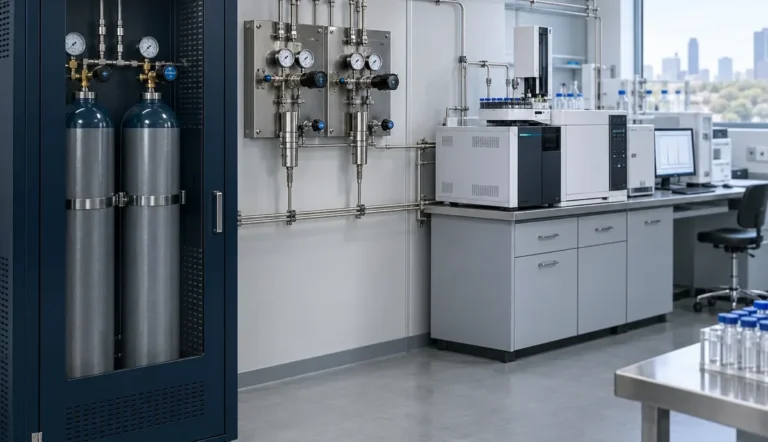
Several NFPA codes apply to laboratory gas hardware, each covering a different aspect of the installation. NFPA 55, the Compressed Gases and Cryogenic Fluids Code, governs storage, use and handling of compressed gases, including cylinders, gas cabinets, separation, piping systems and emergency controls. NFPA 45 covers fire protection for laboratories using chemicals and sets requirements for laboratory units, including limits and arrangements for compressed gas cylinders in the lab. NFPA 2 covers hydrogen technologies, and NFPA 70, the National Electrical Code, governs electrical installations including hazardous locations.
| NFPA code | Scope relevant to lab gas hardware | Typical hardware affected |
|---|---|---|
| NFPA 55 | Storage, use and handling of compressed gases and cryogenic fluids | Cylinders, gas cabinets, manifolds, piping, shutoffs, separation |
| NFPA 45 | Fire protection for laboratories using chemicals | Cylinders in lab units, lab piping, fume hood use |
| NFPA 2 | Hydrogen technologies | Hydrogen cylinders, manifolds, generators, piping |
| NFPA 70 | Electrical installations and hazardous locations | Controllers, detectors, lighting near flammable gas sources |
| NFPA 99 | Health care facilities | Separation of lab gases from medical gas systems in hospitals |
| NFPA 318 | Semiconductor fabrication facilities | Gas cabinets, valve manifold boxes, hazardous production materials |
| NFPA 1 | Fire Code | General fire safety, adopts NFPA 55 requirements |
The applicable edition and any local amendments are determined by the AHJ. Many US jurisdictions adopt the International Fire Code, whose compressed gas provisions closely align with NFPA 55, so designers should confirm which documents and editions apply before specifying hardware.
Who enforces NFPA requirements for laboratory gas systems?
NFPA codes are consensus documents, and they become enforceable when a jurisdiction adopts them by law or when an owner, insurer or institution requires them. The authority having jurisdiction, usually the local fire marshal or building official, reviews plans, inspects installations and interprets the code. Universities, hospitals and corporate campuses often have environmental health and safety departments that apply internal standards stricter than the code, for example limiting full-size cylinders inside laboratories or requiring gas cabinets for certain gases.
Because interpretation varies, the most effective approach is to involve the AHJ and the institution’s safety office early. A short design review that presents the gas inventory, hazard classes, quantities, hardware concept and ventilation design avoids late changes. Insurers may also require specific protections, such as gas detection or sprinklers in gas rooms.
How do maximum allowable quantities and control areas affect gas hardware?
Maximum allowable quantities and control areas determine how much of each hazardous gas can be stored or used in a given area before stricter construction and protection requirements apply. Fire codes set maximum allowable quantities (MAQs) per control area for flammable, oxidizing, toxic, highly toxic, pyrophoric and other hazard categories. The quantities can often be increased when the building is sprinklered or when gases are stored in approved gas cabinets, and a building can be divided into multiple control areas separated by fire barriers.
These limits directly shape the hardware concept. If the planned quantity of a flammable or toxic gas exceeds the MAQ in a lab area, the design may move cylinders into gas cabinets, into a separate gas room or into an outdoor gas yard, with piping to the labs. This is one of the main reasons laboratories adopt central gas supply. The trade-offs are discussed in centralized vs. cylinder-at-bench gas supply.
How does NFPA 45 classify laboratories and limit gas cylinders?
NFPA 45 classifies laboratory units by their fire hazard, primarily based on the quantities of flammable and combustible liquids they contain, and it sets requirements for construction, fire protection and chemical storage in each class. For compressed gases, NFPA 45 limits the number and size of cylinders of flammable, oxidizing and toxic gases in a laboratory work area, requires that cylinders not in use be stored appropriately, and addresses piping, shutoff and ventilation for gases used in the laboratory.
In practice, NFPA 45 encourages keeping only cylinders in use at the bench and using small cylinders where possible, with larger supplies moved to gas cabinets or central gas rooms. Laboratory designers should check the cylinder limits for each lab unit class in the adopted edition and compare them with the gas schedule before deciding where cylinders will stand.
What are the NFPA requirements for gas cylinders and storage?
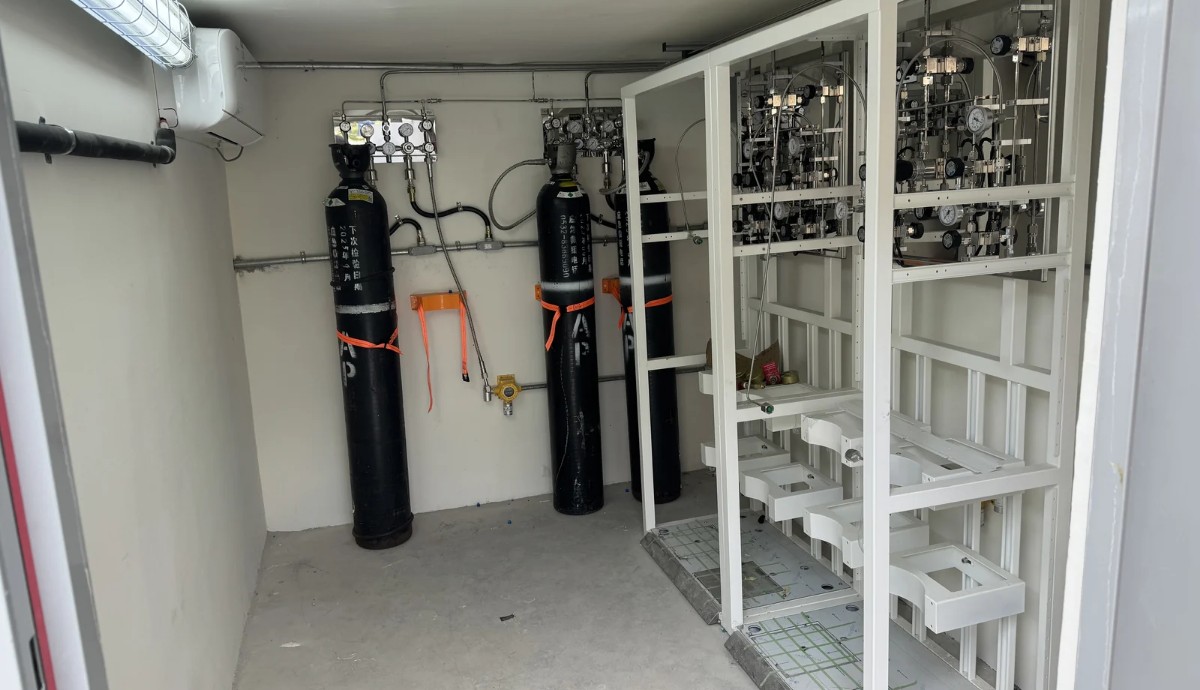
NFPA requirements for gas cylinders and storage focus on securing cylinders, protecting valves, separating incompatible gases and controlling the storage environment. Cylinders must be secured against falling, typically with chains, straps or racks, and valve protection caps must be in place when cylinders are not connected. Cylinders must be stored away from heat sources, in ventilated areas, and with clear identification of contents.
Incompatible gases, such as flammable gases and oxidizers, must be separated by a specified distance or by a noncombustible barrier with a defined fire resistance, unless they are stored in separate approved gas cabinets. Full and empty cylinders should be distinguished, and storage areas should be protected from vehicle damage and unauthorized access. Exact separation distances and barrier specifications depend on the adopted edition of NFPA 55 and local amendments.
| Requirement | Typical hardware solution |
|---|---|
| Secure cylinders against falling | Wall brackets, chains or straps, cylinder racks |
| Protect valves | Valve protection caps, cylinder carts |
| Separate incompatible gases | Distance, noncombustible barriers or separate gas cabinets |
| Ventilate storage areas | Ventilated gas rooms or exhausted cabinets |
| Identify contents | Cylinder labels and area signage |
When does NFPA require a gas cabinet, and how must it be built?
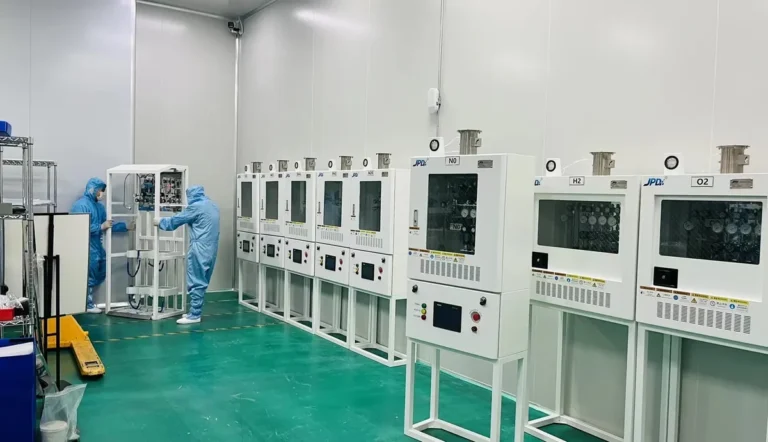
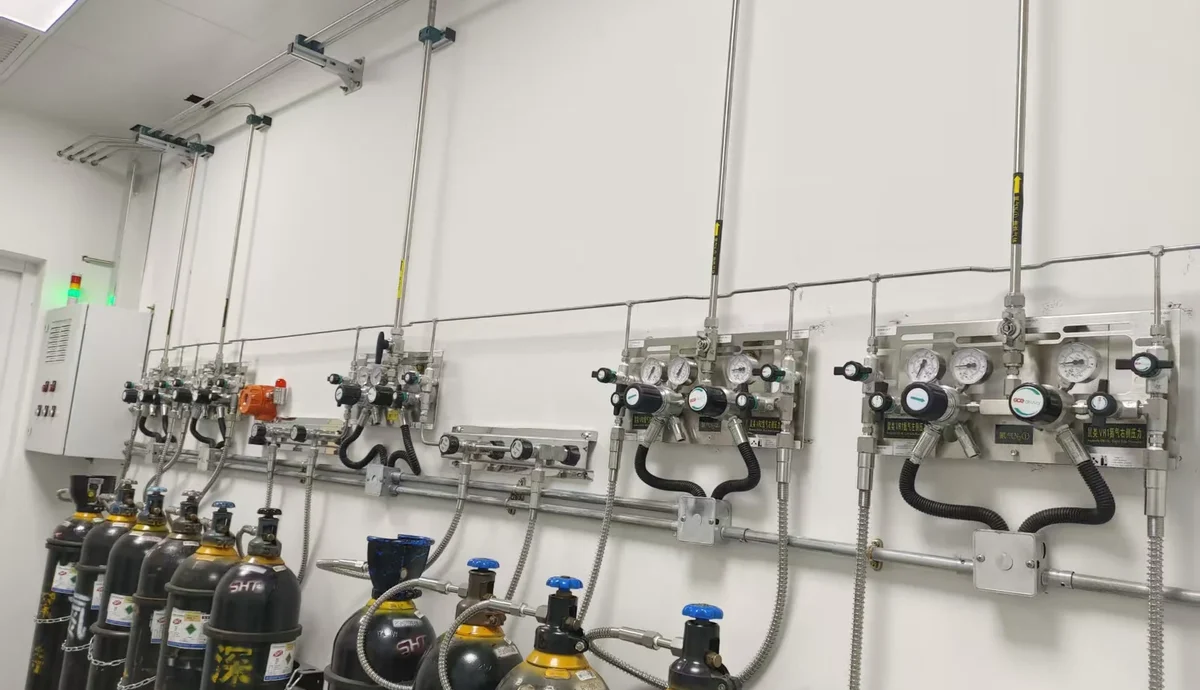
A gas cabinet is required or strongly encouraged by NFPA 55 and the fire code for toxic, highly toxic, pyrophoric and some flammable gases, and gas cabinets are also used to increase allowable quantities in a control area. A compliant gas cabinet is constructed of steel of a specified minimum thickness, has self-closing doors and access ports or windows for valve operation, is connected to a dedicated exhaust system that keeps the cabinet under negative pressure, and is protected by internal sprinklers where required, for example for pyrophoric gases.
Fire codes typically specify an average face velocity at the cabinet access opening, with a minimum value at any point, and limit the number of cylinders per cabinet for certain hazard classes. Incompatible gases must not share a cabinet. Commonly cited values include steel of about 12 gauge, an average face velocity around 200 feet per minute with no point below about 150 feet per minute, and a maximum of three cylinders for toxic or pyrophoric gas cabinets, but the exact numbers must be confirmed in the adopted code. Cabinet types and features are described in the specialty gas cabinets guide, and products include the JW-200-GC and JW-300-GC specialty gas cabinets.
What do NFPA codes require from manifolds and regulators?
NFPA codes require manifolds and regulators to be suitable for the gas, pressure and service, and to be installed so that a failure does not create an uncontrolled release. Components must be rated for the maximum cylinder pressure and compatible with the gas, oxygen service components must be cleaned for oxygen, and flammable and toxic gas manifolds need provisions to shut off the supply quickly. Pressure relief devices on the low-pressure side must protect downstream equipment and vent to a safe location.
Manifolds for flammable and toxic gases are usually located in gas cabinets, ventilated gas rooms or outdoor enclosures rather than in open laboratory space. Purge connections for cylinder changes must vent purged gas safely, and check valves or flash arrestors may be required depending on the gas. Manifold options are explained in the laboratory gas manifolds guide, and an example is the JW-100 manual and semi-automatic changeover manifold.
What do NFPA codes require for laboratory gas piping?
NFPA codes require laboratory gas piping to be designed, installed and tested according to recognized piping standards, typically referencing ASME B31.3 for process piping and ASME B31.12 for hydrogen piping. Piping materials must be compatible with the gas, joints must be suitable for the pressure and hazard, and the system must be pressure tested before use. Piping carrying hazardous gases should be routed to avoid physical damage, supported adequately and kept accessible for inspection.
Piping must be identified with the gas name and flow direction at intervals and at points of entry and exit from rooms. For toxic and highly toxic gases, codes may require double containment or exhausted enclosures at fittings and valves, and excess flow control to limit releases. Piping for gases used in healthcare buildings must remain separate from medical gas pipelines. Material and fitting choices are discussed in the laboratory gas piping and fittings procurement guide.
Which shutoff valves and emergency controls are required?
NFPA 55 and related codes require shutoff valves that allow the gas supply to be isolated at the source, at room entries where appropriate and at points of use. For flammable, toxic and other hazardous gases, automatic or remotely operated emergency shutoff valves are commonly required, activated by gas detection, loss of exhaust, fire alarm or a manual emergency stop. Shutoff valves must be accessible, clearly labeled and located so they can be operated safely during an emergency.
Excess flow control is required for some toxic and highly toxic gases to stop flow automatically if a line breaks. Manual shutoff valves at the lab entrance allow a laboratory to isolate its gases without entering the room during an incident. Valve selection is explained in the laboratory gas valve buying guide, and multi-point distribution in the JW-200-VMB / JW-100-VMB valve manifold box.
How must pressure relief and vent lines be handled?
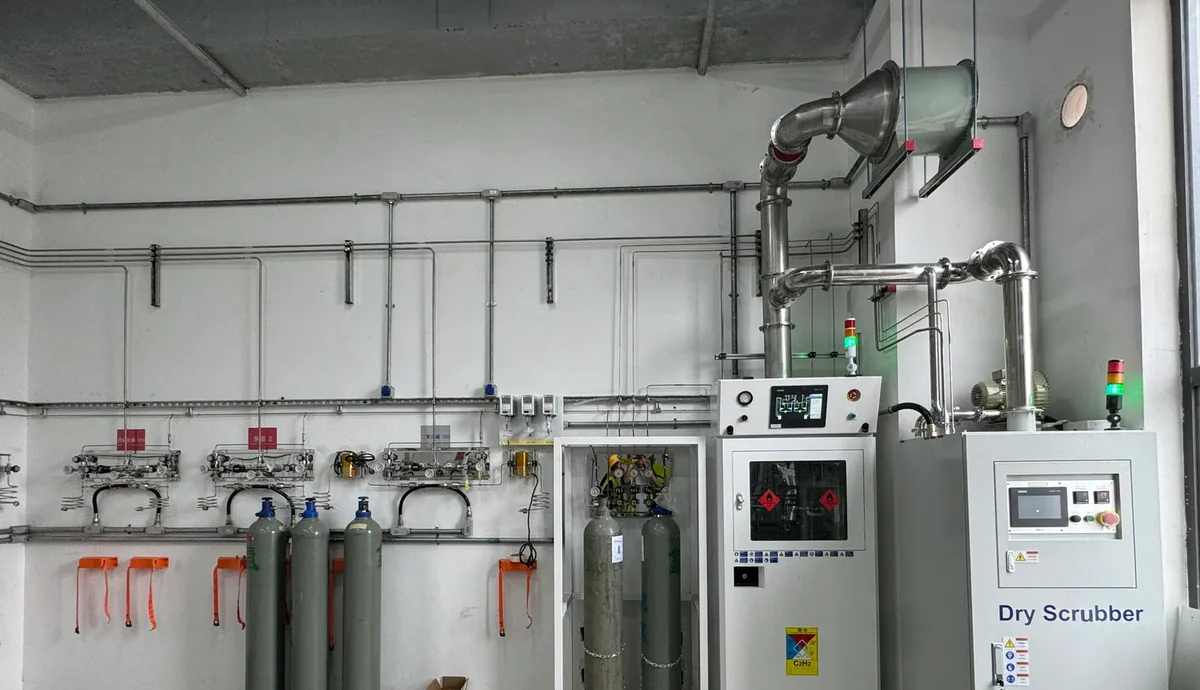
Pressure relief and vent lines must discharge to a location where released gas cannot create a hazard to people or ignite. For flammable gases such as hydrogen, relief and purge vents are typically routed outdoors to a safe height and location away from air intakes, openings and ignition sources. For toxic and corrosive gases, vents are routed to exhaust treatment or scrubbers so that releases are captured and neutralized before discharge.
Vent lines must be sized for the relief capacity, protected against rain and debris, and made of compatible materials. Vent lines from incompatible gases should not be combined. Exhaust treatment options are described on the laboratory gas exhaust treatment and purge systems page.
When is gas detection required for laboratory gas hardware?
Gas detection is required by fire codes for toxic and highly toxic gases in storage and use areas, and it is commonly specified for flammable gases such as hydrogen and for oxygen depletion where inert gases or cryogens could displace oxygen. Detectors must be suited to the specific gas, placed at appropriate heights based on gas density, and connected to alarms and, where required, to automatic shutoff of the gas supply.
Detection systems need regular calibration and functional testing, and their alarm setpoints should be based on recognized exposure limits or a fraction of the lower flammable limit. Detection inside gas cabinets, in gas rooms and at points of use provides layered protection. Integrating detectors with emergency shutoff valves and exhaust failure alarms creates a coherent safety system rather than isolated devices.
How does NFPA 70 affect gas hardware near flammable gases?
NFPA 70, the National Electrical Code, affects gas hardware near flammable gases because areas where flammable gas may be present in ignitable concentrations can be classified as hazardous locations. In such locations, electrical equipment such as controllers, solenoid valves, detectors, lighting and switches must be suitable for the classification, for example by explosion-proof or intrinsically safe design, or the area must be ventilated so that classification is not required.
Area classification depends on the gas, the quantity, the ventilation and the likelihood of release, and it is typically determined by an engineer and accepted by the AHJ. Gas cabinets and enclosures with continuous exhaust are often used to limit the extent of hazardous locations, which simplifies electrical design in the surrounding laboratory.
What special rules apply to hydrogen, healthcare labs and semiconductor facilities?
Hydrogen, healthcare laboratories and semiconductor facilities each have additional NFPA requirements. Hydrogen systems fall under NFPA 2, which addresses storage, piping, ventilation, separation distances and hydrogen generators, and which often requires outdoor or well-ventilated locations for hydrogen manifolds. Laboratories in healthcare facilities must keep laboratory gas systems separate from medical gas systems governed by NFPA 99, so that laboratory gases can never enter patient medical gas pipelines.
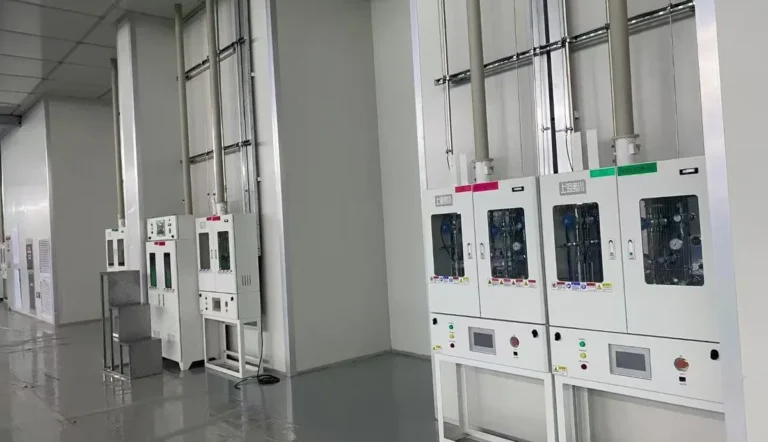
Semiconductor fabrication facilities follow NFPA 318, which addresses hazardous production materials, gas cabinets, valve manifold boxes, exhausted enclosures and emergency controls in cleanroom environments. Research laboratories that use semiconductor-type gases, such as silane or arsine mixtures, often adopt similar measures. Cleanroom-specific installation is described in the cleanroom gas cabinet installation guidelines, and flammable gas solutions on the flammable gas supply system page.
What documentation should be prepared for the AHJ?
The documentation prepared for the AHJ should show what gases are present, in what quantities, how they are stored and distributed, and which protective measures are installed. A typical submittal package includes a hazardous materials inventory statement with gas names, hazard classes and quantities per control area, floor plans showing gas locations, cabinets, piping routes and shutoff valves, equipment data sheets, ventilation and exhaust calculations, gas detection layout and alarm sequences, electrical area classification where applicable, and piping test procedures.
After installation, the package is completed with pressure and leak test records, exhaust flow measurements, detector calibration records, functional test results of shutoff and alarm sequences, and operating and emergency procedures. Keeping these documents current simplifies annual inspections and future modifications. Maintenance and re-verification services are described in after-sales maintenance and annual inspection.
What hardware compliance checklist should be used before inspection?
A hardware compliance checklist helps verify the installation before the AHJ inspection. The following items cover the most common inspection points:
- Gas inventory matches the approved hazardous materials statement and does not exceed MAQs per control area
- Cylinders are secured, valve caps fitted on stored cylinders and incompatible gases separated
- Gas cabinets have correct construction, self-closing doors, working exhaust and required sprinklers
- Manifolds and regulators are rated for the gas and pressure and installed in suitable locations
- Piping is tested, supported, protected and labeled with gas name and flow direction
- Source, room and point-of-use shutoff valves are accessible and labeled
- Emergency shutoff, excess flow and alarm functions have been tested
- Relief and purge vents discharge to safe locations or exhaust treatment
- Gas detectors are installed, calibrated and connected to alarms and shutoffs
- Electrical equipment suits the area classification
- Signage, emergency procedures and training records are in place
What are the most common NFPA violations in laboratory gas systems?
The most common NFPA violations in laboratory gas systems are unsecured cylinders, missing valve caps on stored cylinders and incompatible gases stored together. These are simple to prevent but frequently found during inspections, especially in laboratories with high cylinder turnover. The next most common group involves quantity limits: more flammable or toxic gas in a lab area than the code allows, often because reserve cylinders are kept next to the instruments.
Other frequent violations include unlabeled or incorrectly labeled piping, shutoff valves that are hidden or blocked, relief vents discharging indoors, gas cabinets with disabled self-closing doors or poor exhaust, detectors that are not calibrated, and electrical equipment unsuitable for flammable gas areas. A periodic self-inspection using the checklist above, combined with training for laboratory staff, prevents most of these findings.
Frequently asked questions
Is NFPA 55 or NFPA 45 the main code for laboratory gases?
Both apply. NFPA 55 is the main code for compressed gas storage, use, cabinets, piping and controls, while NFPA 45 addresses laboratory units, including limits on cylinders in the lab. The adopted fire code and local amendments determine how they are applied.
Do all toxic gases need a gas cabinet?
Toxic and highly toxic gases generally require exhausted gas cabinets, exhausted enclosures or ventilated rooms with detection and emergency controls, depending on the quantity and hazard class. The AHJ confirms the exact requirement for each gas.
Can hydrogen cylinders be kept inside a laboratory?
Small quantities of hydrogen can often be used in a laboratory within the code limits for flammable gases, but larger supplies are usually located in gas cabinets, gas rooms or outdoors with piping to the lab. Hydrogen generators are an alternative that reduces stored quantity.
Who is responsible for NFPA compliance of a lab gas system?
The building owner or operator is responsible for compliance, supported by the designer, installer and equipment supplier. The AHJ reviews and approves the installation, and the laboratory must maintain compliance during operation.
How often should NFPA-related gas safety systems be tested?
Gas detectors, emergency shutoff valves, exhaust monitoring and alarms should be tested at intervals defined by the code, the manufacturer and the AHJ, commonly at least annually and often more frequently for detectors. Records of each test should be kept for inspection.
Build NFPA-ready laboratory gas systems with LGF
LGF Lab Gas Flow designs and manufactures laboratory gas hardware for code-compliant installations, including specialty gas cabinets, changeover manifolds, regulators, valve manifold boxes, emergency shutoff and detection packages, high-purity piping and exhaust treatment. Our engineers help laboratories prepare gas inventories, select hardware for each hazard class, plan separation, shutoff and venting, and assemble documentation for AHJ review. Learn more about our laboratory gas piping design, corrosive and high-purity specialty gas supply, core technology and qualifications and project cases.
Planning a new lab or preparing for a fire code inspection? Send your gas list, quantities, floor plan and local code requirements through the LGF contact page. Our team will review your hardware concept, recommend compliant cabinets, manifolds and controls, and prepare a quotation and documentation package for your project. Laboratory designers, EPC contractors and facility managers are welcome to contact us.