
LGF LAB GAS FLOW / PROJECT CASES
Research Institute Gas Supply Engineering Project
Research institutes often run several experimental platforms with unlike gas, purity and pressure requirements. This case follows the engineering choices that connect a controlled source area to flexible research rooms without losing line identity or service access.
AN ILLUSTRATED PROJECT REVIEW
How this laboratory gas project takes shape
A research facility may add instruments during a project and repurpose rooms later. For that reason, the distribution design should show not just the first equipment position but the logic of each gas path: where it starts, how it is isolated, where a future branch may be possible and how the line can be tested. The phrase high purity laboratory gas system describes an objective; it does not substitute for an agreed outlet specification.
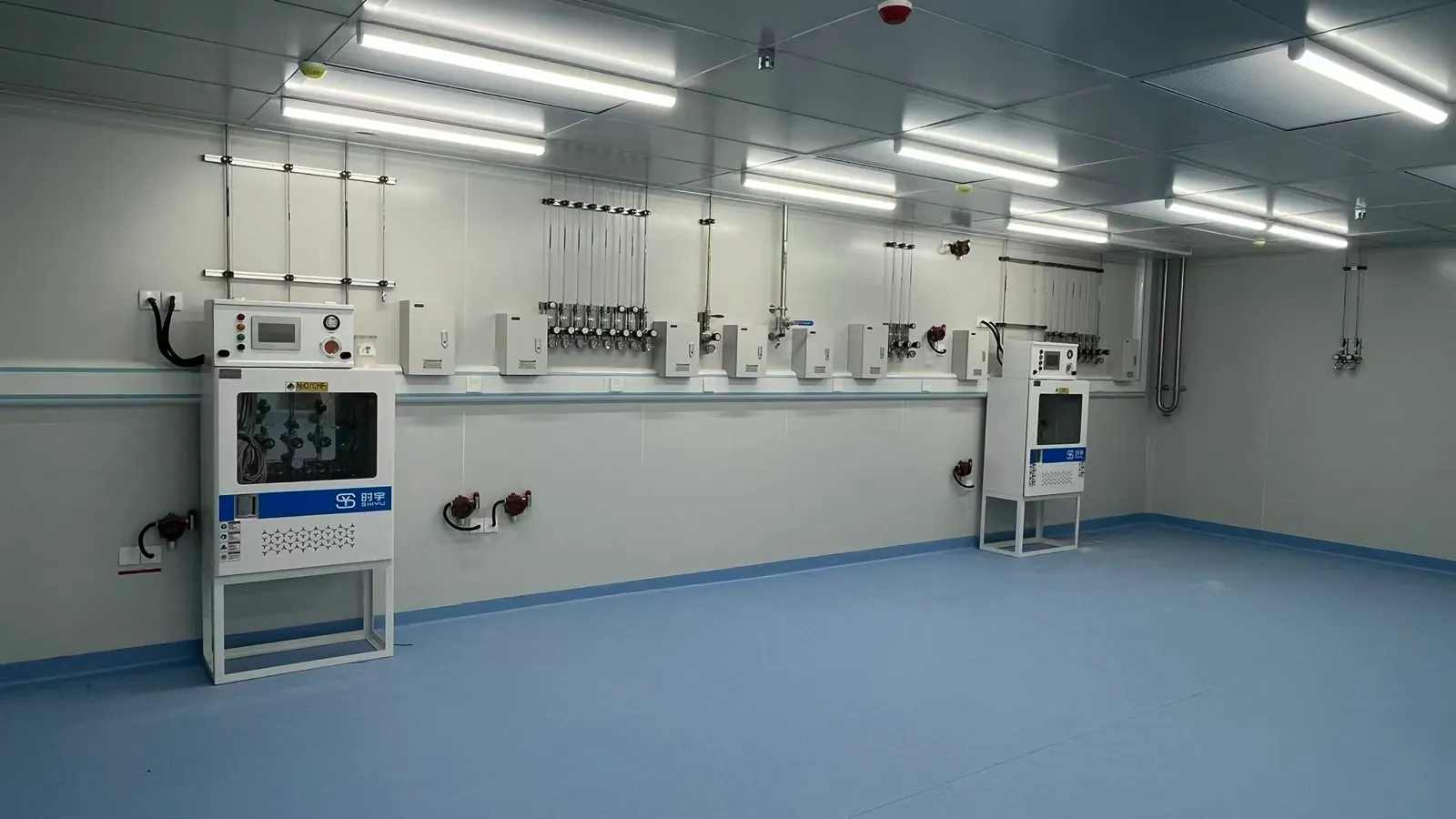
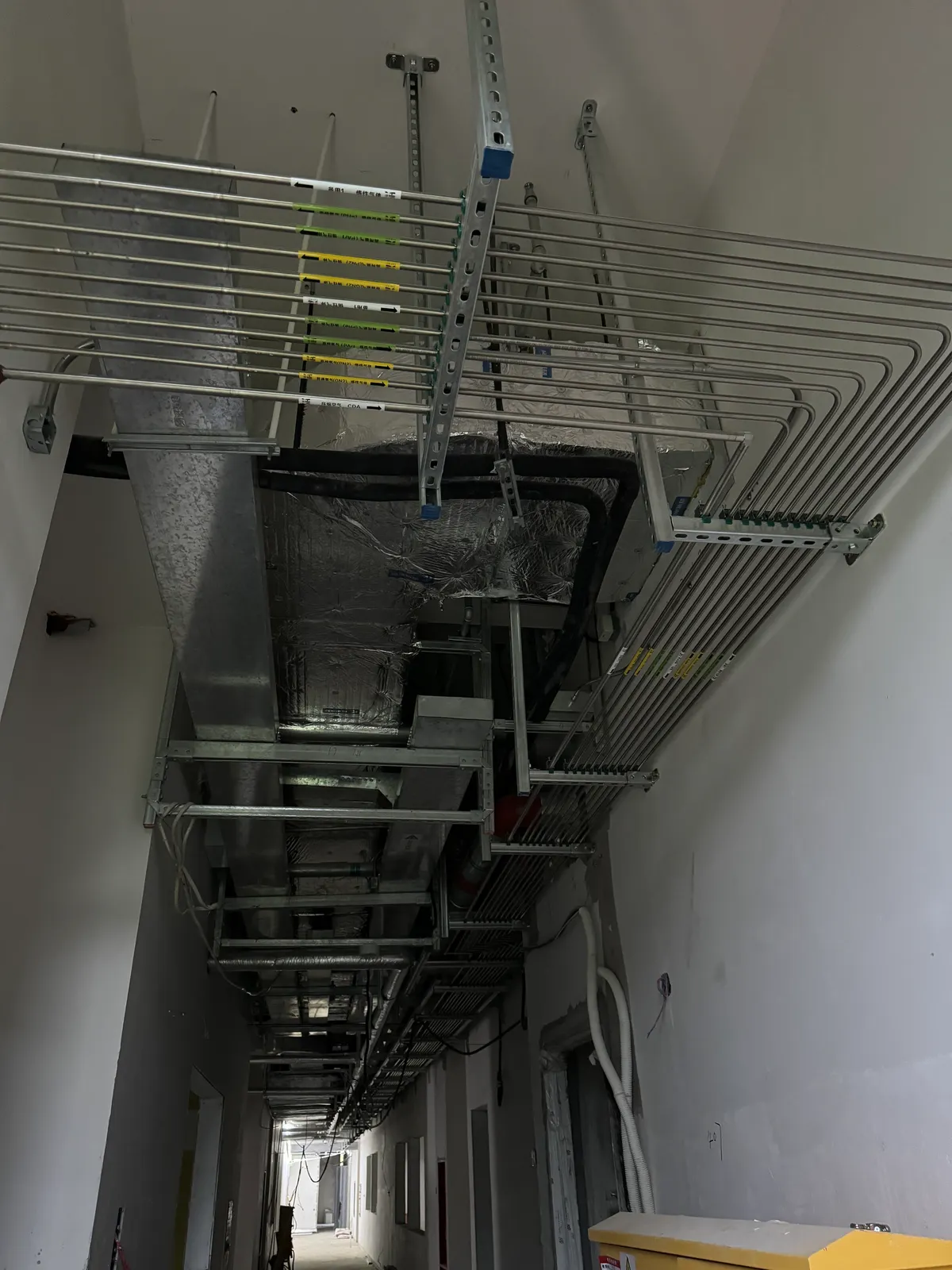
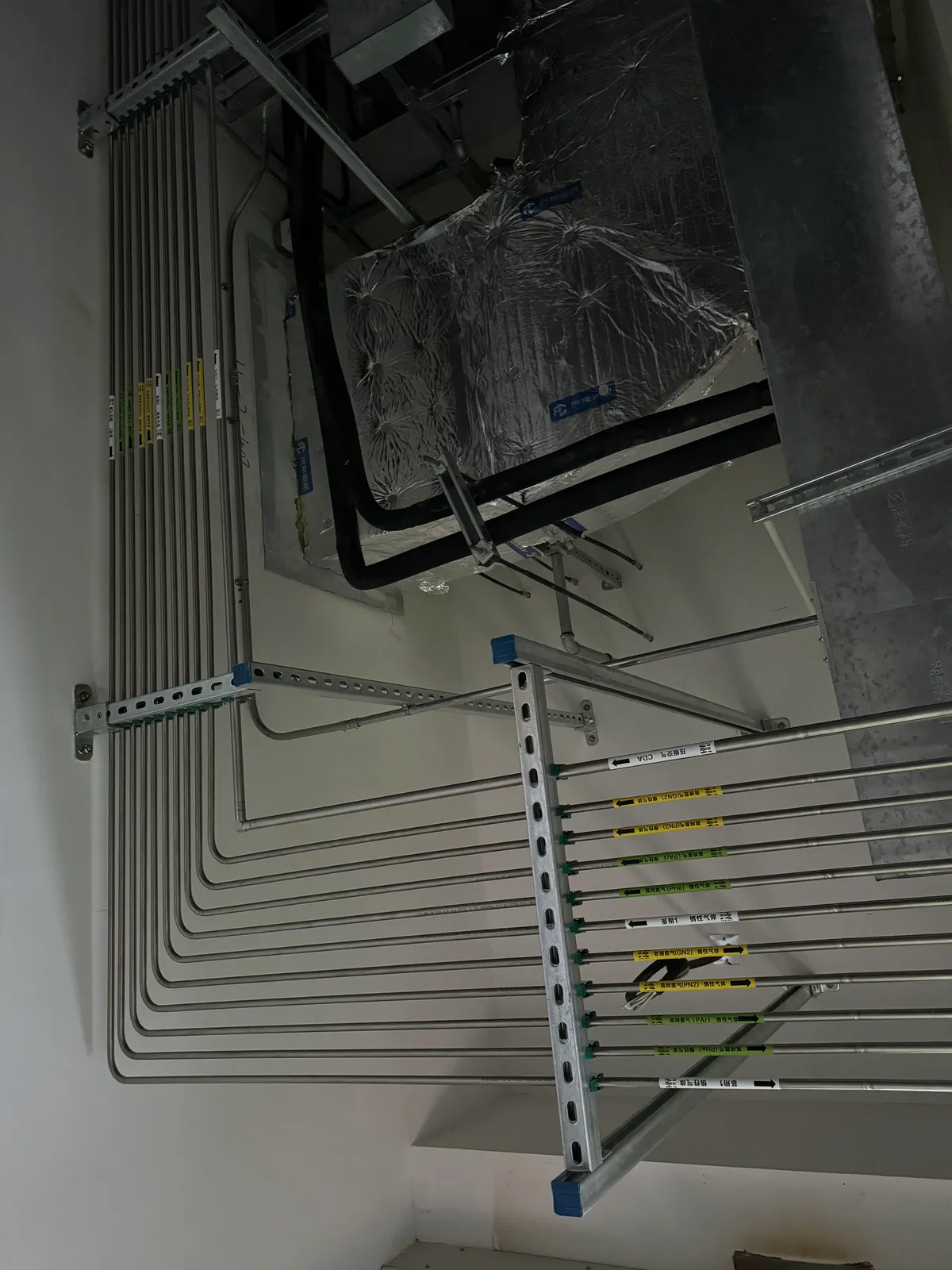
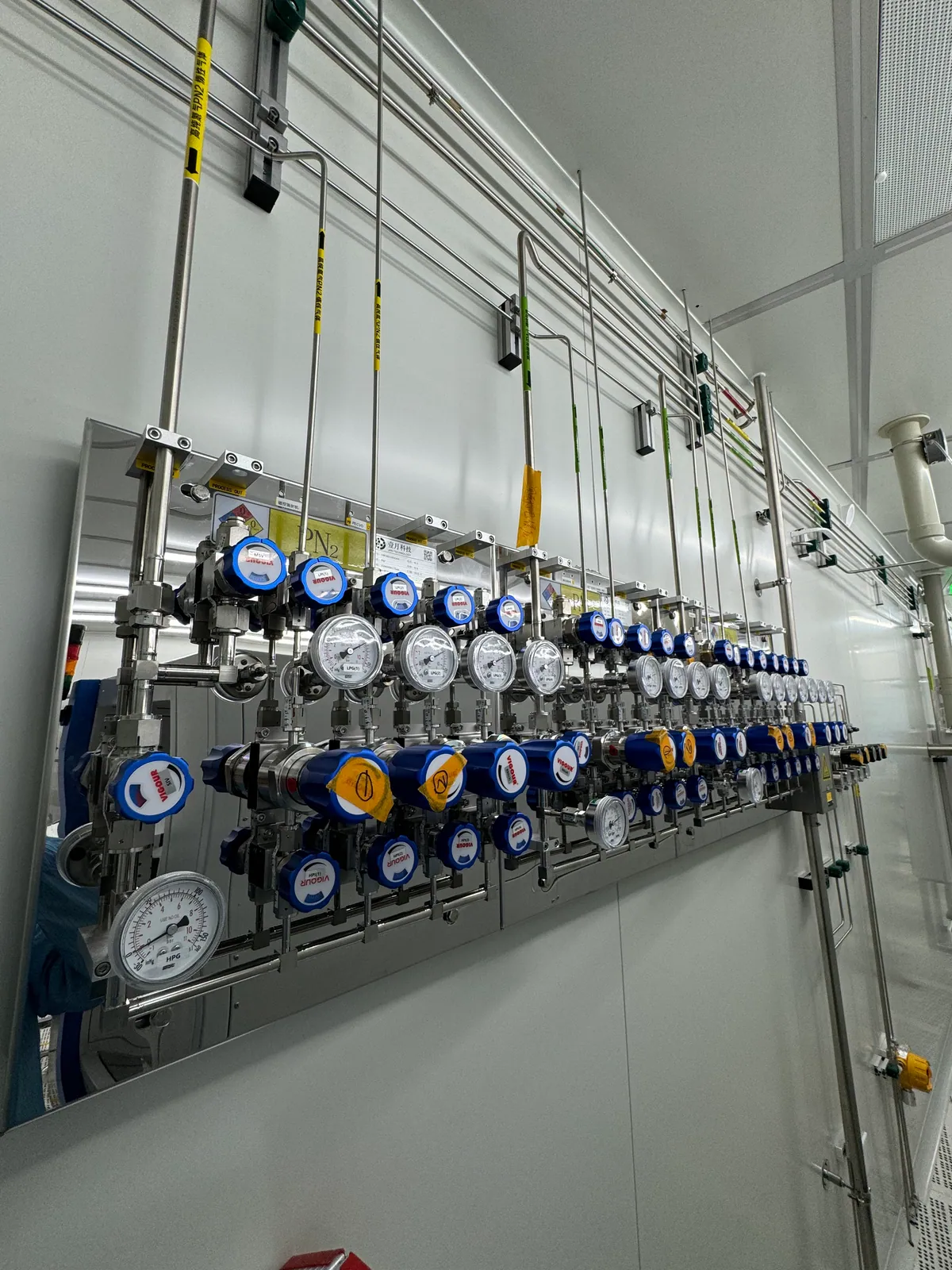
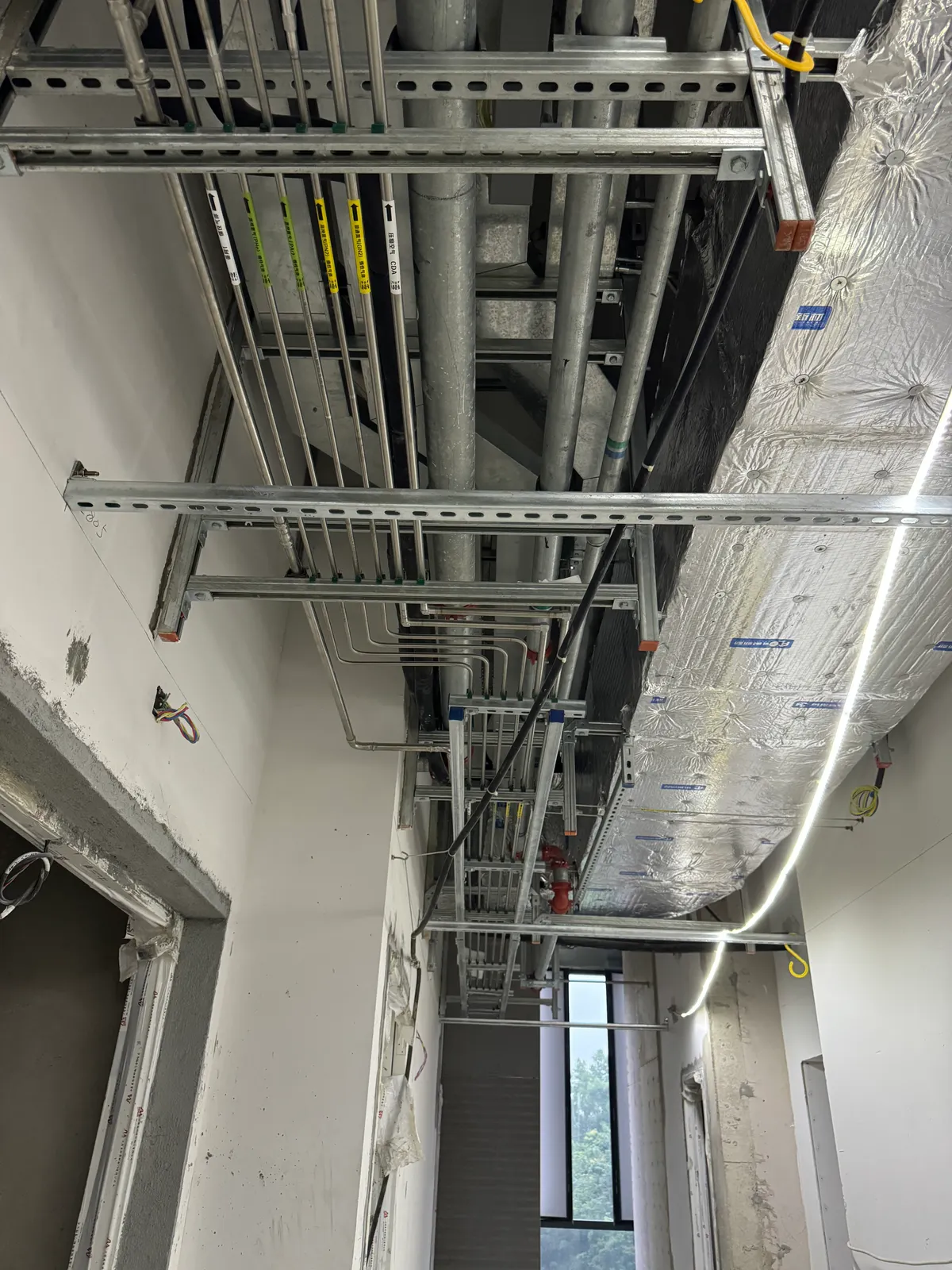
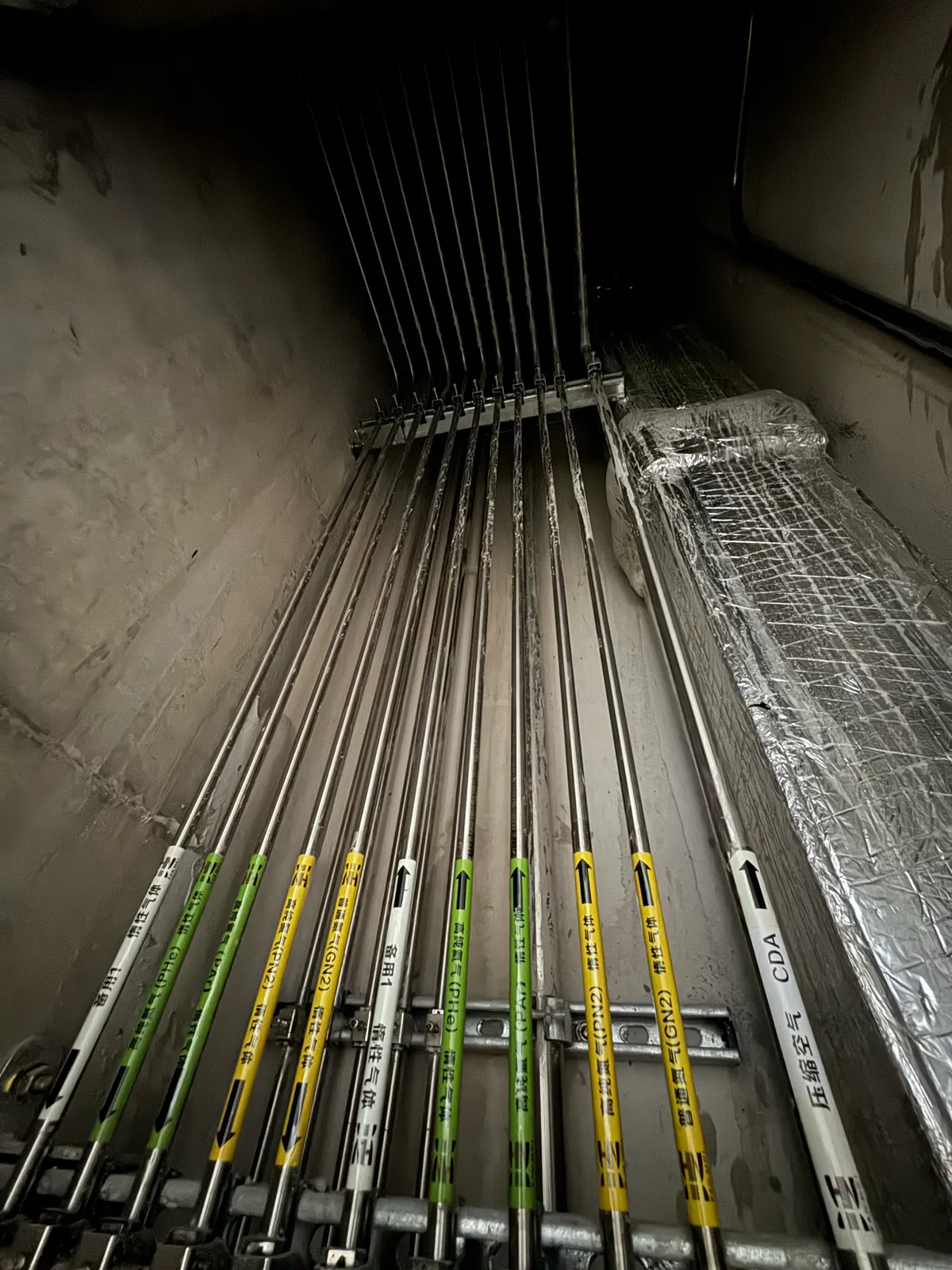
The images selected from the engineering library show supported overhead routes, risers and a room connection wall. They provide visual context for layout decisions. The exact gases, hazard classification, achieved purity and test values must be established by the project documents rather than inferred from the photographs.
01 / EXPERIMENTAL DEMAND
Build a gas-by-gas requirement matrix
The research owner should list each platform, process gas, gas quality, pressure band, normal and peak consumption, connection type, expected duty cycle and sensitivity to interruption. This reveals whether two experiments can share a supply arrangement or need independent control. It also helps distinguish routine laboratory utilities from reactive, flammable, corrosive or ultra-high-purity services.
A useful matrix ties each proposed cylinder or bulk source to a named route and terminal. Equipment makers and facility engineers can then resolve inlet conditions and acceptable pressure variation early. If a future platform is only a possibility, the design should define reserved space and interfaces without treating the unconfirmed load as a commissioned service.
02 / SOURCE AND SAFETY
Coordinate specialty-gas containment with building systems
Source equipment may include cabinets, manifolds, changeover assemblies, regulators and purge hardware. Selection starts with gas hazard, cylinder size, duty pattern and facility policy. Cabinet exhaust, room ventilation, gas detection, emergency isolation and purge sequences can be interdependent; they should be reviewed as a coordinated system rather than purchased as unrelated components.
For an ultra high purity lab gas manifold, wetted materials, seal choices, dead volume and connection handling may be as important as capacity. The team should document which performance target applies at the cylinder, at the source panel and at the experiment. This prevents a nominal cylinder grade from being mistaken for verified gas quality at the final point of use.
03 / ROUTE AND CONSTRUCTION
Protect access to every important line
A multi-service ceiling can become dense with piping, ducts, cable trays and fire-protection equipment. The route should preserve clearance for support, inspection and later maintenance. The image sequence shows parallel lines using corridor and ceiling space; each line still requires its own approved identification and termination schedule. Penetrations and concealed portions should be recorded before the route is closed.
Where the gas and purity specification call for clean stainless-steel pipework, handling and joining controls matter. Tubes, fittings and open ends should be protected from contamination during storage and installation. The plan for welding, mechanical joints, inspection and helium leak testing laboratory gas piping should be established before work starts, then matched to the applicable service and acceptance criteria.
04 / COMMISSIONING
Verify the actual source-to-experiment path
Commissioning is more than pressurizing a header. The team should check line identity, installed components, regulator orientation, isolation logic, leak-tightness and the pressure delivered at each terminal under the agreed test conditions. Any purge or cleanliness checks need methods and limits appropriate to the gas and experiment. Monitoring and alarm interfaces should be demonstrated with the facility operators.
The resulting handover set should make later changes manageable: as-built drawings, connection schedules, component data, records of inspection and tests, operating instructions and a controlled process for adding a new experiment. Research programs evolve; a documented distribution system gives the next project a reliable starting point.
PROJECT DECISION NOTES
Details to resolve in the project brief
Interface register for unusual gases
A source-to-experiment register can identify who owns the cylinder connection, cabinet exhaust, detection signal, emergency shutoff, purge outlet and instrument connection. This becomes important when a research institute has a facilities contractor, a laboratory fit-out team and equipment suppliers working in the same area. Each interface should have a drawing reference and an acceptance witness. If a gas hazard changes after the original design, the register makes it easier to find every affected component and control function before modifications begin.
Designing for experiments that change
Research rooms evolve faster than the building shell. Spare physical route capacity can be valuable, but a spare pipe should never be represented as commissioned for an unknown gas. The team can reserve accessible space, blanked ports or future panel positions while documenting that any later service requires compatibility review, pressure and flow calculation, installation checks and new acceptance testing. This approach supports flexibility without treating a future experimental need as already engineered. A change request should name the new gas and its equipment inlet conditions, not simply ask for another outlet.
Evidence that helps the next researcher
The most useful handover record links every line tag to a source, route, terminal, gas and test result. A photo log of concealed supports and penetrations can complement the as-built drawing, provided it is dated and mapped to locations. For UHP laboratory gas systems, any specified cleaning, purge or particle-control evidence should be retained with the component and joining records. The next research team can then assess what the existing infrastructure actually supports before connecting a sensitive new instrument.
PROJECT REVIEW CHECKLIST
What the team should confirm
- Tie each experiment to a named gas, grade, pressure and flow.
- Review cabinet, exhaust, detection and isolation interfaces together.
- Protect clean components through storage, joining and installation.
- Keep all lines traceable across risers, corridors and terminals.
- Specify acceptance methods before commissioning begins.
PRACTICAL QUESTIONS
Questions before procurement
Is a high-purity cylinder enough to assure purity at the instrument?
No. The source connection, regulator, tubing, fittings, purge method and operating practices affect the delivered gas. Define and verify requirements at the relevant point of use.
Can future instruments be planned without installing every line now?
Yes. Reserve route capacity, source space and accessible interfaces, then document which future services remain uninstalled and untested.
What information should a research institute send for engineering review?
Provide the experiment list, gases, inlet specifications, room plans, source and exhaust constraints, operating hours and known expansion plans.
DISCUSS A SIMILAR PROJECT
Share your gas list and room plan.
LGF Lab Gas Flow can review the source, distribution and point-of-use scope for your laboratory. Include instrument inlet needs and site constraints for a useful first discussion.