
LGF Lab Gas Flow / APPLICATIONS
Laboratory Gas Supply Applications
Different laboratories ask different things of the same gas path. Explore how source management, pressure control, distribution and point-of-use access support research, independent testing, advanced materials, biopharma and environmental analysis workflows.
START WITH THE WORKFLOW
One gas system concept, five different operating contexts
There is no useful “standard laboratory” once the instruments, gases and users are specified. A shared university facility may need flexible connections for several research groups. A testing laboratory may place greater weight on reproducible instrument supply and changeover. Materials research can introduce reactive specialty gases and process-tool interfaces, while biopharma projects can require tighter documentation and controlled changes.
This Applications page helps you identify the laboratory context before choosing equipment. Each project still needs a gas-by-gas review of hazards, purity, pressure, flow, use points and local requirements. For the engineering approach, see our laboratory gas supply solutions; for individual components, see the product overview.
CHOOSE YOUR APPLICATION
Find the laboratory that resembles your project
The five routes below describe the buyer’s setting and daily work. They are starting points for a project brief, not fixed equipment packages.
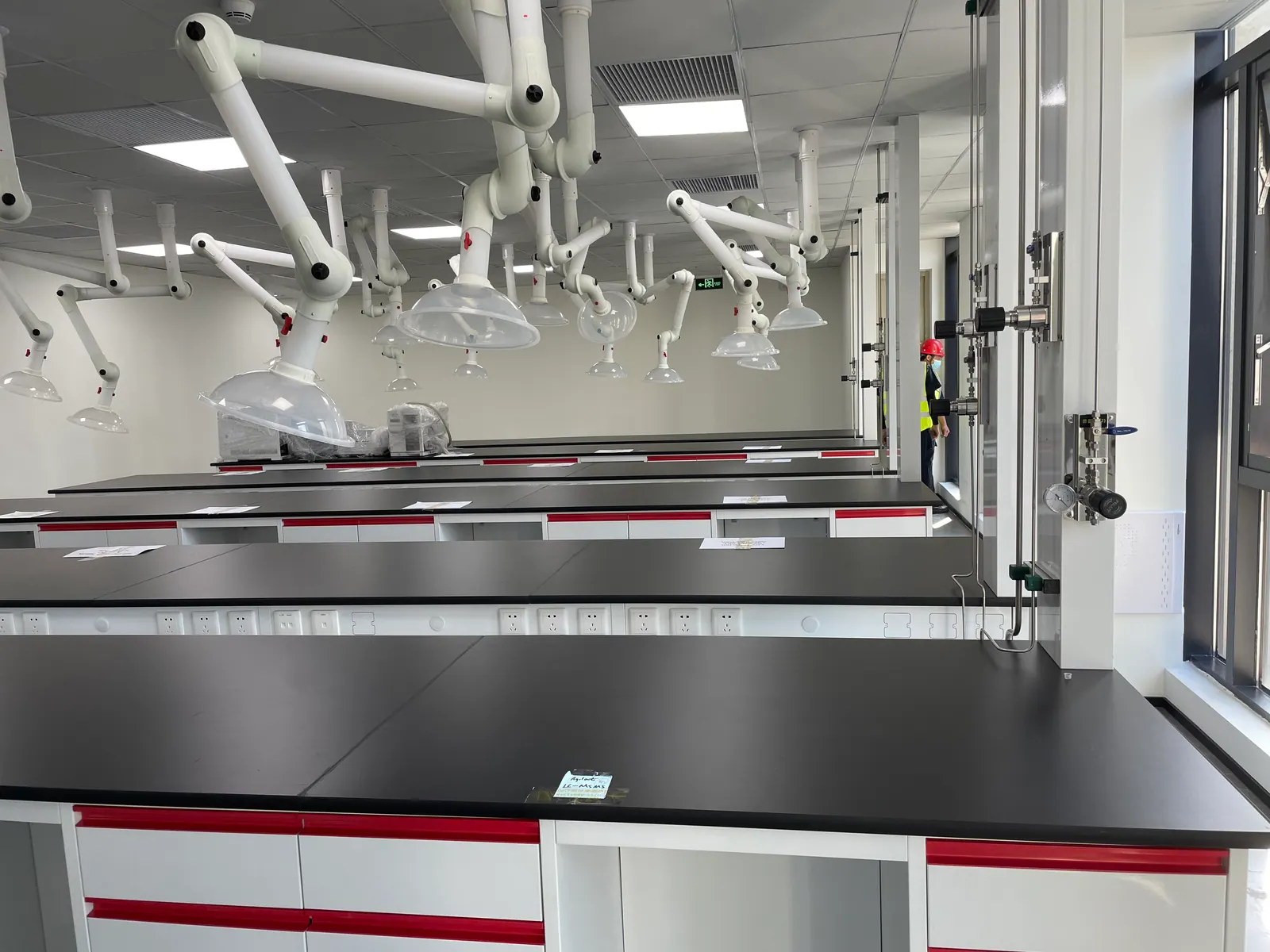
 01 / UNIVERSITY & RESEARCH
University & Research Laboratories
Shared services, multiple users and experiments that change over time.
Explore university and research labs02 / INDEPENDENT TESTINGIndependent Testing Laboratories
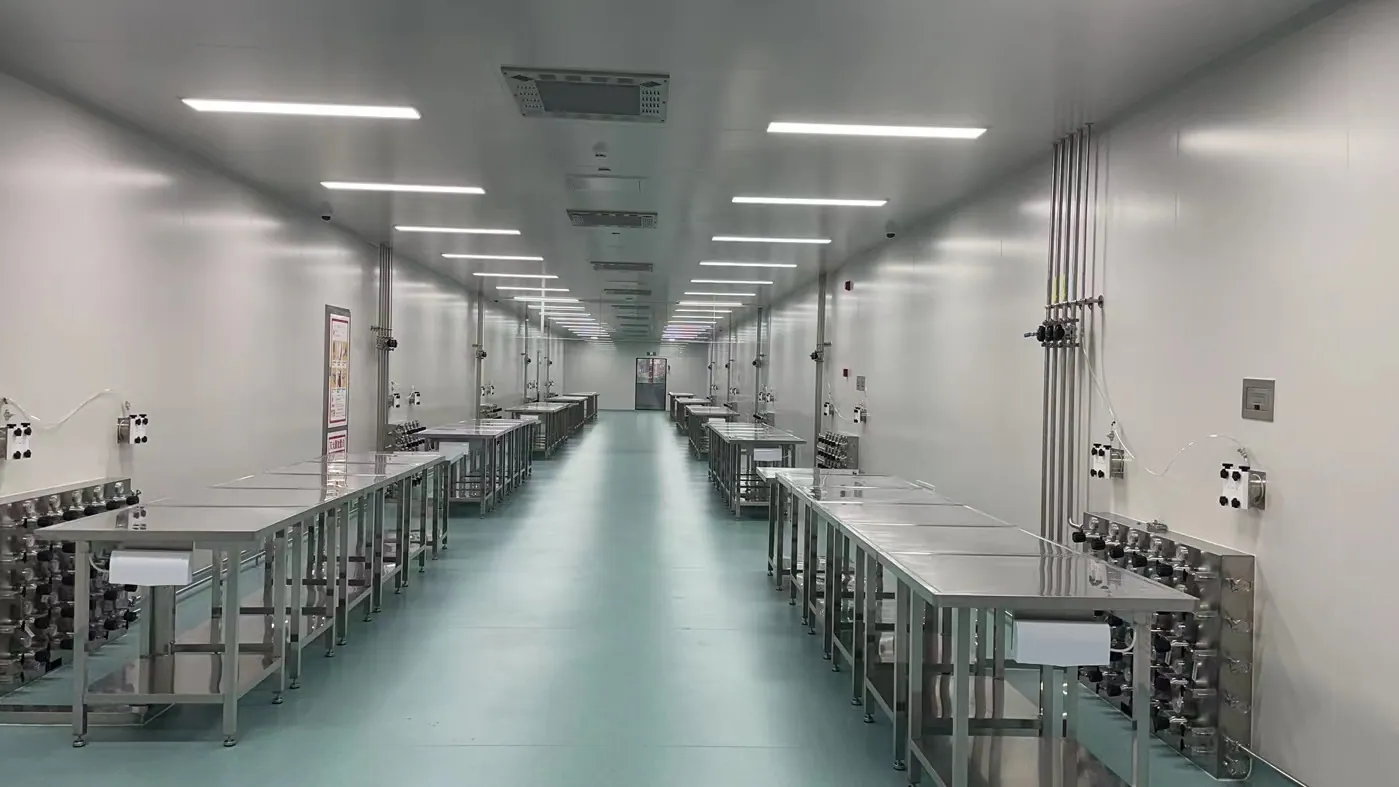
Repeatable instrument supply, calibration control and client delivery continuity.
Explore independent testing labs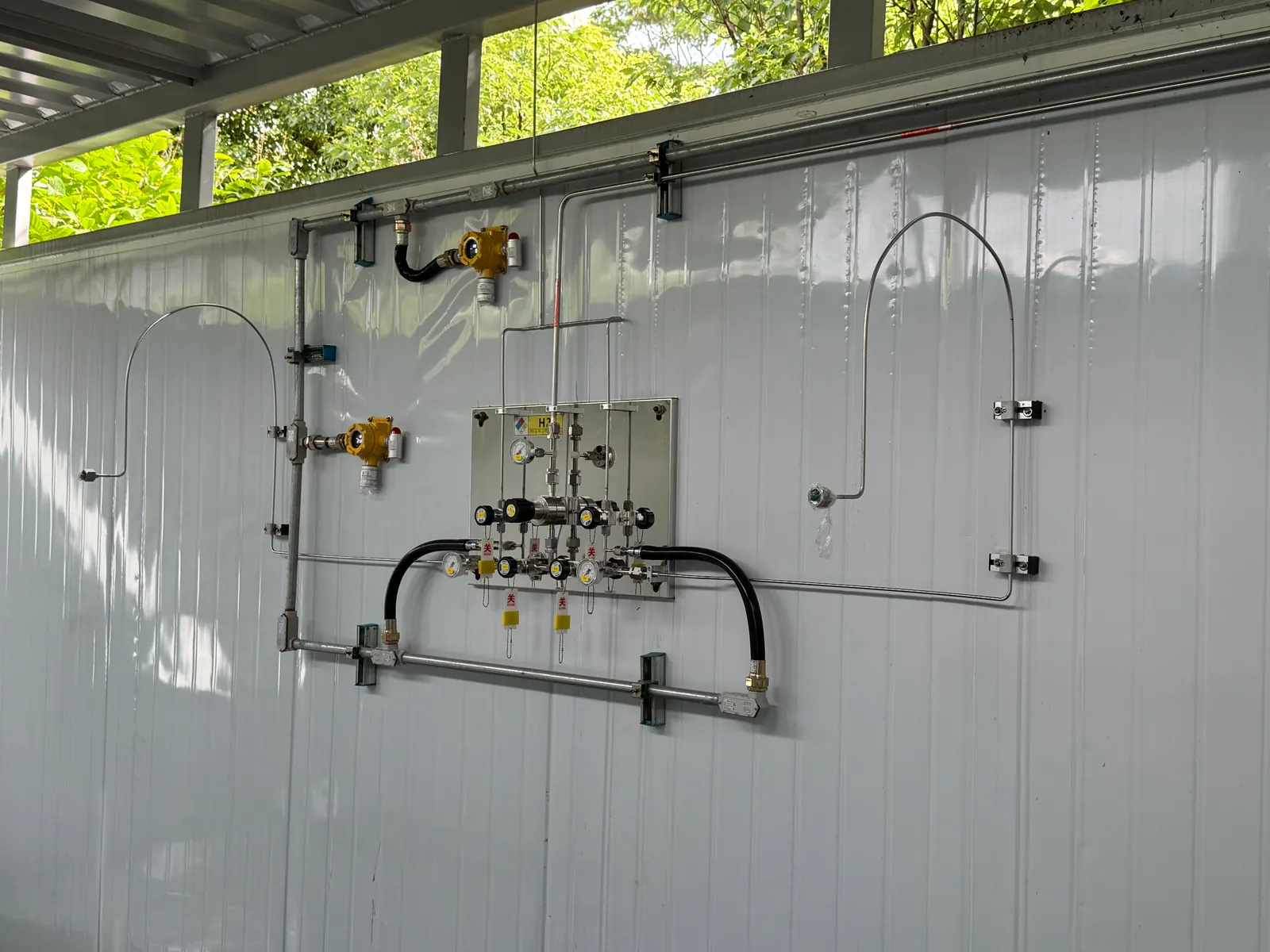 03 / ADVANCED MATERIALS
Advanced Materials R&D Laboratories
High-purity and specialty gases matched to changing process tools.
Explore advanced materials labs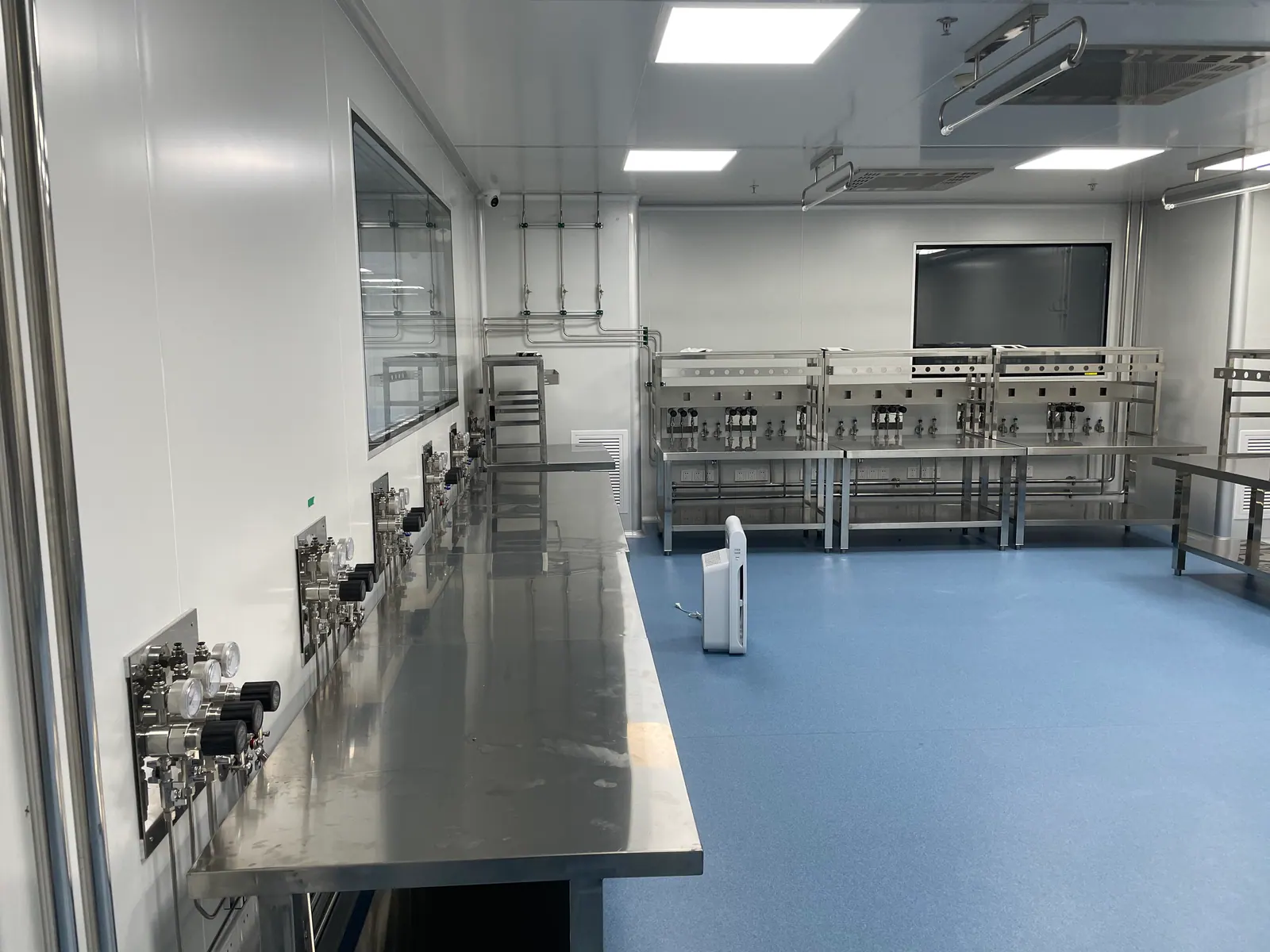 04 / BIOPHARMA & LIFE SCIENCE
Biopharma & Life Science Laboratories
Use-point requirements, utility records and controlled process interfaces.
Explore biopharma labs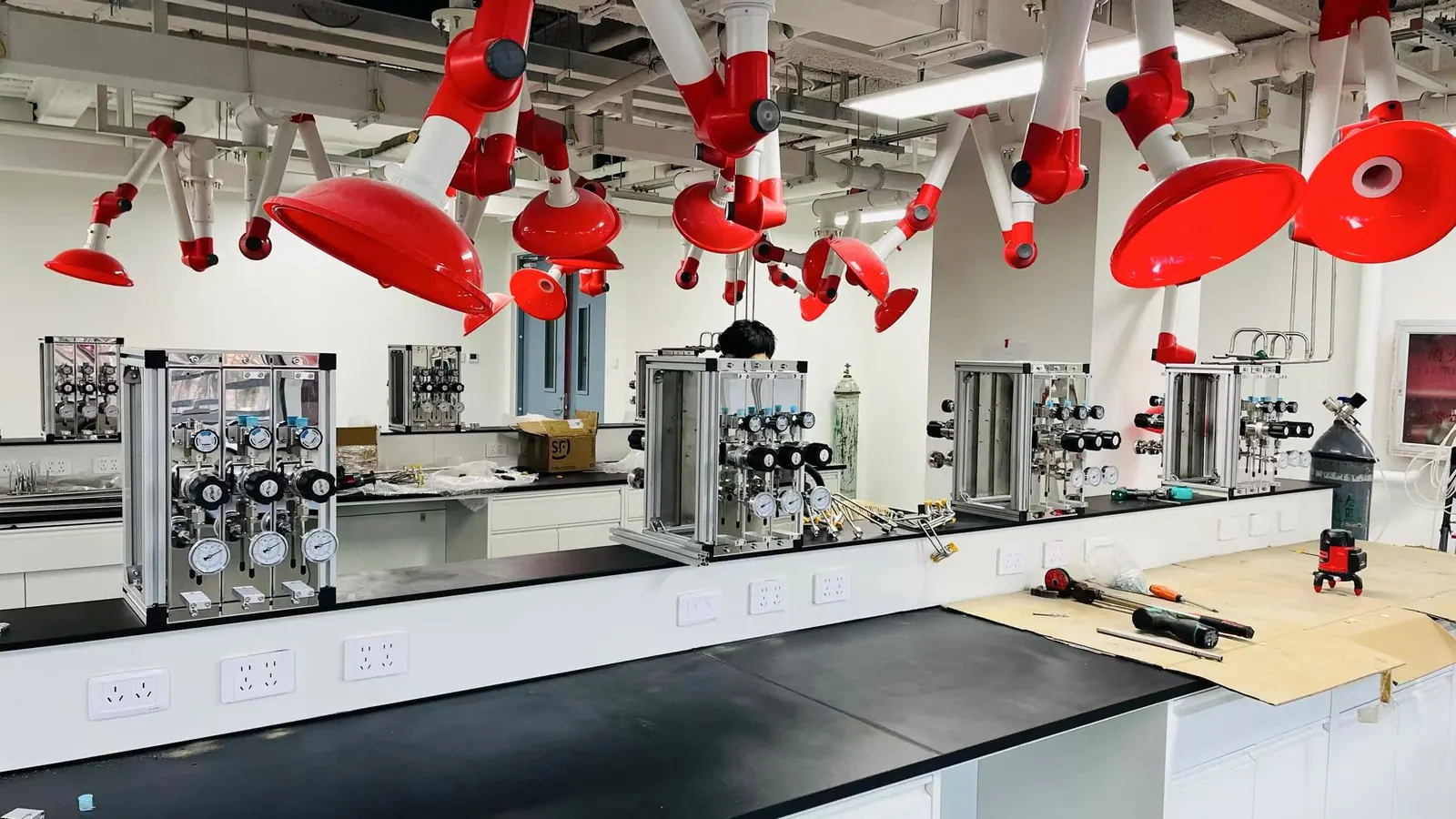 05 / ENVIRONMENTAL ANALYSIS
Environmental & Analytical Laboratories
Method-specific gas quality for environmental GC, ICP and trace analysis.
Explore environmental analysis labs01 / UNIVERSITY & RESEARCH LABORATORIES
Supply research groups without locking the laboratory into one experiment
University and research facilities often serve several instruments, investigators and disciplines from the same building. The question is how to give each team a clear, safe point of use while keeping source changes and distribution maintenance manageable. A gas-use schedule should record the confirmed instruments, the gases and purity grades they require, simultaneous demand and the likely direction of future work.
Shared cylinder rooms and manifolds can reduce routine cylinder handling in occupied laboratories when the facility layout supports them. Local panels can provide labeled isolation and pressure control near a bench. Neither arrangement is universal: a single-room group may need a compact system, while a multi-lab facility may need a broader distribution strategy and defined responsibility for each branch.
- Map shared gases and identify the experiments that need a dedicated clean or hazardous-gas path.
- Keep outlets, regulators and isolation points understandable to changing users.
- Document spare capacity and an approved process for adding instruments later.
Related guide: centralized laboratory gas supply or compact research-lab supply.
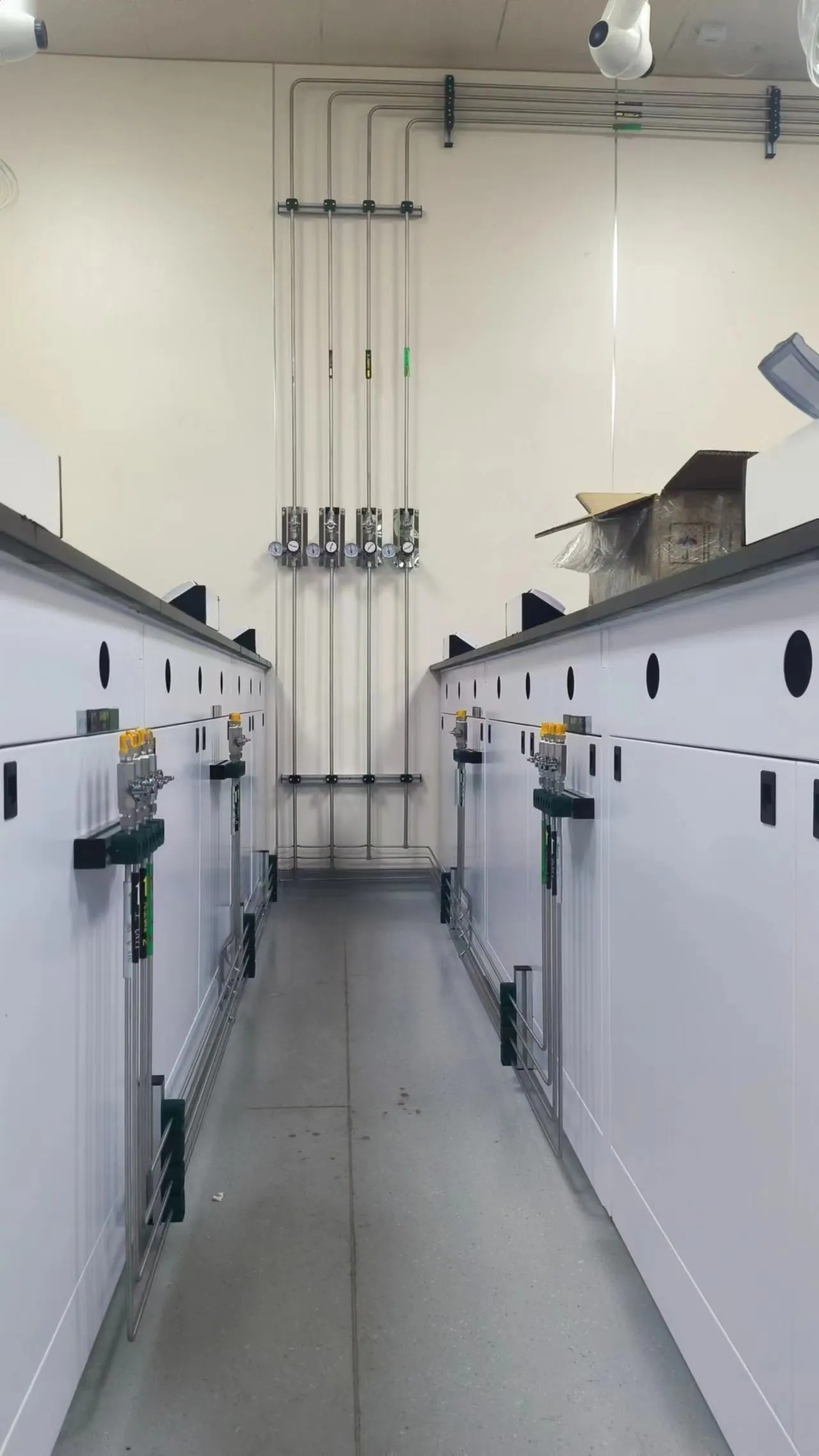
02 / INDEPENDENT TESTING LABORATORIES
Keep a multi-client testing schedule supplied and traceable
Independent testing laboratories run a varied instrument fleet across many client methods and sample schedules. The laboratory needs to know which gas reaches each instrument, at what pressure and quality, and how a cylinder or source change affects a test in progress. The gas system should follow the actual instrument and method requirements, rather than a generic list of common laboratory gases.
A practical layout separates instrument-specific quality requirements from ordinary utility service. Labeled distribution routes, accessible point-of-use shutoffs and a documented source-change plan help users identify and maintain the correct connection. Where a critical instrument cannot tolerate supply loss, a suitable reserve or changeover arrangement can be evaluated against its duty cycle and operating cost.
- Collect every instrument’s inlet connection, pressure, flow and gas-quality requirement.
- Review simultaneous use and source replacement frequency before sizing a manifold.
- Make test points, line labels and maintenance records part of handover.
Explore point-of-use systems and manifold and changeover options.
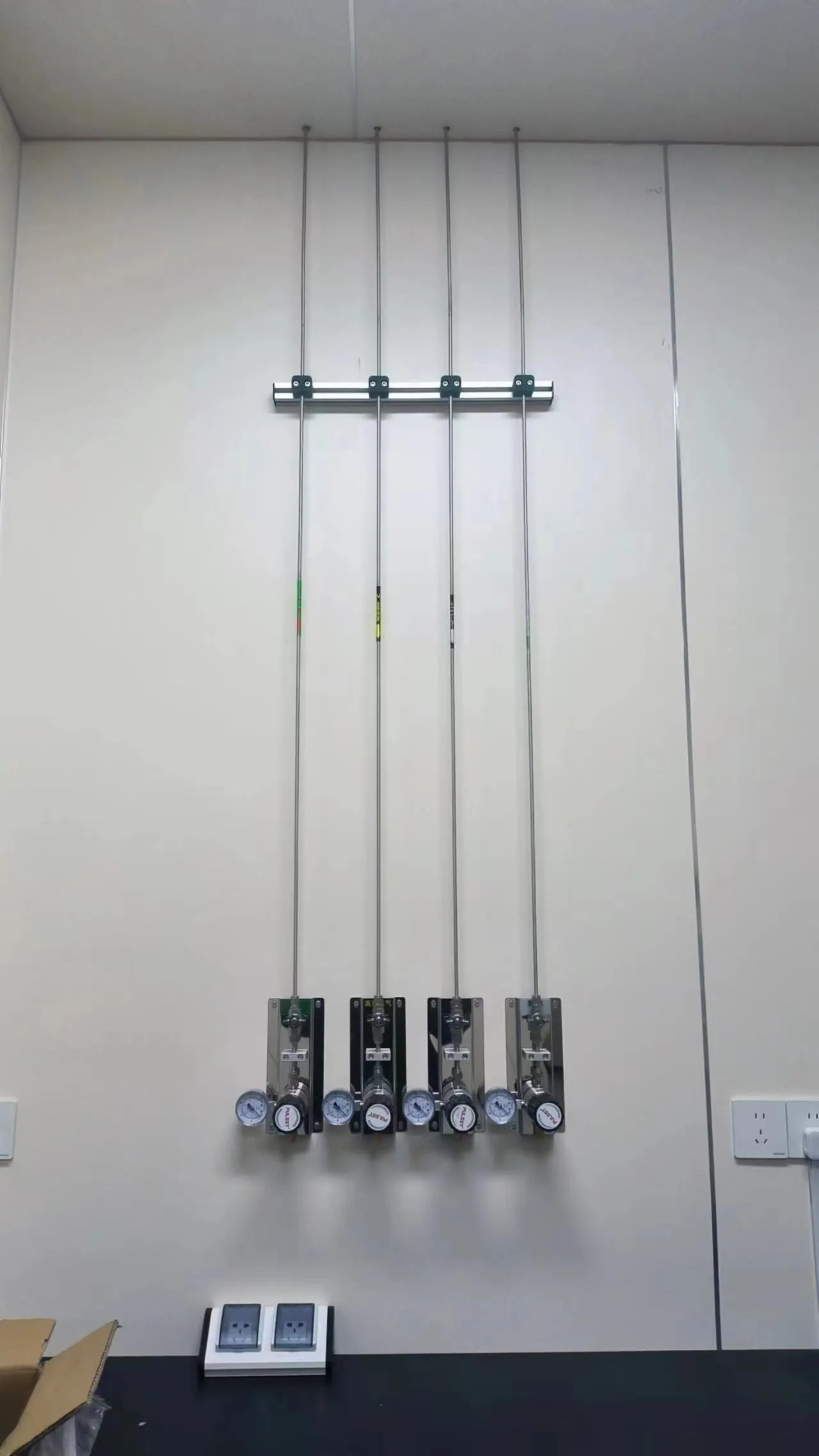
03 / ADVANCED MATERIALS R&D
Connect specialty gases to the process, purity and safety boundary
Materials research can combine high-purity carrier gases with reactive, corrosive or flammable process gases. The right design begins with the process tool and the actual gas composition: inlet pressure and flow, purity target, source connection, use pattern, purge need and exhaust destination. A specialty gas panel is only one part of that path; cabinet ventilation, monitoring and treatment may sit at the boundary between the gas equipment and building systems.
Clean tubing and compatible wetted materials matter when contaminants can affect a process. At the same time, researchers may change recipes or tools as projects evolve. The engineering team should therefore define what can be reconfigured, which changes require a new hazard review, and how an added line will be tested before use. Avoid assuming that one “UHP” specification is suitable for every gas in the room.
- Separate the clean-gas requirement from the chemical-hazard requirement for each service.
- Review cabinet, purge, detection and exhaust interfaces as a connected system.
- Plan documented maintenance access and acceptance tests at the process connection.
Related guides: corrosive and high-purity gas supply and gas exhaust and purge.
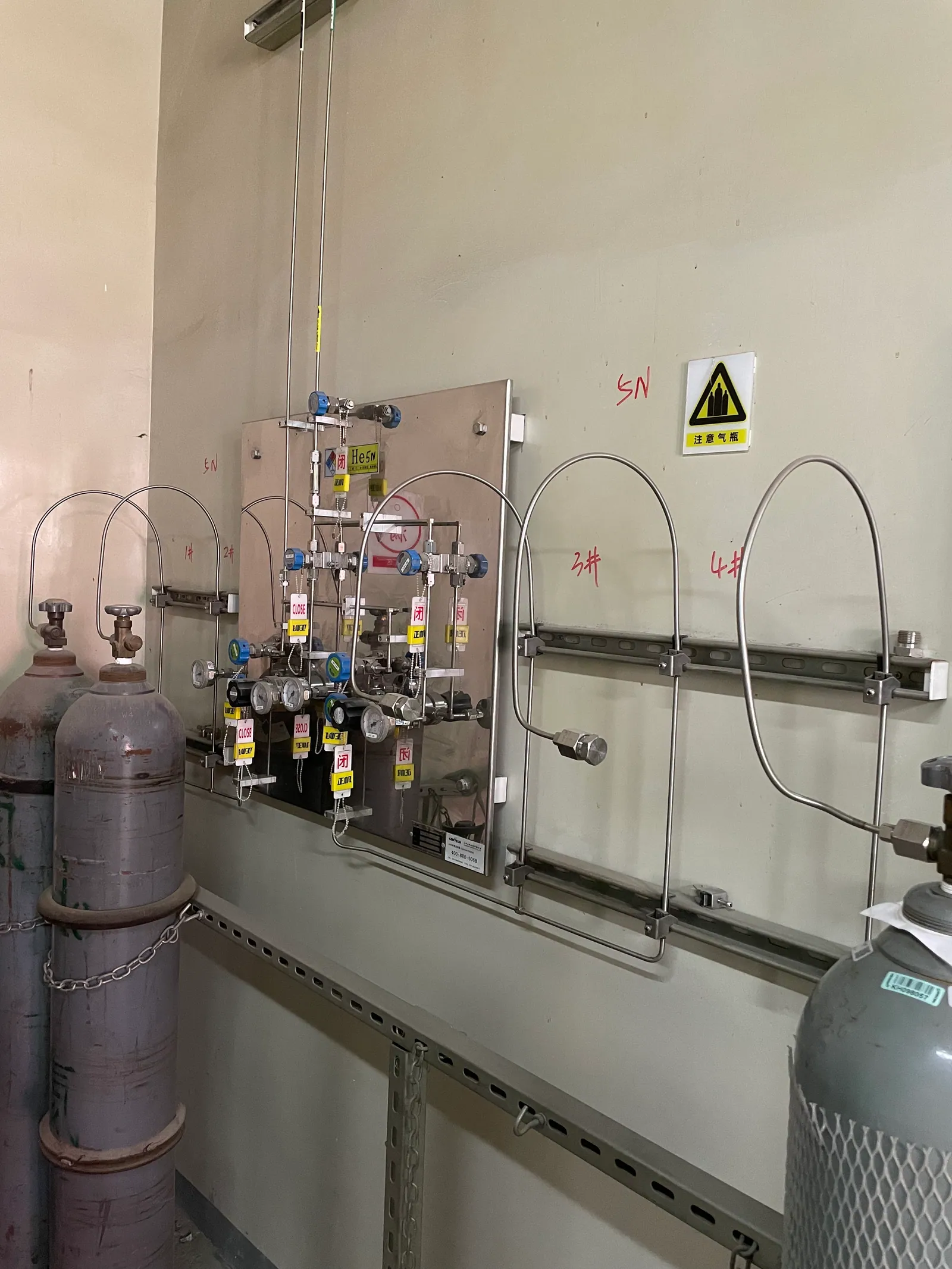
04 / BIOPHARMA & LIFE SCIENCE
Make routine gas service consistent and reviewable
Biopharma and life-science spaces may use gases for analytical instruments, research processes and laboratory utilities. The system scope should distinguish research use from any regulated production or quality-control service. For each application, the team needs to establish the gas quality, delivery pressure, continuity need, cleaning or filtration requirements where applicable, and the records required by the facility’s own quality system.
Source selection and piping are only part of the work. A practical system also supports access for calibration or replacement, line identification, agreed testing and a controlled response when an instrument, room or gas specification changes. If a project is subject to GMP or another regulated framework, its responsible quality and engineering teams must define and approve the applicable requirements; no generic component or marketing statement establishes compliance.
- Identify each gas’s role: instrument utility, process aid or another defined use.
- Specify the records and verification points needed at the actual point of use.
- Coordinate service continuity, maintenance and future modifications with facility operations.
See the centralized supply planning guide and high-purity regulator range.
05 / ENVIRONMENTAL MONITORING & ANALYSIS
Match gas delivery to the analytical method
Environmental sample laboratories may operate GC, GC-MS, ICP and other methods with very different carrier, plasma, purge and calibration-gas requirements. The gas specification should begin with the exact instrument and approved method, then verify pressure, purity and continuity at the instrument inlet.
A clear source-to-use-point route helps analysts investigate a blank, baseline drift or low-pressure event. Separate high-flow utilities from sensitive specialty-gas channels when their duties differ, and plan the source-change procedure around real analytical schedules.
- Build a method-to-gas matrix for each instrument and analytical role.
- Confirm simultaneous demand and source reserve during peak campaigns.
- Document calibration mixtures, local terminals and return-to-service checks.
Explore environmental and analytical laboratory gas supply →
FROM APPLICATION TO PROJECT BRIEF
What to share before selecting a gas system
A useful enquiry connects the laboratory workflow to the equipment and building interfaces. Share what is known; identify unknowns early rather than filling the design with assumptions.
People & process
Laboratory type, instruments, operating hours, expected growth and the team responsible for routine gas changes.
Gas requirements
Gas identities and mixtures, quality grades, inlet and outlet pressures, peak flow and number of use points.
Facility interfaces
Room drawings, source location, ventilation, available utilities, monitoring, exhaust and local approval constraints.
Acceptance & handover
Required drawings, material records, test methods, operating procedures and maintenance responsibilities.
Application pages explain the setting; the Solutions hub explains system architecture, and the Products page shows equipment families. The final configuration is reviewed for the actual gas, site and use.
DISCUSS YOUR APPLICATION
Tell us what your laboratory needs to run.
Send a room plan, gas and instrument list, purity and pressure requirements, and any known safety or building constraints. LGF Lab Gas Flow can help define a reviewable source-to-point-of-use equipment scope.