
LGF Lab Gas Flow / PROJECT CASES
Laboratory Gas System Project Cases
Explore how laboratory gas supply projects differ across university research, research institutes, independent testing and biopharmaceutical work. The project photographs show practical source, piping and point-of-use arrangements; each system still begins with its own gas list and facility brief.
FOUR PROJECT SETTINGS
Find a project setting close to your laboratory
These case introductions focus on the decisions that shape a laboratory gas distribution system, rather than repeating the technical guidance on our Solutions page. The supplied engineering photographs illustrate real equipment and routing details, but photographs alone cannot establish the full project scope, testing record or operating performance. Select a setting below to see the relevant planning questions and images.
01 / UNIVERSITY LABORATORIES
University Laboratory Specialty Gas Upgrade
A university laboratory renovation often has to connect new instruments to a building with existing services. The project team first maps which gases are shared, which require a dedicated specialty-gas path, and where source changes can be managed without disrupting teaching or research. The resulting layout may combine stainless-steel laboratory gas piping with local pressure control and labeled outlets.
The photos here show routing details that matter in an upgrade: how lines pass through constrained spaces, how branches stay identifiable and how future access is preserved. A planning review should also cover safe isolation of existing lines, compatibility of reused equipment, room ventilation and the sequence for bringing each instrument back into service.
- Record every instrument’s gas grade, inlet pressure and expected flow before changing a branch.
- Separate common utility gases from sensitive or hazardous specialty-gas services.
- Plan line identification, access and a documented test before handover.
Related planning:Laboratory Gas Piping Design →
Full project case:Read University Laboratory Specialty Gas Upgrade →
02 / RESEARCH INSTITUTES
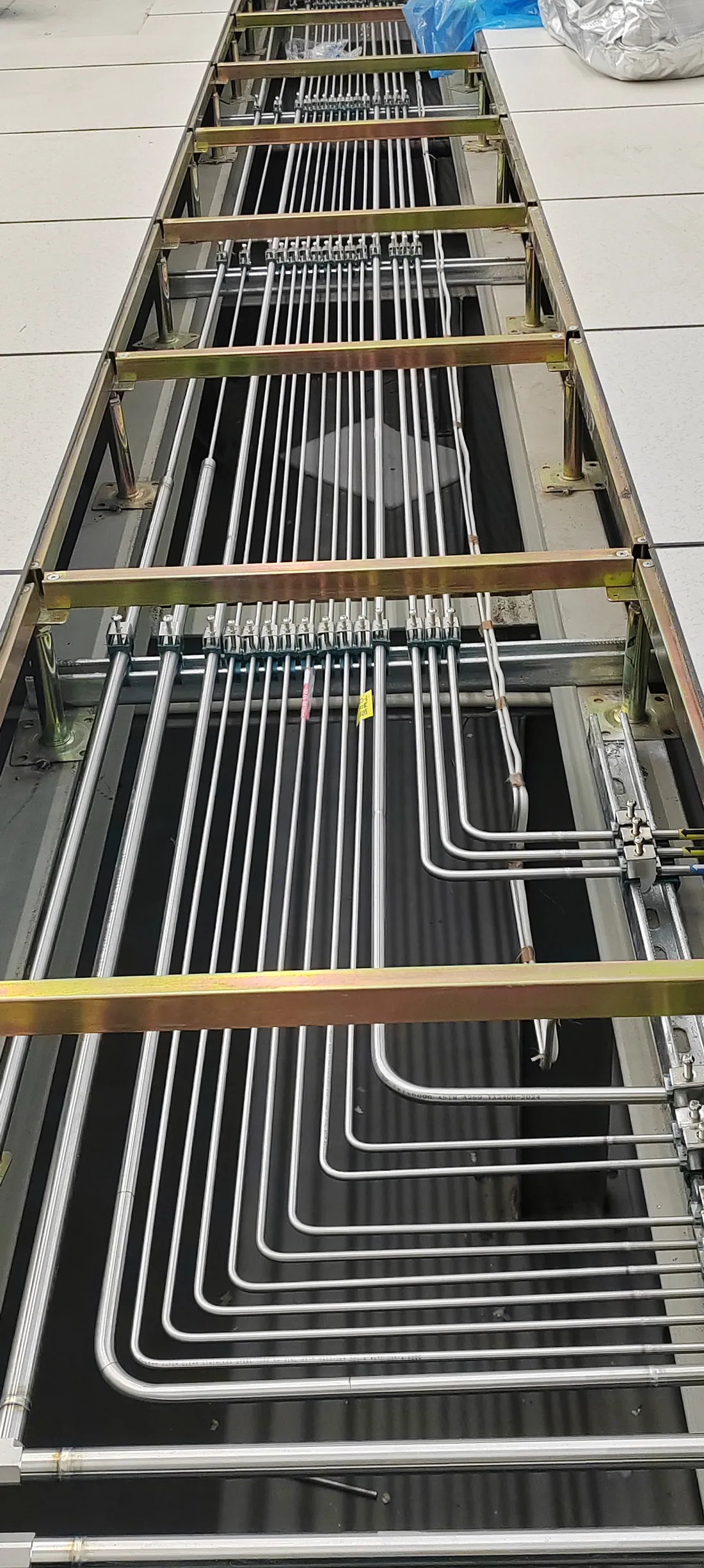
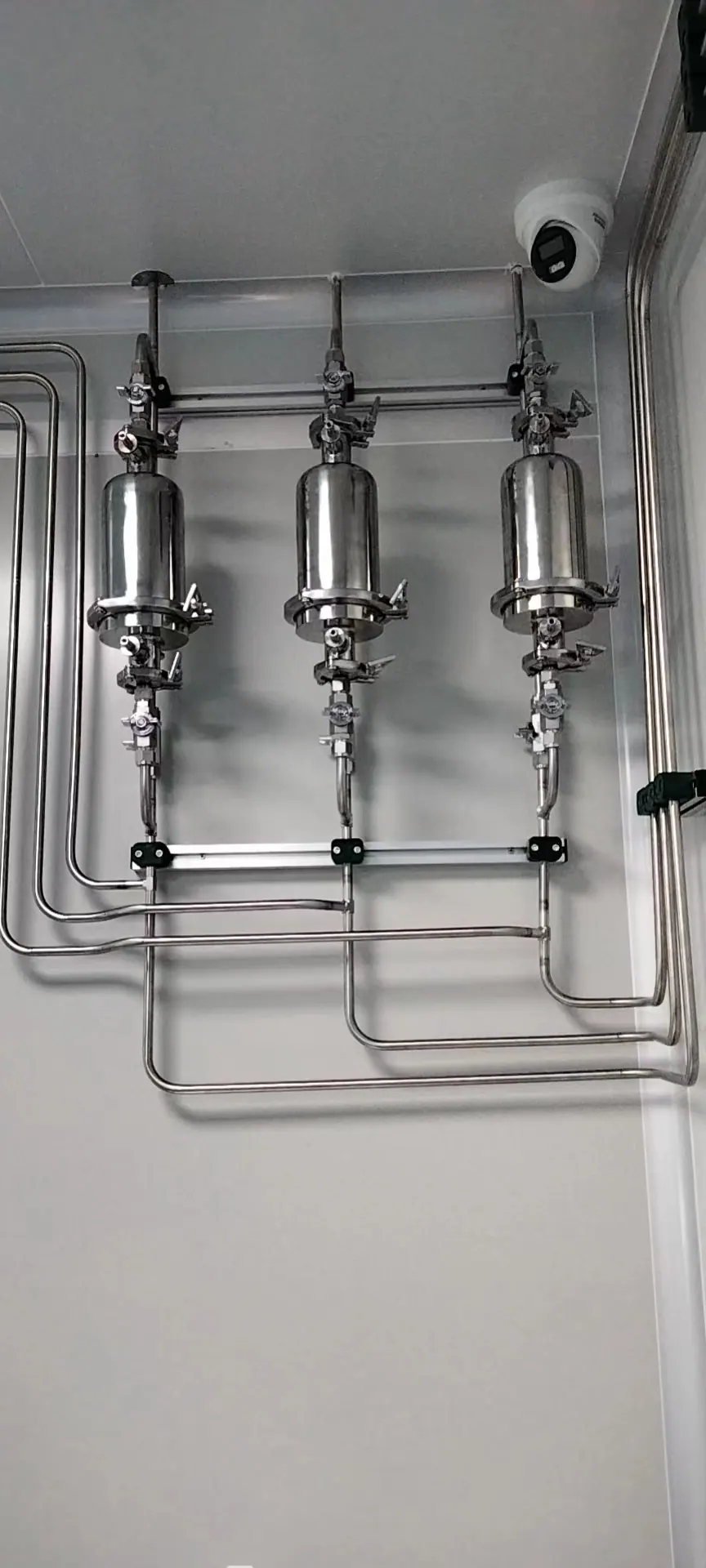
Research Institute Gas Supply Engineering
Research institutes may operate several experimental platforms with different pressure, purity and gas-compatibility requirements. A single “high-purity” label is not enough to select a line: the gas chemistry, source connection, wetted materials, purge method and process-tool interface all need review. Where gases are reactive or hazardous, the source and distribution layout must also be coordinated with the facility’s monitoring, ventilation and exhaust design.
This project setting emphasizes the path between the source and experiment. Support spacing, bend locations, clean handling and accessible isolation points affect both initial installation and later changes. The case photos focus on physical routing and service connections, not an implied claim about a particular gas grade or achieved cleanliness.
- Create a gas-by-gas matrix for equipment demand, source duty and safety interfaces.
- Review stainless-steel line materials and connections against the actual media.
- Define leak-test and acceptance evidence before the system enters service.
Related planning:Corrosive & High-Purity Specialty Gas Supply →
Full project case:Read Research Institute Gas Supply Engineering →
03 / TESTING ORGANIZATIONS
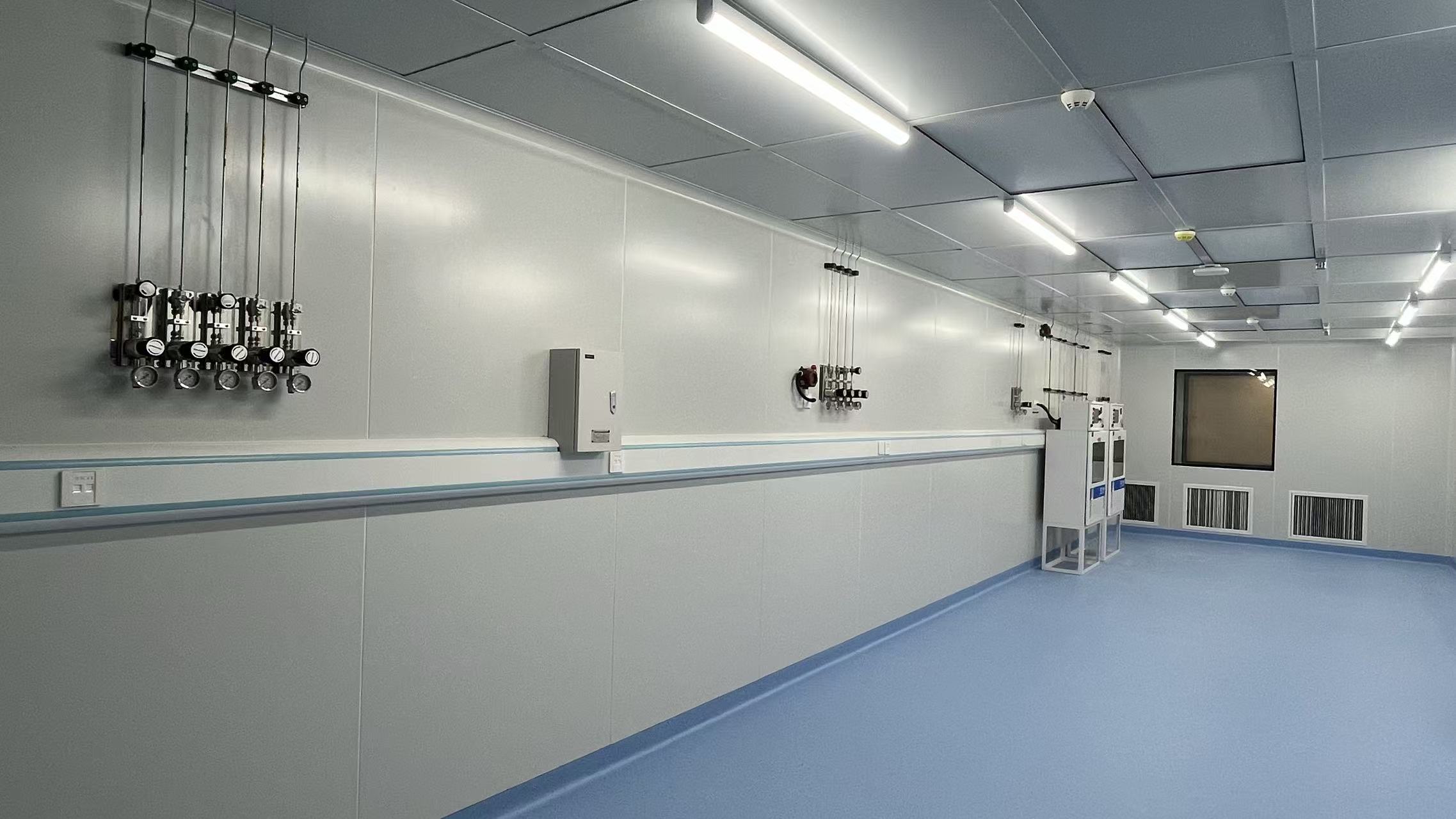
Centralized Gas Supply for Testing Laboratories
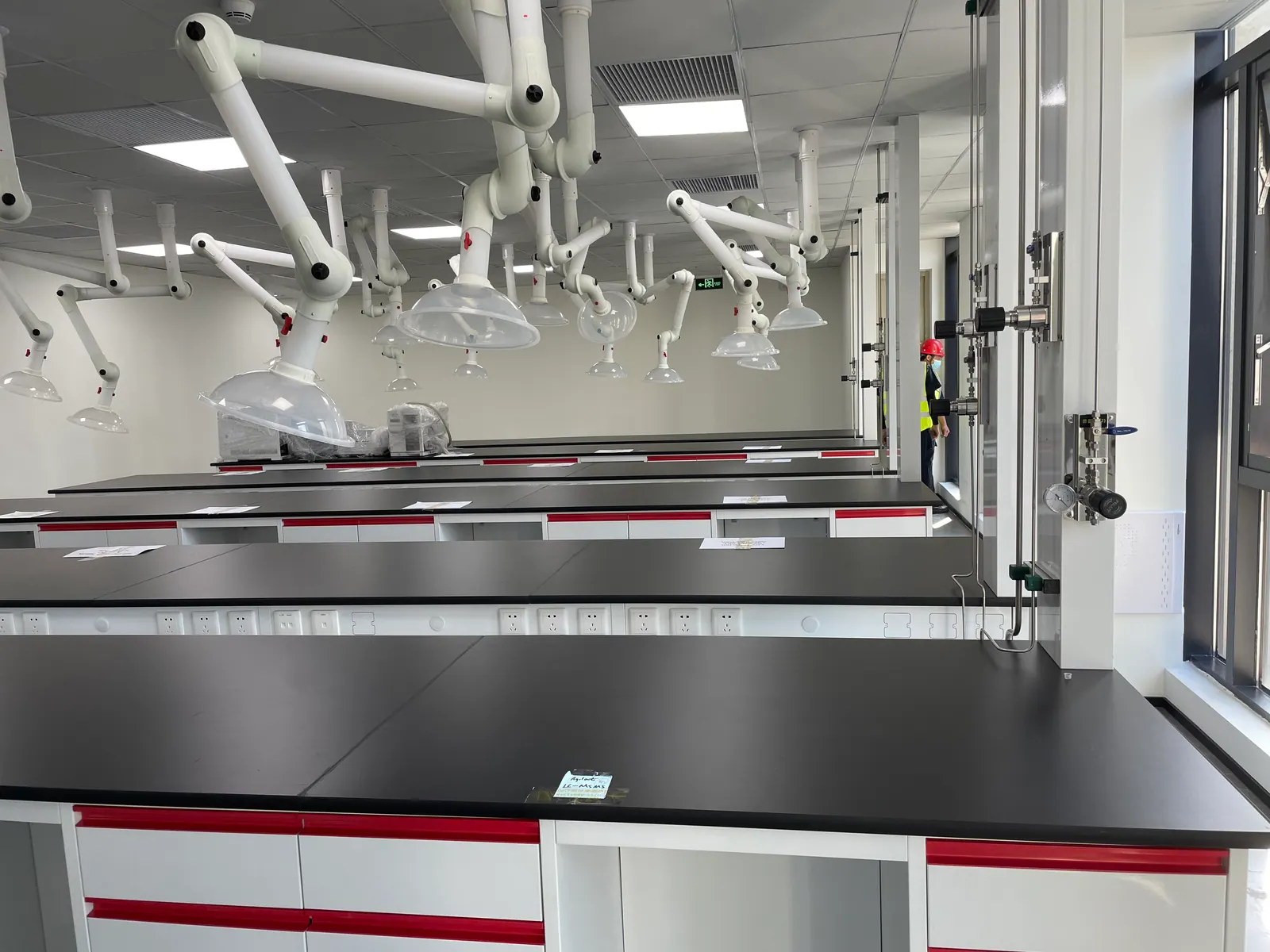
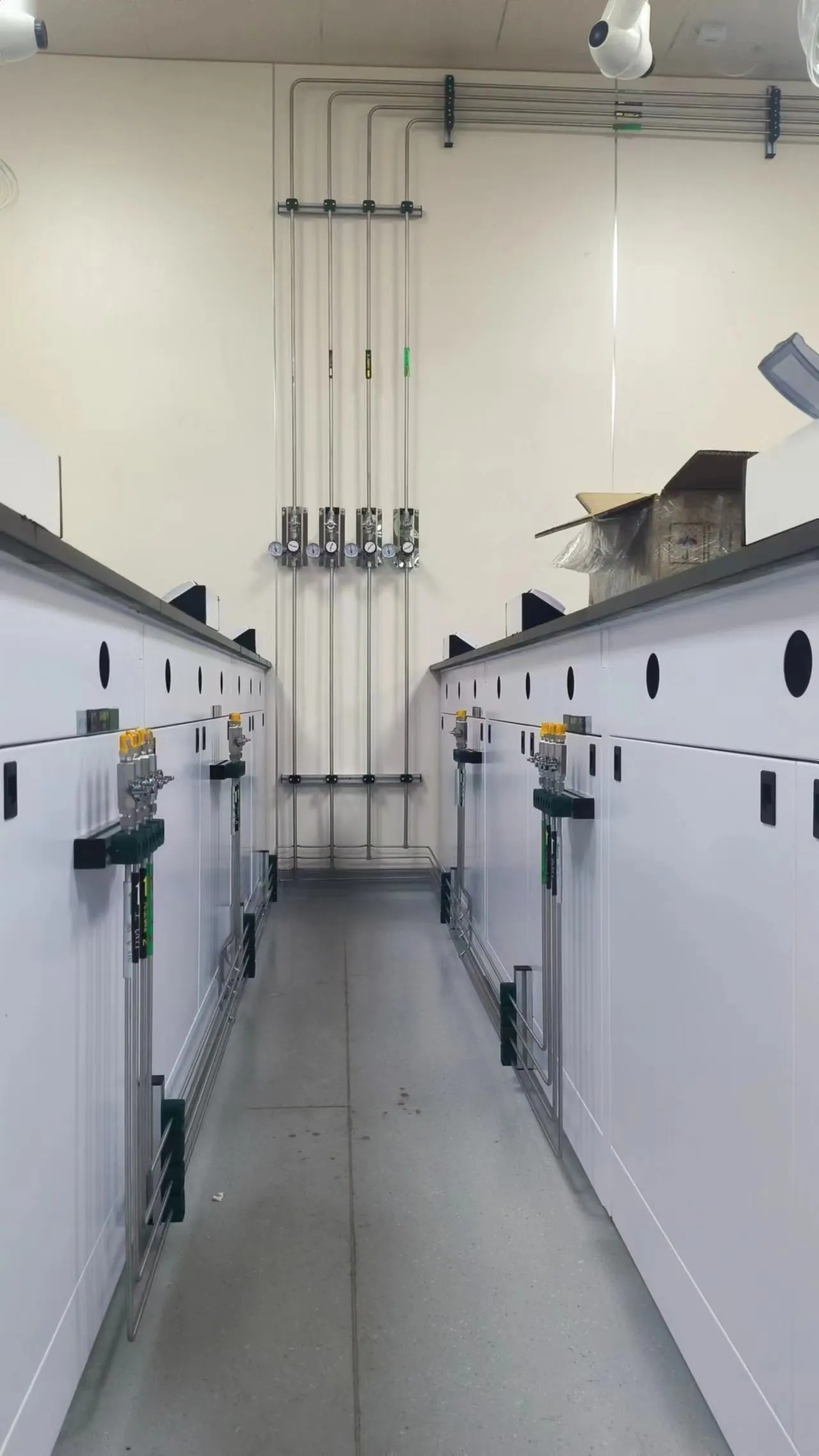
An independent testing laboratory needs reliable gas delivery across many methods and instruments. A centralized laboratory gas supply system can move routine cylinder management away from the workbench while keeping each outlet, gas identity and pressure-control point understandable to analysts. The starting document is an instrument schedule: carrier, fuel, plasma, purge and calibration services may need different quality or continuity arrangements.
Central supply is useful only when the layout makes cylinder replacement, changeover and maintenance practical. The photographs illustrate laboratory rooms and local terminal routes; the final manifold capacity, reserve arrangement and point-of-use equipment depend on actual consumption and operating schedules. Clear labeling and a recorded return-to-service process help prevent an unnoticed connection change from affecting analytical work.
- Group instruments by gas, quality, pressure and simultaneous demand.
- Locate source changeover and local isolation where staff can reach them.
- Verify outlet identity and operating pressure at every instrument connection.
Related planning:Centralized Laboratory Gas Supply →
Full project case:Read Centralized Gas Supply for Testing Laboratories →
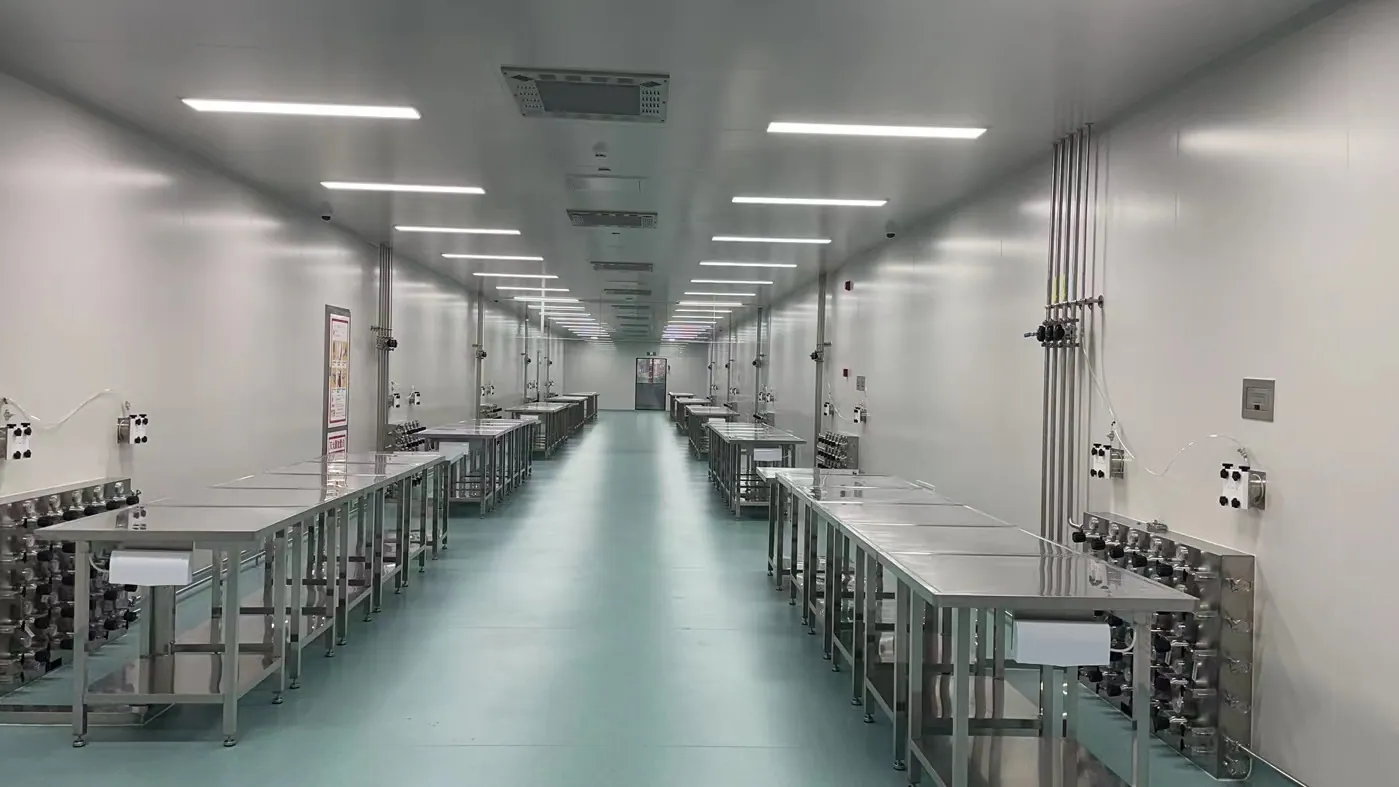
04 / BIOPHARMACEUTICAL LABORATORIES
Biopharmaceutical Laboratory Specialty Gas Project
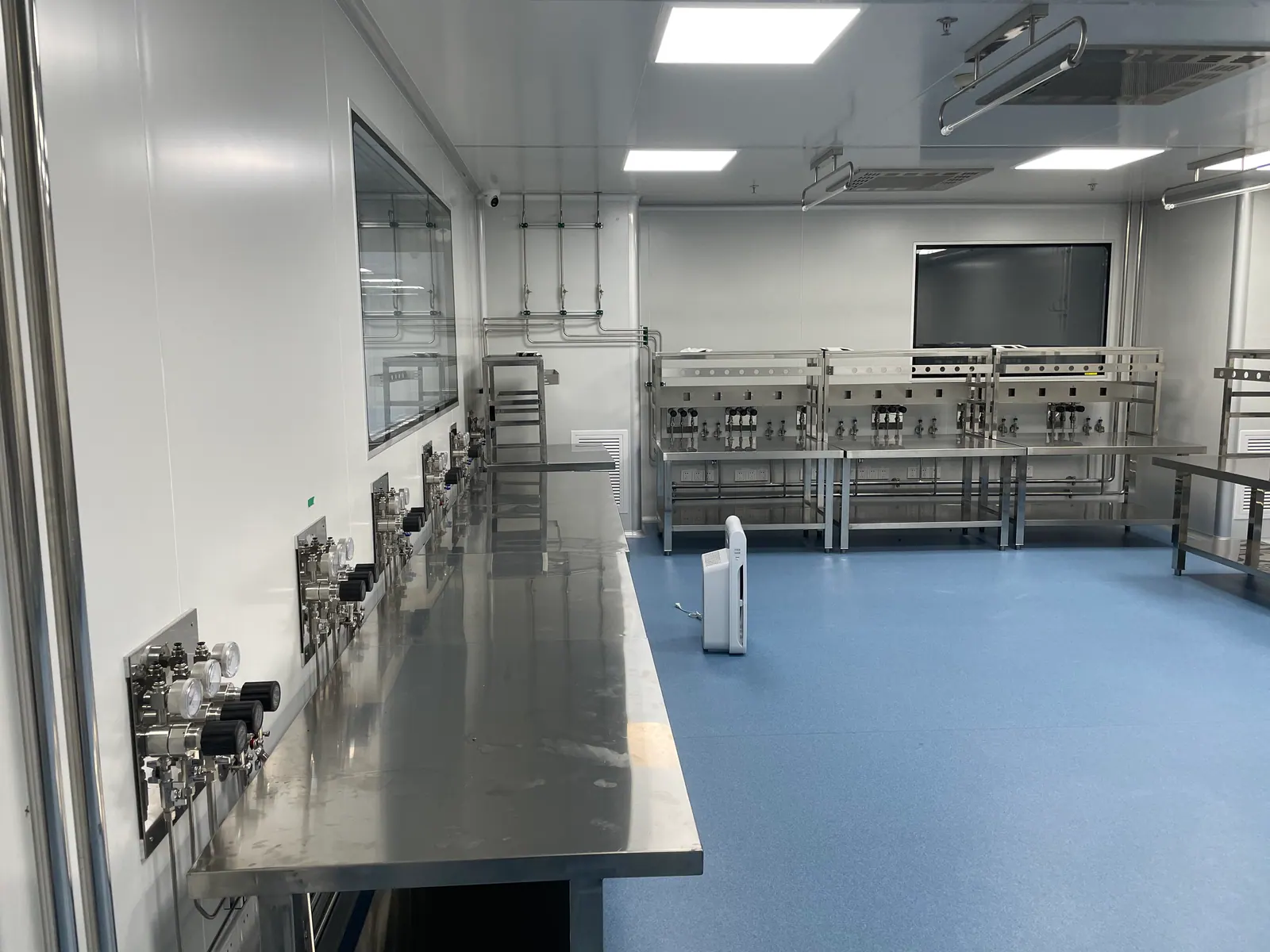
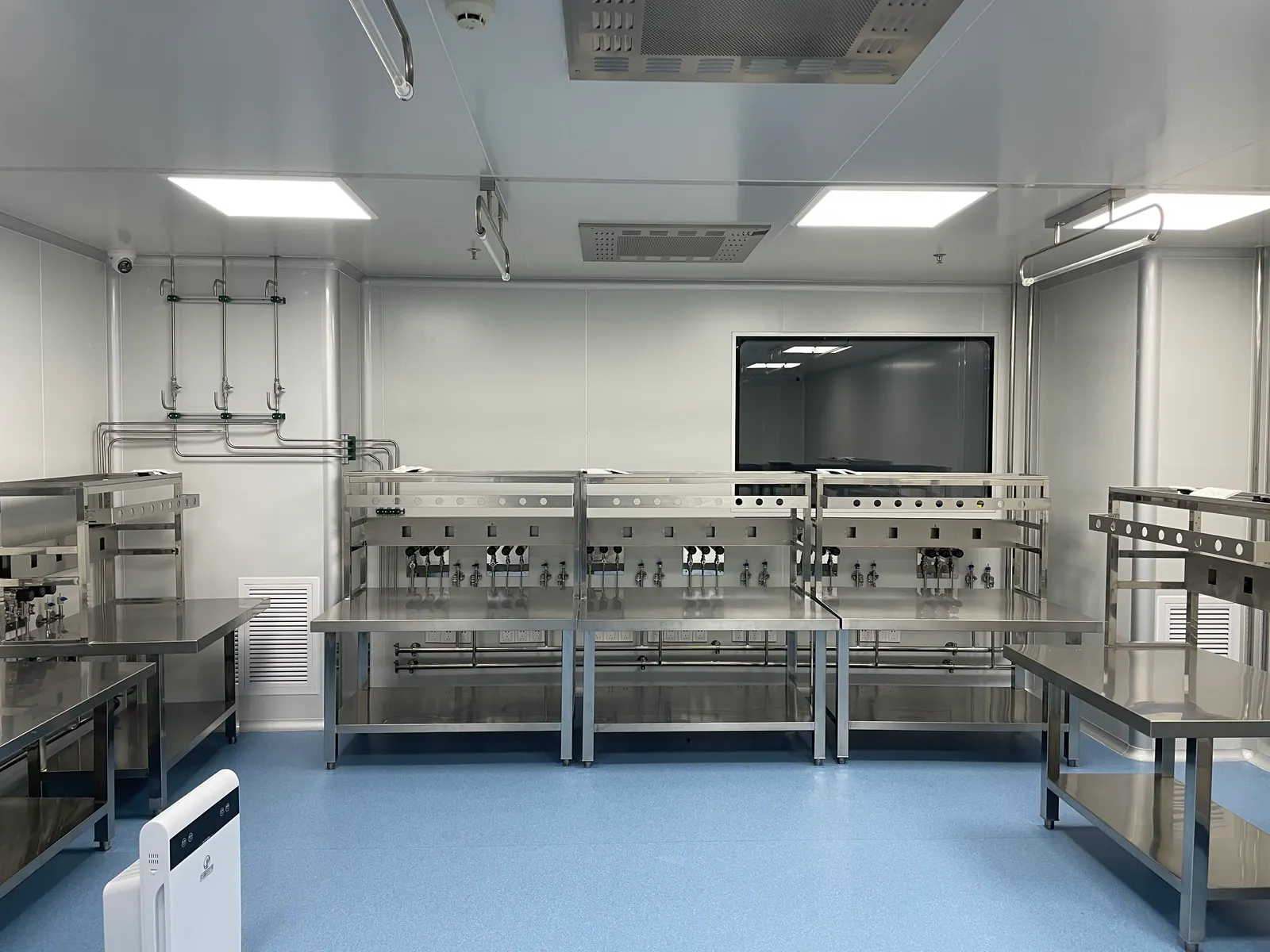
Biopharmaceutical laboratory gas projects may serve analytical equipment, research workstations and controlled utility points in the same facility. The project brief should identify the role of each gas and the quality, pressure and continuity required at the actual point of use. Requirements for regulated work must be defined by the facility’s responsible engineering and quality teams rather than inferred from a component description.
The images show how stainless-steel distribution and bench-level services can be organized in a laboratory space. For procurement and handover, the useful record includes the approved gas list, route and outlet schedule, component specifications, inspection and test results, and a procedure for later modifications. That makes the system easier to maintain as instruments and room use change.
- Keep instrument utilities distinct from any process-critical gas service.
- Agree on material, cleaning and verification requirements for each line.
- Document each source, branch and point-of-use connection before use.
Related planning:Laboratory Gas Pipeline Installation →
Full project case:Read Biopharmaceutical Laboratory Specialty Gas Project →
FROM CASE TYPE TO PROJECT SCOPE
What makes a useful laboratory gas project brief?
Send a room plan and instrument list, identify each gas and quality grade, and note source pressure, required outlet pressure, peak flow, operating hours and any planned expansion. Add the site’s ventilation, exhaust, monitoring and access constraints. With these facts, LGF Lab Gas Flow can discuss a suitable source-to-point-of-use arrangement and the equipment needed to develop it.
The photographs are drawn from the supplied project image library and show visible system elements. They do not establish customer identity, equipment certification, gas purity, completed testing or performance for the project described in a section.
DISCUSS YOUR LABORATORY PROJECT
Bring the gas list and room plan. We will help define the scope.
Tell us whether your project is a renovation, a new research facility, a testing laboratory or a biopharmaceutical installation. We can review the source, distribution and point-of-use equipment that fits the operating brief.