
LGF LAB GAS FLOW / PROJECT CASES
Biopharmaceutical Laboratory Specialty Gas Project
Biopharmaceutical research and analytical rooms can contain several gas services with different roles. This illustrated project case focuses on how to keep the path from source to workstation clear, serviceable and documented as room layouts and instruments change.
AN ILLUSTRATED PROJECT REVIEW
How this laboratory gas project takes shape
The term biopharmaceutical laboratory covers varied activities. A research bench, analytical instrument and process-support room may share a building while imposing different requirements on gas quality, availability and documentation. The correct gas delivery arrangement begins with the intended use of each outlet. No blanket statement about cleanroom class, validation status or process suitability can be made from a photograph of stainless-steel equipment.
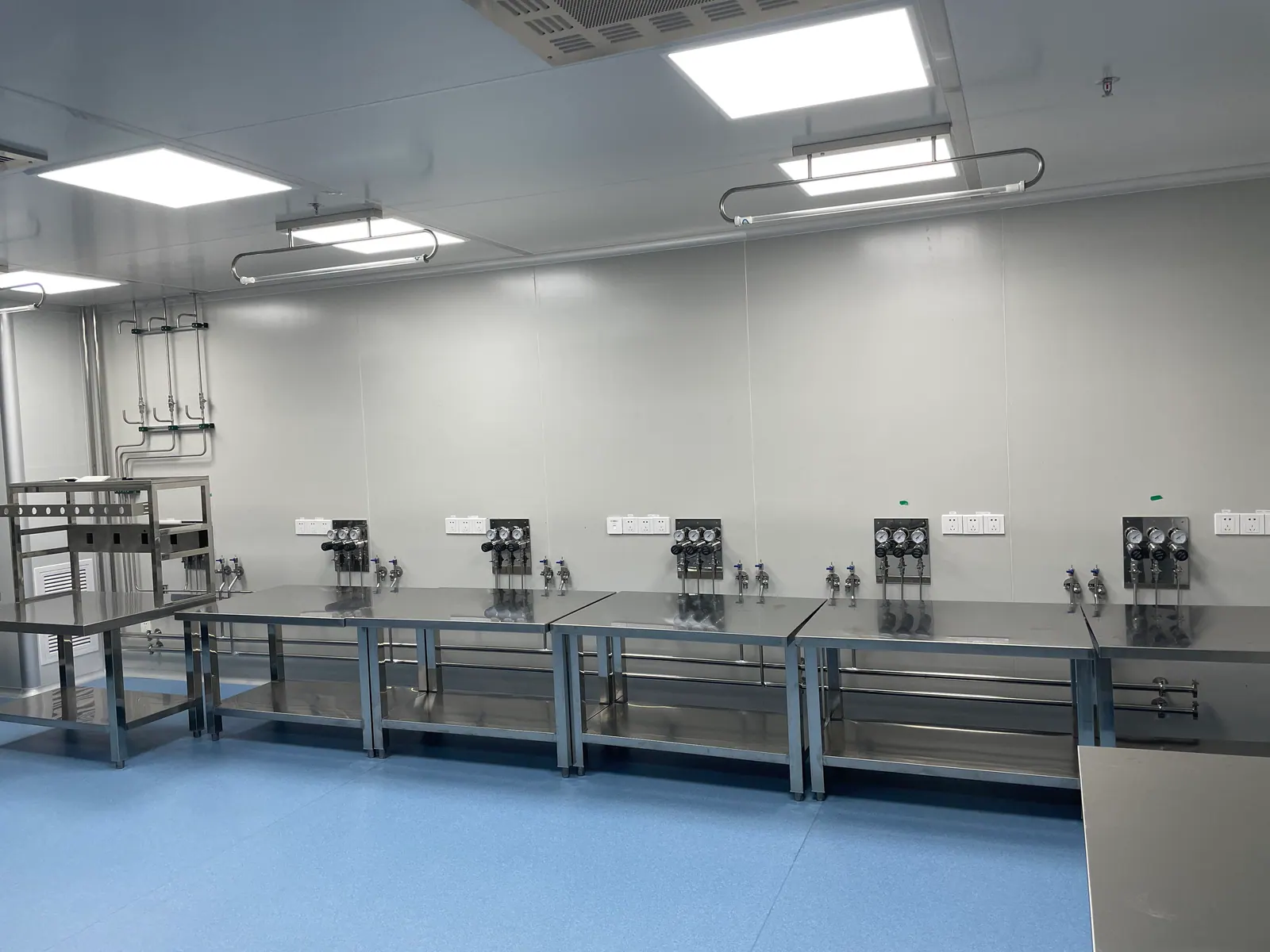
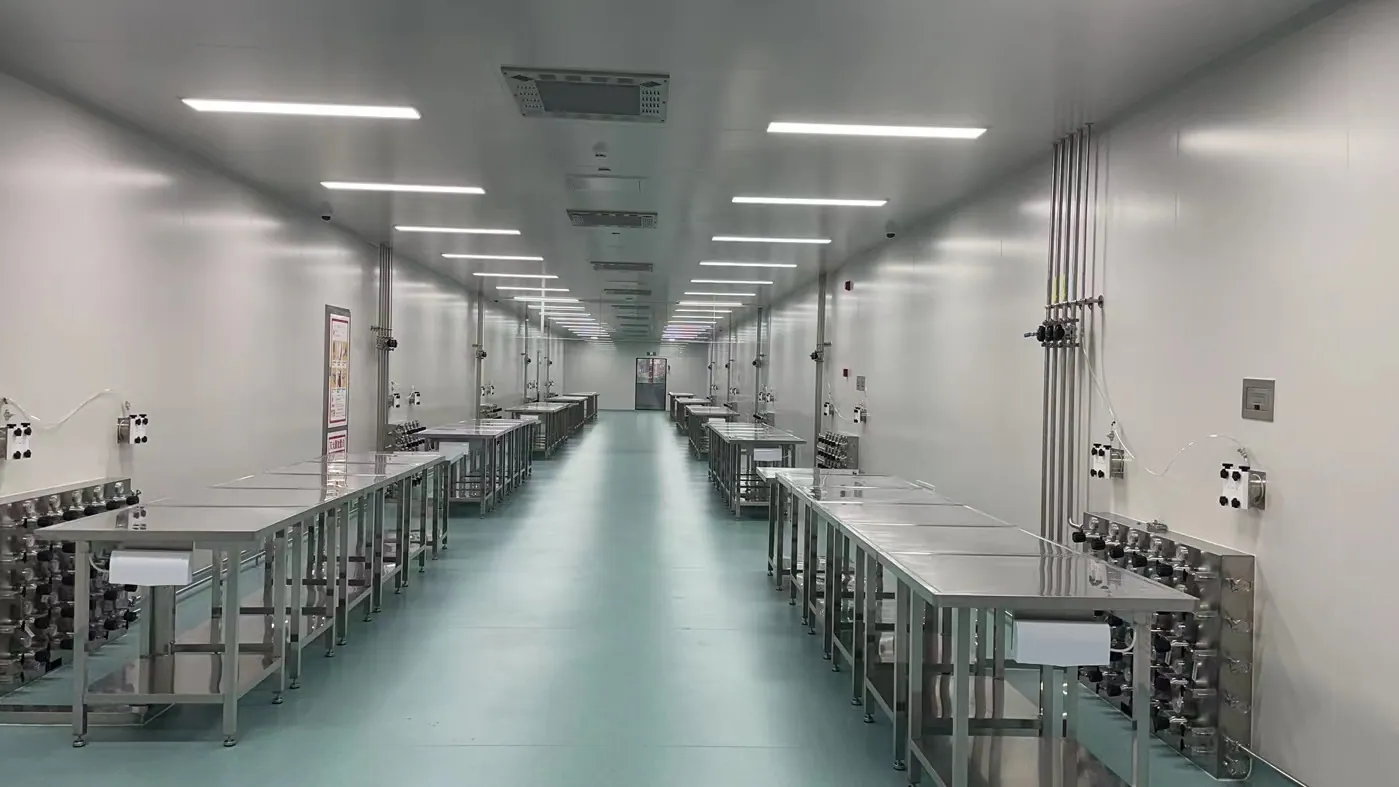
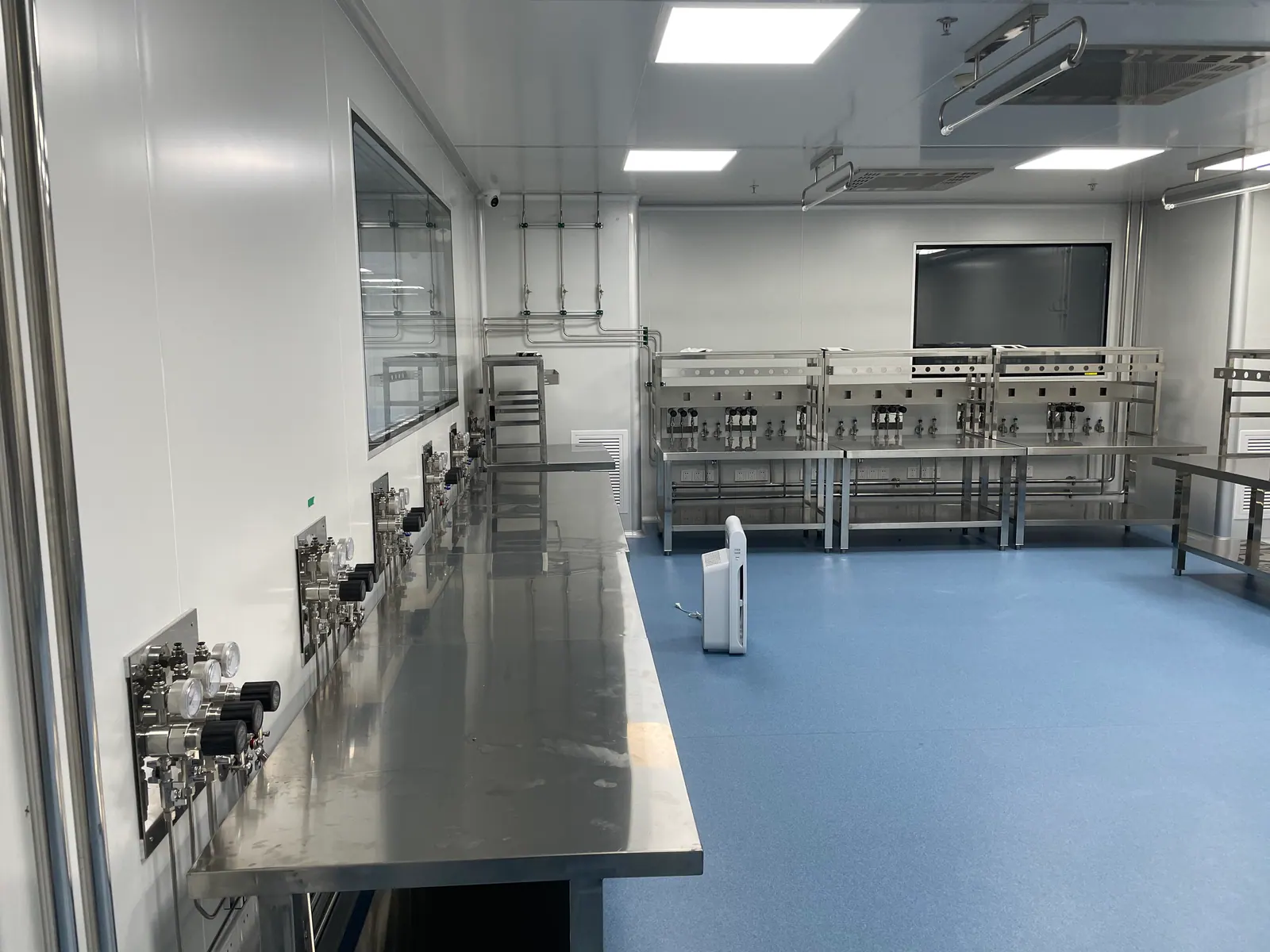
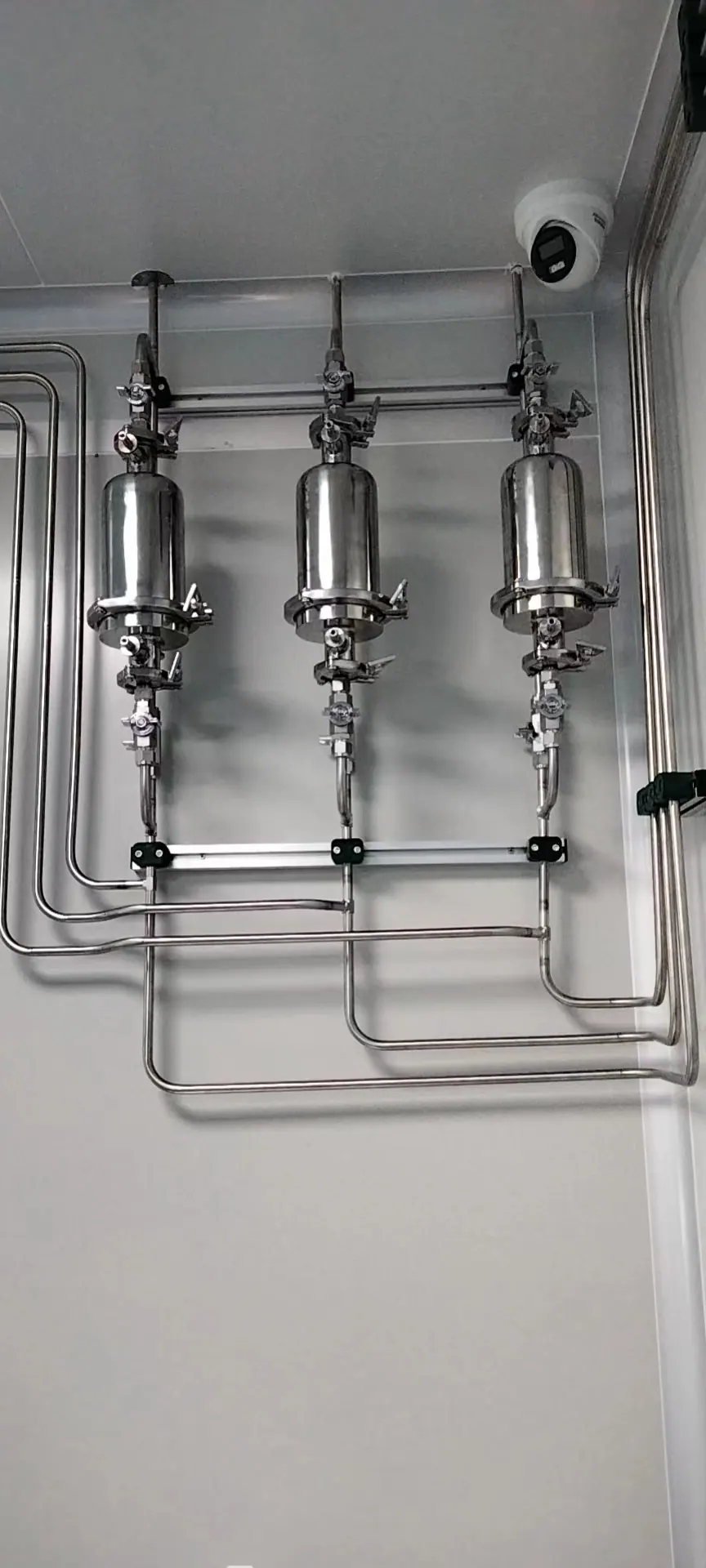
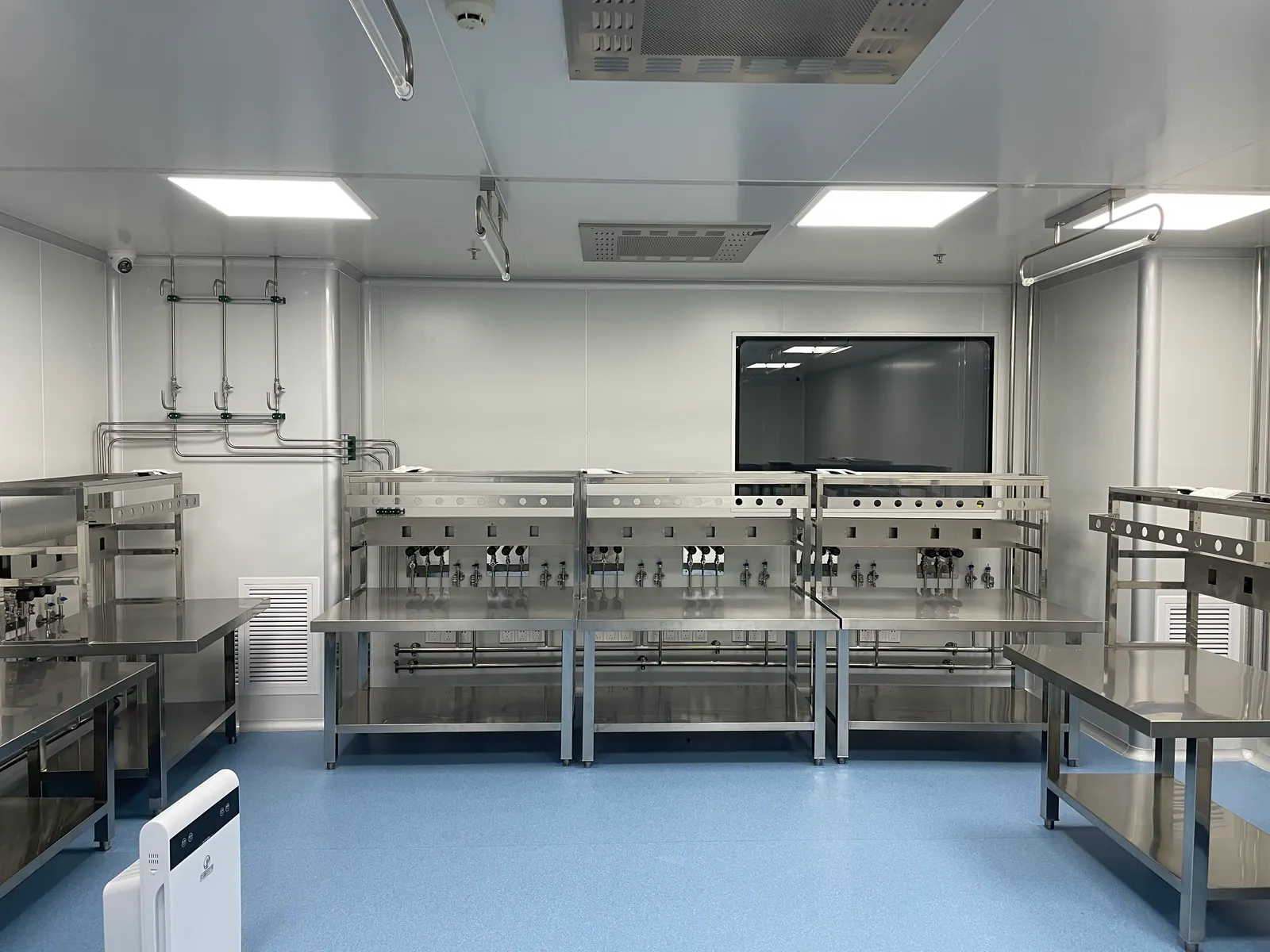
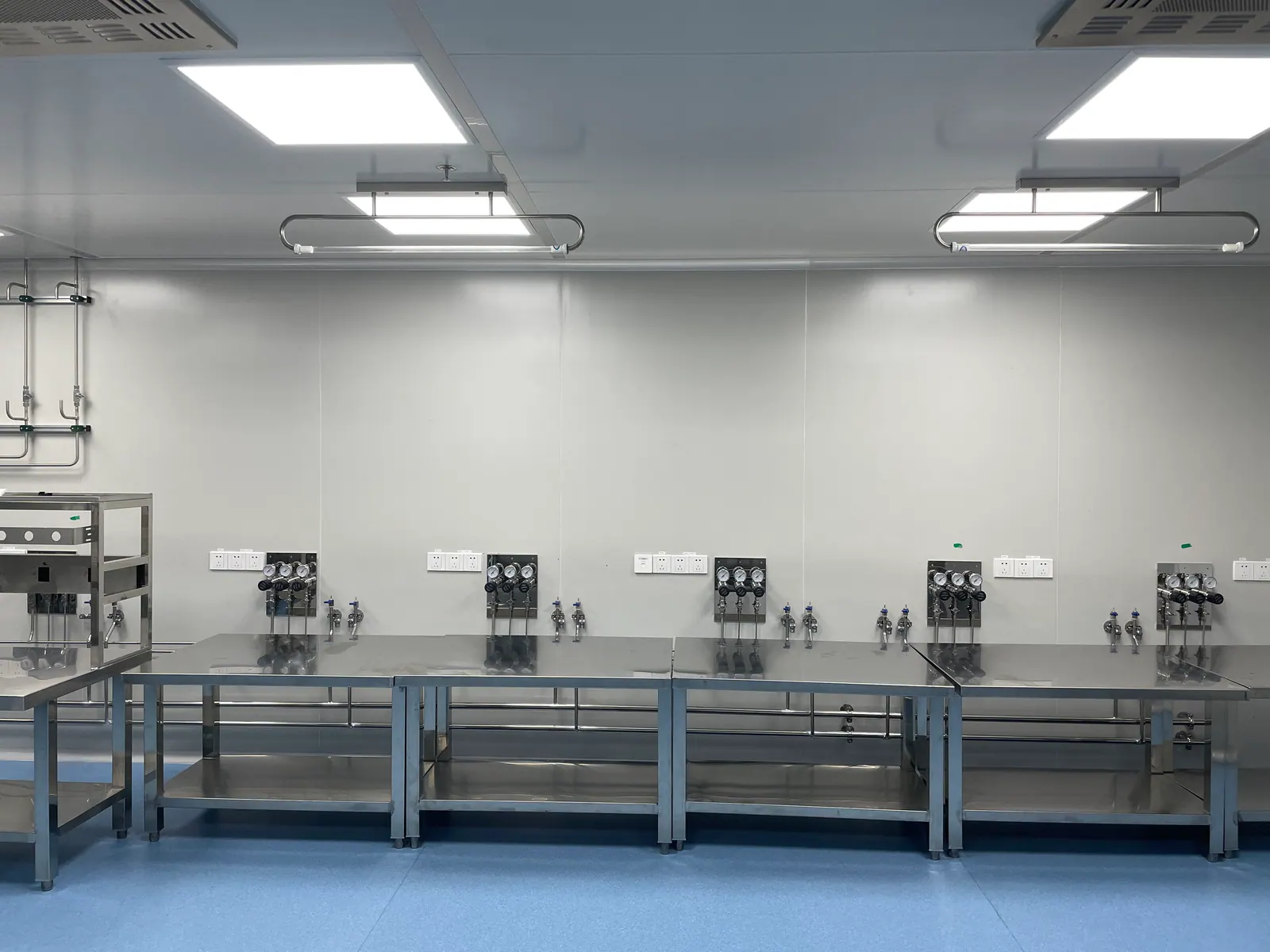
The supplied project images show room layouts, wall-mounted pipework and terminal connections. They are useful for discussing installation and access, while the facility’s engineering and quality teams must define the actual performance criteria, cleaning methods, acceptance evidence and change control for the work.
01 / USE AND QUALITY
Define the role of every gas service
The first schedule should connect each gas to a named instrument, workstation or utility. It should record gas grade, inlet pressure, flow, operating pattern, permitted interruption and any monitoring requirement. A general instrument utility should not be treated as equivalent to a process-critical service merely because both use stainless-steel tubing. The approved design needs to distinguish those roles in drawings and labels.
A review of source pressure and line loss helps determine where regulation belongs. For sensitive instruments, the project may need to consider connection cleanliness, filter placement and purge practices. These choices should be justified by the equipment specification and facility requirements rather than by a generic product description.
02 / ROUTE AND ACCESS
Coordinate piping with room operations
The route should preserve maintenance access without obstructing benches, doors or cleaning workflows. Wall-mounted gas lines can keep service points visible, while concealed portions need a drawing record that remains useful after the room is occupied. Penetrations, supports and interfaces with ceilings or service corridors should be coordinated with the building team.
Materials and joint methods should match the actual gas and specified cleanliness. A high purity laboratory gas system may require clean handling of tubing and fittings throughout installation. Where the site operates controlled environments, the facility must define entry rules, work-area protection and restoration checks; no single installation procedure applies to every biopharmaceutical room.
03 / TERMINAL CONTROL
Make the workstation connection unambiguous
Local panels and outlets should identify the gas and pressure range and give users an accessible isolation point. Instrument connection details must be confirmed before fabrication: fitting type, location and clearance can change with a new analyzer model. A tidy terminal area helps reduce accidental cross-connection and makes inspection possible without dismantling nearby equipment.
Source equipment, distribution pipework and point-of-use components form one delivery path. If a gas is used by several workstations, the team should review simultaneous demand and any need for independent regulation or isolation. If a workstation is moved later, the modification should be documented and the affected branch rechecked before use.
04 / RELEASE AND CHANGE
Plan handover for the next room change
The release package should include approved gas and outlet schedules, as-built route drawings, component records and results of inspections and tests required by the project specification. Testing may include pressure or leak checks, purge or cleanliness verification and checks of alarm or isolation interfaces where fitted. The facility’s own quality process determines any additional qualification or validation work.
An operating procedure should explain source replacement, outlet isolation, abnormal-condition response and escalation. This is particularly useful when multiple teams share a room. A well-documented lab gas supply system supports later instrument changes because the next engineer can identify the existing line and understand which parts of the previous acceptance remain relevant.
PROJECT DECISION NOTES
Details to resolve in the project brief
Ownership across engineering and quality teams
A biopharmaceutical laboratory project often has several approving groups. Facilities may own source capacity and maintenance access; laboratory users own instrument inlet needs; quality personnel may define documentation and change procedures for certain uses. An interface schedule should record each decision and the person who accepts it. This prevents a component supplier’s generic claim from being mistaken for the facility’s approved operating specification. It also helps separate ordinary research utilities from services that require additional site-specific controls.
Planning installation around room use
A room that is already fitted out needs a construction plan for access, dust and debris control, temporary protection and restoration. The specific controls come from the facility’s own rules and the work area, not from a universal checklist. The route designer should coordinate supports, penetrations and terminal locations with room cleaning and equipment service clearances. Any temporary disconnection should be recorded by line and workstation, and the affected service should be inspected and tested again before use.
Records that support later change
A completed system should have a source-to-outlet map, connection schedule, approved component list, relevant inspection and test records, and instructions for operators. These records can be tied to room and instrument identifiers so a later equipment swap does not depend on an old photograph or informal label. When a new analyzer needs a different gas grade or pressure, the facility can review the actual installed line and decide whether modification, dedicated distribution or a new source is needed.
PROJECT REVIEW CHECKLIST
What the team should confirm
- Separate research utilities from services with tighter facility controls.
- Confirm equipment inlets before positioning outlet panels.
- Match material, cleaning and testing methods to each gas.
- Record source-to-outlet identity and as-built routes.
- Treat later workstation changes as controlled modifications.
PRACTICAL QUESTIONS
Questions before procurement
Are all biopharmaceutical laboratory gas lines subject to the same requirements?
No. Requirements depend on the gas, its use, the room and the facility’s engineering and quality procedures. The project brief should identify each service individually.
Can the photographs establish a validated installation?
No. Validation or qualification requires project-specific records and acceptance criteria. Photos show physical layout only.
What should be included in the first design review?
Provide the gas and instrument schedule, room layout, utility interfaces, required outlet conditions, facility procedures and anticipated changes.
DISCUSS A SIMILAR PROJECT
Share your gas list and room plan.
LGF Lab Gas Flow can review the source, distribution and point-of-use scope for your laboratory. Include instrument inlet needs and site constraints for a useful first discussion.