
Quick answer: Choosing a high purity gas delivery systems manufacturer starts with matching the type of manufacturer to the project. The four main types are:
- component makers
- panel and cabinet fabricators
- system manufacturers that design, build, install and commission complete systems
- equipment divisions of gas supply companies
The right partner can prove capability in five areas: application engineering, clean assembly and welding, testing and documentation, project delivery, and long-term service. Laboratories and research facilities that need gas cabinets, manifolds, piping and point-of-use hardware from one accountable source are usually best served by a system manufacturer with in-house engineering and installation teams.
What this guide covers: the manufacturer types and when each fits, how to match capability to the project, domestic versus overseas sourcing, scope-of-supply models, the engagement timeline, and the long-term relationship. For a detailed supplier audit and scorecard, see how to evaluate ultra-high purity laboratory gas equipment suppliers.
What does a high purity gas delivery systems manufacturer actually supply?
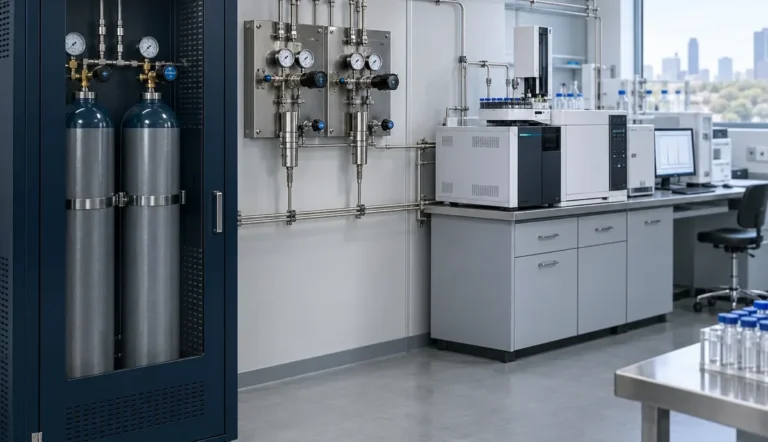
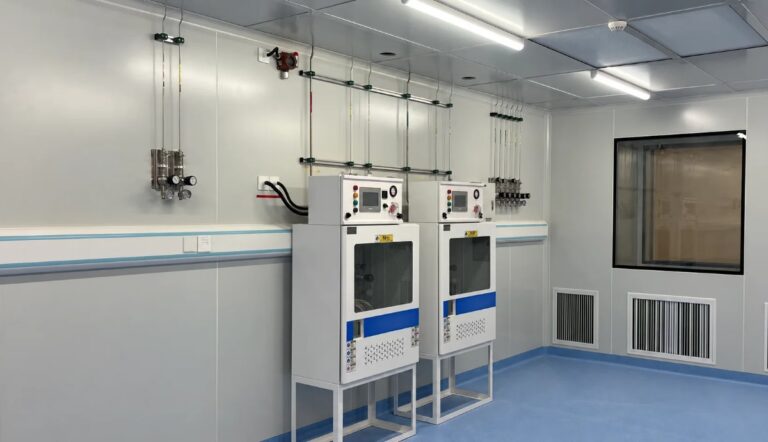
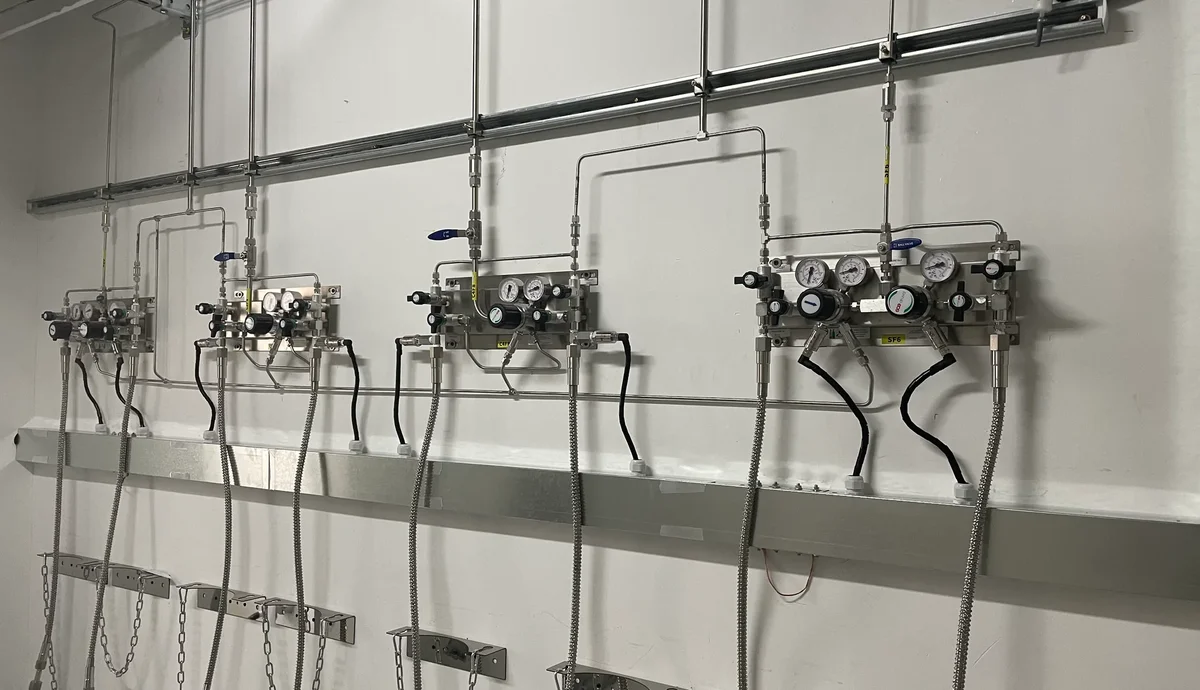
A high purity gas delivery systems manufacturer supplies the equipment that moves gas from a cylinder, bulk tank or generator to the point of use without adding contamination. A complete scope usually includes:
- gas cabinets and gas racks
- cylinder manifolds with changeover
- pressure regulators and gas control panels
- valve manifold boxes for distribution
- 316L stainless steel tubing with electropolished or bright annealed interiors
- diaphragm valves and face-seal fittings
- point-of-use panels
- gas detection, alarms and exhaust treatment
The more of this chain a manufacturer controls, the easier it is to keep purity, safety and responsibility consistent from source to instrument.
High purity performance is not created by one component. It is created by the combination of wetted materials, surface finish, joint method, cleanliness during assembly, leak integrity, purge design and correct installation. A manufacturer that supplies excellent regulators but leaves welding and installation to an unqualified contractor cannot guarantee the gas quality at the instrument. That is why buyers increasingly choose partners that take responsibility for the complete delivered system. The complete system is explained in the laboratory gas delivery systems guide.
Which types of high purity gas equipment manufacturers are there?
High purity gas equipment manufacturers fall into four business models, and each one is the best fit for a different kind of buyer.
| Manufacturer type | What they supply | Strengths | Limitations | Best fit |
|---|---|---|---|---|
| Component maker | Valves, regulators, fittings, tubing, gauges | Deep product expertise; broad catalogue; consistent part quality | Does not design or install systems; buyer must integrate | OEM equipment builders and facilities with strong in-house engineering |
| Panel and cabinet fabricator | Gas cabinets, racks, manifolds and panels built from components | Assembly and testing capability; faster than building in-house | Limited site installation and piping scope | Projects where a separate contractor handles piping and installation |
| System manufacturer (design-build) | Engineering, equipment, piping, installation, commissioning and service | Single point of responsibility; purity managed end to end; coordinated safety systems | Requires early involvement and a clear project scope | Laboratories, research institutes, pilot lines and new facilities |
| Gas company equipment division | Equipment bundled with gas supply contracts | Combined gas and hardware sourcing | Equipment choice can be tied to the gas supply agreement | Buyers who want one contract for gas and hardware |
Many projects combine these types. A system manufacturer may use components from specialist makers, and a large fab may buy cabinets from a fabricator and piping from a separate contractor. What matters is that one party clearly owns purity, safety and performance at the point of use.
How do you match the manufacturer to the type of project?
Different facilities need different manufacturer strengths, so the selection should start with the project profile:
- Analytical laboratories: They need dependable UHP carrier and detector gas supply for GC, GC-MS and ICP-MS. The priority is clean point-of-use regulation and continuous supply.
- University and research institutes: They use many gases in small quantities and change processes often. The priorities are flexible design, safe handling of hazardous gases, and training for many users.
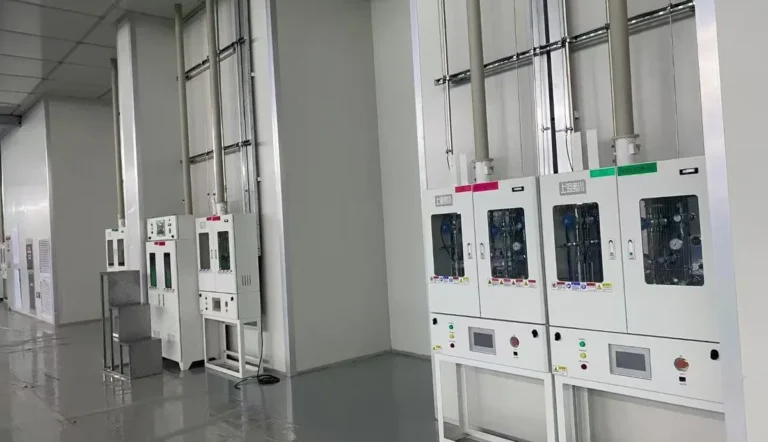
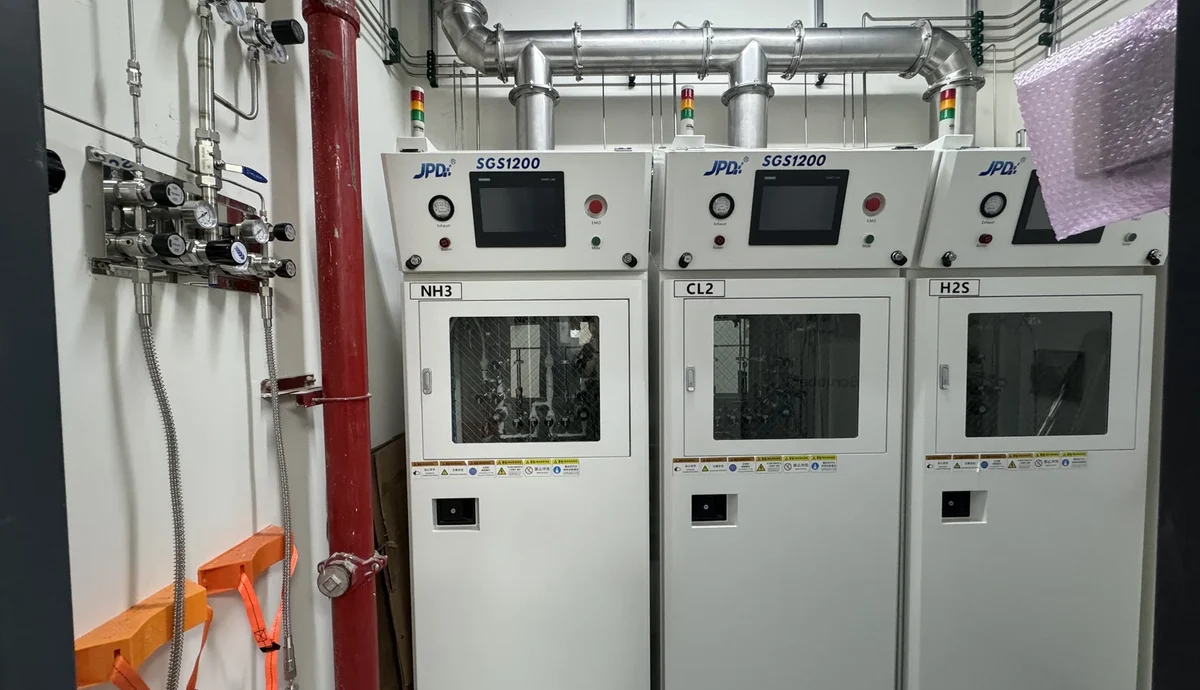
- Semiconductor research and pilot lines: They handle toxic, pyrophoric and corrosive gases, so they need automatic gas cabinets, valve manifold boxes, purge systems and abatement.
- Biopharmaceutical laboratories: They focus on CO2 and mixed gases, documentation and controlled environments.
| Project type | Capability that matters most | Recommended manufacturer type |
|---|---|---|
| Analytical or testing laboratory | UHP regulation, changeover manifolds, clean piping | System manufacturer or experienced panel fabricator |
| University or research institute | Multi-gas design, hazardous gas safety, training | System manufacturer with installation teams |
| Semiconductor research or pilot line | Automatic gas cabinets, VMBs, purge, abatement, controls | System manufacturer with specialty gas experience |
| Hydrogen and fuel cell testing | Flammable gas safety, high-pressure handling | System manufacturer with flammable gas references |
| Production fab expansion | Capacity, standardisation, redundancy | Fabricator plus specialist installer, or large system manufacturer |
Examples of these project profiles are shown in the project cases, including semiconductor research specialty gas delivery and analytical testing laboratory installation.
Which engineering capabilities separate a strong manufacturer from a supplier of parts?
Engineering capability is the clearest difference between a high purity system manufacturer and a parts supplier. A strong manufacturer starts with the gas schedule: every gas, purity grade, pressure, flow and point of use. From it, the manufacturer produces:
- process and instrumentation diagrams
- pipe sizing with pressure drop checks
- material selection for each gas
- a purge and vent design
- a safety concept for hazardous gases
- a layout that fits the building
Engineering also prevents the most common cause of contamination: uncontrolled substitution. When a contractor replaces a specified diaphragm valve or electropolished tube with a cheaper so-called equivalent, the purity performance of the whole system can drop without anyone noticing. A manufacturer that designs, supplies and installs the system keeps the specified components in place and can document every material in the gas path. Design services of this kind are described under laboratory gas piping design.
Which manufacturing capabilities should a high purity manufacturer have?
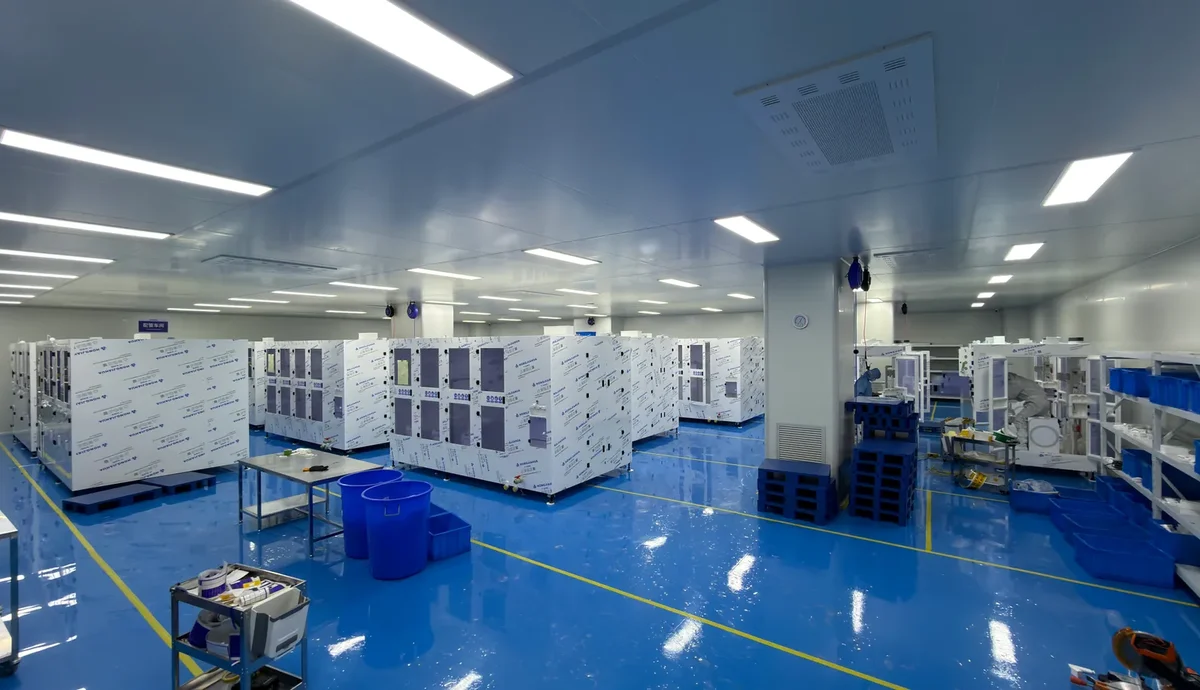
Manufacturing capability determines whether the delivered equipment keeps gas clean. The essential capabilities are:
- a clean assembly area for wetted components
- automatic orbital welding with qualified procedures and weld logs
- controlled cleaning, purging and capping of components and assemblies
- helium leak testing equipment
- pressure testing
- clean packaging that protects internal surfaces during shipping
For ultra-high purity work, particle, moisture and oxygen testing equipment adds further assurance.
In-house production of key parts also matters. A manufacturer that produces its own regulators, valves, manifolds and cabinets can control quality, lead time and spare parts better than one that only assembles purchased items. It can also adapt designs quickly for special gases or pressures. When visiting a manufacturer, look at the welding area, the clean assembly area, the test room and the finished goods area, and ask to see records from a recent project.
Which testing and documentation should come with a high purity system?
Testing and documentation turn a purity claim into evidence. A high purity system should arrive with:
- material certificates for wetted parts
- weld records for welded assemblies
- helium leak test results
- pressure test records
- cleaning and packaging records
- for UHP lines, purge certification with particle, moisture and oxygen results at the outlet
Commissioning should add functional test records for changeover, alarms, gas detection and emergency shutoff. Operation and maintenance manuals, drawings and spare parts lists complete the handover.
Factory acceptance testing before shipment and site acceptance testing after installation are the two points where these records are created. Buyers should agree the test list and acceptance values when the order is placed, so that every party works to the same standard. The installation testing sequence is outlined in the laboratory specialty gas installation guidelines.
Should you choose a domestic or an overseas manufacturer?
The choice between a domestic and an overseas high purity gas equipment manufacturer depends on cost, lead time, service and project support.
| Factor | Local manufacturer or integrator | Overseas manufacturer (for example in China) |
|---|---|---|
| Equipment cost | Usually higher | Often significantly lower for equivalent specifications |
| Product range | Varies; may rely on imported components | Broad in-house ranges of cabinets, regulators, valves, fittings and tubing |
| Lead time | Short travel and delivery times | Production plus sea or air freight; planned into the schedule |
| Site installation | Local teams on site | Supervision teams, partner installers or full installation teams for larger projects |
| Service and spares | Fast local response | Spare parts stock held by the buyer or a local partner; remote support |
| Customisation | Depends on in-house engineering | Strong flexibility for custom cabinets, panels and OEM branding |
A hybrid model is common and effective. The overseas manufacturer supplies engineered, factory-tested equipment and technical supervision, while a local contractor installs it under that supervision. This combines lower equipment cost with local service. For distributors and system integrators, overseas manufacturers can also supply OEM-branded equipment for their own markets.
Which scope-of-supply model fits your project?
Buyers can purchase high purity gas systems under three scope models:
- Equipment only: The manufacturer supplies cabinets, manifolds, panels, valves and tubing, and the buyer installs. This is the lowest cost, but the buyer carries integration and purity risk.
- Equipment with supervision: The manufacturer supplies equipment and supervises installation, testing and commissioning by a local contractor. This balances cost and accountability.
- Turnkey design-build: The manufacturer designs, supplies, installs, tests and commissions the complete system and hands over a working, documented installation. This gives a single point of responsibility.
The scope should match the experience of the buyer. Facilities with experienced gas engineers and trusted installers can buy equipment only. New laboratories, research buildings and projects with hazardous gases usually benefit from turnkey or supervised delivery, because purity and safety depend on the installation as much as on the equipment. Pipeline installation services are described under laboratory gas pipeline installation.
What does working with a high purity gas systems manufacturer look like from inquiry to handover?
A typical project with a high purity gas systems manufacturer follows these stages:
- Inquiry and requirements: The buyer shares the gas list, instruments, drawings and project location.
- Technical proposal: The manufacturer proposes a configuration, layout and scope, and identifies open questions.
- Quotation and clarification: Scope, specifications, testing and delivery terms are agreed.
- Design approval: P&IDs, layouts and equipment drawings are reviewed and approved.
- Manufacturing and FAT: Equipment is built and tested in the factory, often witnessed by the buyer.
- Delivery and installation: Equipment is shipped and installed, with piping and connections completed on site.
- SAT and commissioning: Leak, purge and functional tests are completed and gases are introduced.
- Training and handover: Users are trained, and documents and spare parts are delivered.
Clear communication at each stage shortens the project. Buyers should assign one technical contact and one commercial contact, keep the gas schedule under revision control, and confirm site readiness before equipment ships.
Which commercial factors matter beyond the equipment price?
The lowest equipment price rarely gives the lowest cost of ownership in high purity gas systems. Total cost includes:
- equipment and installation
- testing and documentation
- gas lost through leaks or inefficient changeover
- purge gas consumption
- spare parts and consumables such as regulator seats, filters and gaskets
- service visits and annual inspections
- downtime caused by supply interruptions or contamination
A slightly more expensive system with automatic changeover, better leak integrity and local spare parts often costs less over ten years.
Contract terms should cover warranty on both equipment and workmanship, the spare parts supply period, response times for service, training, and the handover document package. Price structures differ between manufacturers, so quotations should be compared on the same scope and specification. Cost factors for automatic gas cabinets are explained in the automatic gas cabinet price guide.
How should a long-term partnership with a gas systems manufacturer be managed?
A high purity gas system is a long-life asset, so the relationship with the manufacturer continues long after installation. Laboratories add instruments, change gases and expand into new rooms. A manufacturer that keeps the original drawings, uses compatible components and supports expansion makes these changes faster and safer. Regular maintenance and annual inspection by the manufacturer keep regulators, valves, detectors and changeover systems performing as designed.
Spare parts and service planning should be agreed at the start. Typical items are a recommended spare parts kit, a preventive maintenance schedule, detector calibration intervals, and a remote support channel for troubleshooting. Service programs of this kind are described in after-sales maintenance and annual inspection.
Which questions should you ask a manufacturer before shortlisting?
A short set of direct questions quickly shows whether a manufacturer can deliver a complete high purity system:
- Which parts of the scope are designed and produced in-house, and which are purchased?
- Which gases and purity grades has the team handled in similar laboratories?
- How are welded joints made, inspected and recorded?
- Which leak rate and purity values are tested before shipment and after installation?
- Who installs the system, and who is responsible for purity at the outlet?
- How are hazardous gases handled, including detection, shutoff, purge and exhaust treatment?
- Which documents are delivered at handover?
- What is the spare parts and service plan for the first five years?
- How quickly can the team respond to a fault, and in which way?
- Can the system be expanded later with compatible components?
Clear, specific answers with examples from past projects indicate a capable partner. Vague answers, or answers that depend entirely on subcontractors, indicate a supplier of parts rather than a system manufacturer. The full weighted scorecard for comparing finalists is in the UHP supplier evaluation guide.
How can distributors and integrators work with a high purity gas manufacturer?
Distributors, laboratory furniture companies and engineering integrators often partner with a high purity gas manufacturer instead of building equipment themselves. Typical cooperation models are:
- Standard product supply: Regulators, valves, fittings and manifolds supplied for resale.
- OEM equipment: Cabinets and panels supplied under the brand of the partner.
- Engineering support: Design support for project bids, covering P&IDs, layouts and bills of materials.
- Project delivery: Supervision of installation and commissioning in the market of the partner.
These models let partners offer complete laboratory gas solutions without investing in welding, clean assembly and test facilities.
A successful partnership rests on shared standards. That means agreed specifications, consistent component families, documented test procedures, technical training for the sales and installation teams of the partner, and a reliable spare parts channel. Partners gain a broader product offering and faster project delivery. End users gain equipment that is engineered and tested to one standard, even when the project is sold and installed locally.
What are the most common mistakes when choosing a high purity gas manufacturer?
The mistakes that most often lead to purity problems, delays or extra cost are:
- Choosing on price alone: Selecting the lowest equipment price without comparing scope and specifications.
- No owner for installation: Splitting equipment and installation between parties without a clear owner of purity at the outlet.
- Allowing substitutions: Allowing installers to substitute components or materials.
- No test plan: Ordering without an agreed test and documentation list.
- Ignoring hazardous gases: Overlooking safety requirements until late in the project.
- No support plan: Ignoring spare parts and service planning.
- Weak references: Choosing a manufacturer with no references in similar facilities.
Each of these is easy to avoid by involving the manufacturer early and defining the complete scope in writing.
Frequently asked questions
What is the difference between a gas equipment supplier and a gas delivery systems manufacturer?
A gas equipment supplier sells individual components such as regulators and valves. A gas delivery systems manufacturer designs and builds complete systems, including cabinets, manifolds, piping and point-of-use panels, and often installs and commissions them.
Can one manufacturer supply both standard and hazardous gas systems?
Yes. A capable system manufacturer supplies manifolds and panels for inert gases as well as automatic gas cabinets, valve manifold boxes, detection and exhaust treatment for toxic, flammable and corrosive gases, which keeps the whole facility on one consistent design standard.
How early should a gas systems manufacturer be involved in a new laboratory?
The best time is during building design, when gas room locations, pipe routes, exhaust and power can still be planned. Early involvement avoids costly changes to ceilings, walls and services later.
Is an overseas manufacturer suitable for a laboratory project abroad?
Yes, when the manufacturer provides engineering, factory testing, clear documentation and installation supervision or a local installation partner. This model is widely used for laboratories and research facilities around the world.
Choose LGF as your high purity gas delivery systems manufacturer
LGF Lab Gas Flow designs and manufactures high purity gas delivery equipment for research, testing and analytical laboratories, and supports projects from the gas source to the point of use. The range covers:
- specialty gas cabinets
- gas manifold and changeover systems
- UHP regulators
- high purity diaphragm valves and fittings
- UHP stainless steel tubing
- point-of-use systems
- gas monitoring
- laboratory gas scrubbers
Engineering, manufacturing, installation guidance and after-sales service are provided by one team. See the company profile and factory strength and capacity pages for more about LGF.
Laboratory owners, designers, contractors and distributors can send their gas list, instrument list, room drawings, purity and pressure needs, and project location. The LGF team will propose a complete high purity gas delivery configuration with scope, testing plan and quotation. Contact LGF to discuss your high purity gas delivery system project.