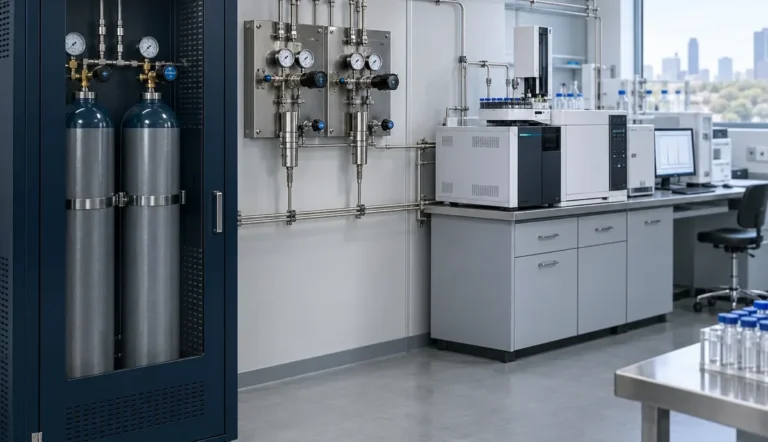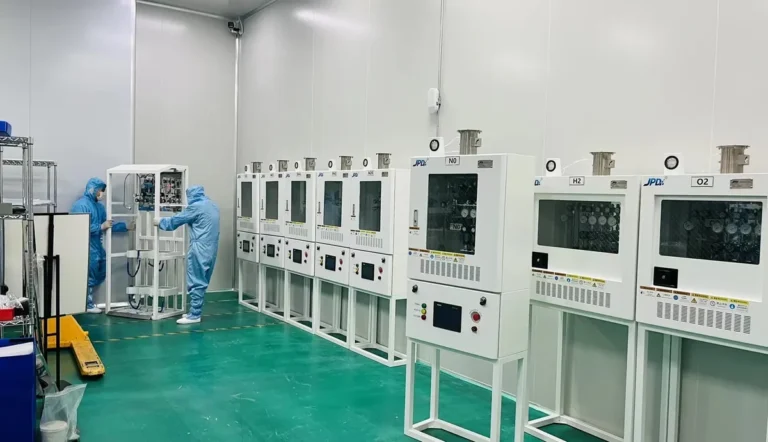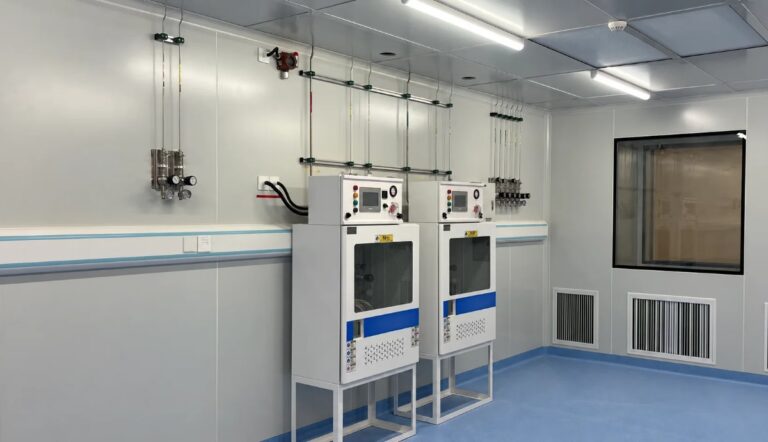

An automatic gas cabinet does not have one dependable catalog price because the enclosure is only one part of the supplied system. The final quotation depends on the process gas, cylinder arrangement, wetted materials, valve and regulator count, automatic purge sequence, gas detection, shutdown logic, communications, documentation, testing, installation scope, and project location. Two cabinets that look similar from the outside can therefore differ substantially in cost because one is a basic automatic source panel while the other is a fully integrated hazardous-gas delivery system.
The most useful price guide is not a single number. It is a method for separating the base cabinet, process panel, controls, safety devices, factory testing, site work, and lifecycle support. That method lets a laboratory, university, pilot plant, or advanced manufacturing buyer compare quotations on the same technical basis and avoid choosing a low bid that excludes essential work.
What does the quoted price of an automatic gas cabinet normally include?
A basic automatic gas cabinet quotation normally includes the exhausted enclosure, cylinder restraint, process-gas panel, pressure regulation, pneumatically operated isolation valves, purge and vent paths, pressure instruments, a controller, a local operator interface, emergency stop, and selected alarm inputs. The exact boundary varies by supplier, so the phrase “automatic gas cabinet” is not enough to establish a comparable scope.
A complete project price may also include the purge-gas source, vacuum generator, gas detector, horn and beacon, cylinder scale, exhaust monitoring, sprinkler connection, facility interlocks, remote communications, delivery, installation supervision, startup, training, spare parts, and acceptance testing. A quotation that excludes several of these items can appear cheaper while producing a higher installed cost.
| Cost layer | Typical contents | Why the amount changes |
|---|---|---|
| Enclosure | Cabinet body, doors, window, restraints, exhaust connection and finish | Size, material, fire provisions, cleanroom finish and seismic requirements |
| Process panel | Regulator, valves, gauges, transducers, filters, fittings, pigtails and tubing | Gas compatibility, pressure, flow, purity, component grade and valve count |
| Automation | PLC, touchscreen, software, pneumatic controls and sequence logic | Single-source control, automatic purge, changeover, recipes and custom logic |
| Safety | Detection, exhaust switch, emergency shutdown, alarms and interlocks | Gas hazard, sensor technology, alarm matrix and facility integration |
| Verification | Leak tests, functional tests, calibration, records and factory acceptance test | Acceptance criteria, witness testing, traceability and document package |
| Site scope | Freight, positioning, utilities, hook-up, commissioning and training | Location, access, local labor, clean-work controls and interface complexity |
Which factor has the greatest effect on automatic gas cabinet cost?
The process gas usually has the greatest influence because gas properties determine the materials, containment, detection, purge strategy, shutdown response, and documentation required. An inert carrier gas may need a comparatively simple panel, while a toxic, corrosive, flammable, or pyrophoric gas can require more valves, automatic isolation, gas-specific detection, restrictive flow devices, enhanced exhaust monitoring, and a more rigorous test program.
Gas name alone is still insufficient. Buyers should state concentration, balance gas, cylinder pressure, phase, expected flow, required outlet pressure, compatible seal and diaphragm materials, and the consequences of air or moisture entering the line. A low-concentration calibration mixture and a pure corrosive gas may share a gas name but require very different panel construction and control logic.
How does automation level change the price?
Automation cost rises with the number of functions that the controller must perform and verify. A simple automatic cabinet may close a pneumatic valve after an alarm and provide a guided purge sequence. A more advanced system may run pressure-verified purge cycles, perform leak checks, switch between cylinders, record events, manage multiple user levels, communicate with a building system, and place the cabinet in a defined safe state after power, exhaust, or detector failure.
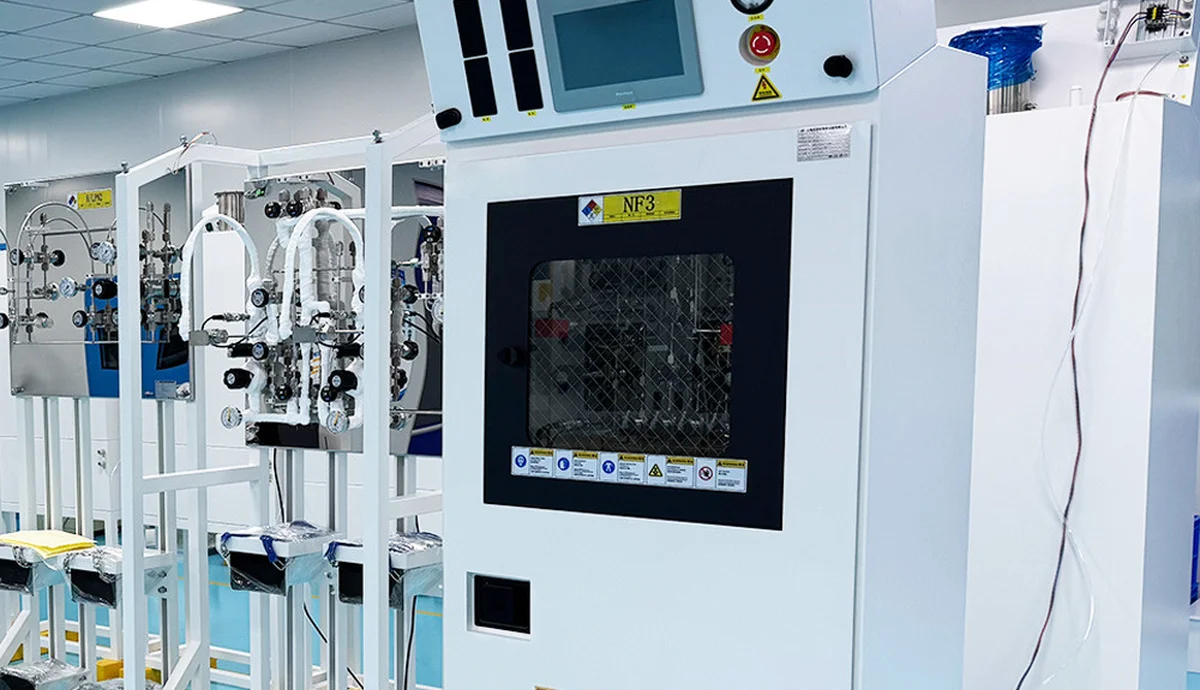
The controller hardware is only part of the premium. Engineering hours are needed to create the cause-and-effect matrix, program sequences, define alarm setpoints, test failure modes, prepare interface signals, and document the final software version. Custom logic costs more than a proven standard sequence because it requires additional design review and validation.
Automatic changeover adds further instruments and logic. A dual-source arrangement needs a reliable method to identify an empty cylinder, transfer supply without an unacceptable pressure disturbance, isolate the depleted side, and prevent an unsafe or contaminated change. The related article on single-cylinder versus dual-cylinder gas cabinets explains when continuity justifies this additional investment.
Why do cylinder count and panel architecture affect the quotation?
A one-cylinder automatic cabinet normally has one process panel and the smallest enclosure footprint. A two-cylinder configuration may use one process cylinder plus one purge cylinder, two independent process panels, or two process sources with automatic changeover. These arrangements are not equivalent, even when every quotation says “two-cylinder cabinet.”
Each additional process path can add a regulator, isolation valves, pressure instruments, excess-flow protection, pigtail, purge routing, software states, and test points. A two-source changeover cabinet may therefore cost much more than a larger enclosure containing one process cylinder and one simple purge cylinder. Buyers should compare the process and purge flow diagrams instead of comparing cylinder capacity alone.
How do purity and wetted materials influence price?
Purity requirements affect every surface that contacts the process gas. General laboratory service may accept conventional stainless-steel components and compression connections. Ultra-high-purity service can require electropolished 316L stainless steel, high-integrity face-seal connections, orbital welds, controlled cleaning, protective packaging, low-dead-volume valve arrangements, point-of-use filtration, and traceable assembly procedures.
Corrosive gases may require special alloys or gas-specific component selections. The premium does not come only from the alloy price; it also comes from limited component availability, qualified fabrication methods, additional inspection, and longer procurement lead time. Replacing one material callout late in the project can force panel redesign and invalidate earlier compatibility reviews.
Purity should be specified as a measurable process requirement rather than the vague phrase “high purity.” A useful RFQ states the gas grade, permitted contamination risk, surface finish where applicable, connection standard, filter requirement, cleaning method, leak-test criterion, and packaging expectation. The guide to UHP gas manifold configuration provides additional detail on defining wetted flow paths.
What safety components add to the cost?
Safety cost is driven by the required response to credible failures. Common inputs include gas detection, exhaust flow or pressure, high and low process pressure, excess flow, emergency stop, fire alarm, valve position, cylinder weight, and facility emergency-off signals. Common outputs include process isolation, purge initiation, audible and visual alarms, remote alarm contacts, exhaust commands, and permission signals to downstream equipment.
Gas detection is a separate cost variable because sensor technology, sampling method, range, response time, calibration arrangement, and controller integration vary by gas. A quotation that states only “gas detector included” is not technically comparable with one that identifies the target gas, measurement range, alarm levels, output signals, calibration accessories, and sensor replacement requirements.
The alarm matrix also changes engineering cost. A cabinet with four simple dry-contact signals needs less design and testing than a system with multiple detectors, voting logic, remote reset restrictions, event history, network communication, and coordinated shutdown of several tools. The cabinet should be priced against a defined cause-and-effect table so every bidder implements the same safety intent.
How much does facility integration matter?
Facility integration can turn an apparently complete equipment quotation into only part of the installed budget. An automatic gas cabinet depends on exhaust, electrical power, pneumatic supply, purge gas, vent or vacuum service, fire protection, gas monitoring, and signal connections. The equipment supplier, laboratory contractor, controls contractor, and owner may each assume that another party provides these interfaces.
The most frequent pricing gaps involve exhaust ductwork, sprinkler drops, power disconnects, signal cable, central alarm programming, nitrogen supply, vent routing, abatement connections, seismic anchoring, wall penetrations, and final tool hook-up. None of these items must be supplied by the cabinet manufacturer, but each item must have a named owner and a funded work package.
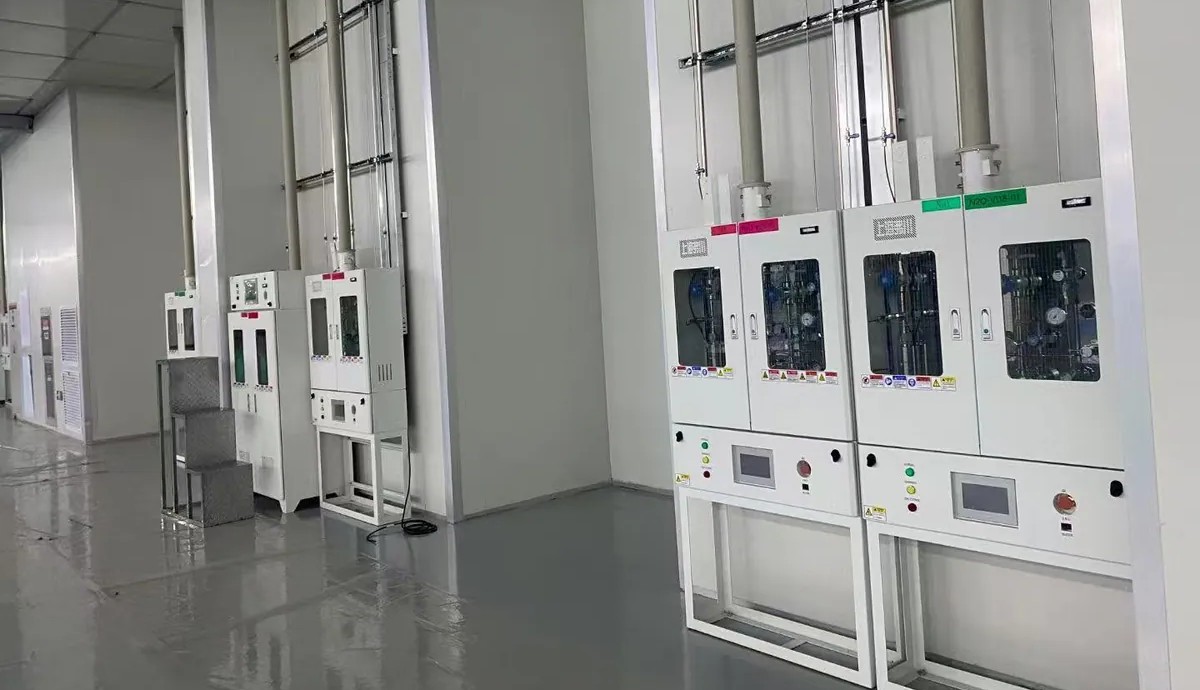
Site conditions also influence labor. A new utility room with clear access is easier to price than a live laboratory requiring shutdown coordination, temporary controls, restricted work hours, contamination control, or routing through occupied spaces. The cleanroom gas cabinet installation guide explains why delivery, positioning, sealed penetrations, clean hook-up and commissioning should be defined before purchase.
Why do testing and documentation change the price?
A cabinet that passes a basic leak check is not equivalent to a cabinet supplied with component traceability, weld records, calibrated-instrument certificates, helium leak-test results, pressure-test records, functional sequence tests, alarm simulation, software backup, electrical drawings, piping diagrams, spare-parts lists, and operating manuals. Documentation requires engineering and quality-control time, but it reduces uncertainty during acceptance and maintenance.
A factory acceptance test can be a significant line item when the buyer witnesses testing, supplies a detailed protocol, or requires every alarm and failure state to be simulated. The cost is usually justified for hazardous gases, remote installations, complex custom logic, or projects where a failed site acceptance test would delay an expensive tool startup.
Buyers should define the acceptance package before suppliers quote. Adding records after fabrication may require repeated testing or reconstruction of traceability. A practical supplier evaluation should examine evidence rather than brochure claims; the article on evaluating UHP laboratory gas equipment suppliers gives a structured method.
What is the difference between equipment price and installed price?
The equipment price covers the cabinet as delivered under the stated commercial terms. The landed price adds packaging, freight, insurance, customs charges, duties, local delivery, and any special handling. The installed price then adds positioning, anchoring, utility connections, process tubing, controls integration, testing, commissioning, and training.
The operational price extends further to include exhaust energy, purge-gas consumption, detector calibration, sensor replacement, valve and regulator spares, software support, preventive maintenance, and downtime during cylinder change or repair. A quotation can be lowest at the equipment level and highest at the lifecycle level if it consumes more utilities, requires proprietary service, or lacks local replacement parts.
Can a buyer obtain a useful budget price before final engineering?
A buyer can obtain a useful budget price when the supplier is given enough information to define a reference configuration. The minimum budget basis should include the gas and concentration, cylinder count, source pressure, delivery pressure, maximum flow, purity level, automation functions, detection scope, installation country and expected site services. The resulting figure should be labeled as a budget estimate with stated assumptions, not treated as a fixed production quotation.
A budget estimate becomes more reliable when it is divided into allowances. The supplier can identify the cabinet and process panel as the core equipment, then show provisional amounts for detection, communications, documentation, freight, commissioning and spare parts. This structure allows the buyer to update one uncertain area without discarding the whole estimate.
A fixed quotation normally requires approved technical inputs and a defined responsibility boundary. If gas data, interface drawings or acceptance criteria remain open, a supplier must either include contingency or exclude the unresolved work. The apparent precision of a single total does not remove that uncertainty; a transparent assumption list is more useful than an unexplained exact number.
How do lead time and customization affect price?
Short delivery requirements can increase cost when critical valves, regulators, detectors, controllers or special-alloy components are not available from normal stock. Expedited components, priority fabrication, overtime testing and air freight can each add cost. A realistic schedule should therefore identify long-lead items before the purchase order rather than assuming every cabinet component has the same availability.
Customization also affects both engineering time and schedule risk. Changes to enclosure dimensions, panel layout, software logic, network protocol, document format or approved component list may require new drawings, purchasing work, programming and repeat testing. A standard platform with project-specific gas-compatible components is usually more economical than a completely bespoke design.
Buyers can reduce schedule premiums by approving drawings promptly, freezing interfaces, accepting technically equivalent components through a controlled review, and ordering common spares with the cabinet. Schedule comparisons should use the same milestone: shipment from factory, arrival at site, mechanical completion or successful acceptance. These dates can differ by weeks and should not be treated as interchangeable.
| Price view | Question it answers | Commonly missed items |
|---|---|---|
| Equipment price | What does the factory supply? | External detection, purge source, exhaust fan and interface wiring |
| Landed price | What does it cost to reach the site? | Export packing, duties, insurance, unloading and indoor movement |
| Installed price | What does it cost to become operational? | Ducts, utilities, tubing, controls integration, permits and commissioning |
| Lifecycle cost | What does it cost to own and operate? | Purge gas, calibration, spares, service, energy and production interruption |
How should buyers compare two automatic gas cabinet quotations?
Buyers should normalize every quotation against the same equipment and responsibility matrix. Start by confirming the gas data, cylinder arrangement, pressure and flow, panel materials, connection type, automation functions, detection scope, alarm matrix, communication protocol, tests, documents, site services, warranty, and delivery terms. Any unmatched item should be priced separately or identified as an accepted deviation.
A useful comparison has three columns for each requirement: included, excluded, or optional with price. “Comply” is not enough because suppliers may interpret the same requirement differently. The comparison should reference a drawing, model number, material, test method, signal list, or document deliverable whenever possible.
Commercial review should also distinguish fixed prices from allowances. Installation labor based on an unverified route, detector calibration without replacement gas, or commissioning that excludes facility troubleshooting may be an allowance rather than a firm price. The buyer should understand which changes can trigger variation orders.
What information is required for an accurate gas cabinet quotation?
An accurate RFQ begins with a gas schedule. For each source, list the gas name and concentration, cylinder specification, valve connection, full-cylinder pressure, required delivery pressure, normal and peak flow, purity grade, expected consumption, and whether uninterrupted supply is necessary. Add the installation country and site classification because local acceptance requirements affect the design.
The RFQ should then define the required cabinet architecture: cylinder count, process and purge arrangement, manual or automatic changeover, wetted materials, regulator type, valve arrangement, filtration, detection, exhaust monitoring, PLC and display functions, communication method, emergency-off interface, power supply, pneumatic supply, and utilities available at the boundary.
Finally, state the commercial and quality scope: drawing approval, document language, inspection points, factory acceptance test, third-party inspection if required, calibration certificates, spare parts, export packing, shipping term, installation supervision, site acceptance test, training, warranty response, and software support. Complete information shortens quotation time and reduces the risk of later redesign.
Which specifications reduce cost without reducing the required outcome?
The safest cost reduction is standardization. Reusing an approved panel architecture, controller platform, interface protocol, alarm philosophy, and document template reduces engineering and spare-parts diversity. Standardization is especially valuable when a project includes multiple cabinets for gases with similar hazard and purity requirements.
The second opportunity is separating mandatory functions from preferences. A larger touchscreen, custom cabinet color, unusual network protocol, redundant instruments, or bespoke report format may be useful, but each should have a stated operational reason. Removing a necessary detector or purge function is not value engineering; simplifying a preference that does not change safety, purity, uptime, or maintainability can be.
The third opportunity is defining site boundaries early. A coordinated exhaust, utility and controls design avoids duplicated hardware and emergency modifications. Buyers should also group compatible procurement packages where common engineering, testing or shipping can be shared, while keeping incompatible gases and independent safety functions properly separated.
When does a higher-priced automatic cabinet provide better value?
A higher initial price can provide better value when downtime is expensive, cylinder changes are frequent, gas purity directly affects analytical results or product yield, or the gas hazard requires repeatable automated control. Automatic changeover can protect continuity, while pressure-verified purge sequences can reduce operator variation and contamination risk.
Better value also comes from maintainability. Clearly labeled components, accessible valve panels, diagnostic screens, event logs, replaceable modules, open communication protocols, complete drawings, and available spares can reduce troubleshooting time. These attributes are difficult to evaluate from a front-view photograph, so they should be demonstrated in the technical proposal and factory acceptance test.
A less expensive cabinet can still be the correct choice for low-use, noncritical service if the gas risk, process requirements and operating procedure support a simpler design. The goal is not to buy the most automated cabinet; the goal is to buy the least complex configuration that consistently satisfies the required safety, purity, continuity and acceptance criteria.
A practical example of why two quotations differ
Consider two quotations for a dual-cylinder automatic cabinet. Quotation A includes an enclosure, two regulators, pneumatic isolation, a basic controller and local alarm contacts. Quotation B includes automatic changeover, pressure-verified purge, integrated gas detection, cylinder scales, exhaust monitoring, remote communications, documented failure-mode testing, calibration records, startup and operator training.
Quotation B should cost more because it supplies more equipment and engineering. The difference cannot be classified as supplier margin until the buyer prices the missing detector, scales, programming, testing and site support in Quotation A. A normalized comparison may show that Quotation B has the lower installed risk and a more predictable final cost.
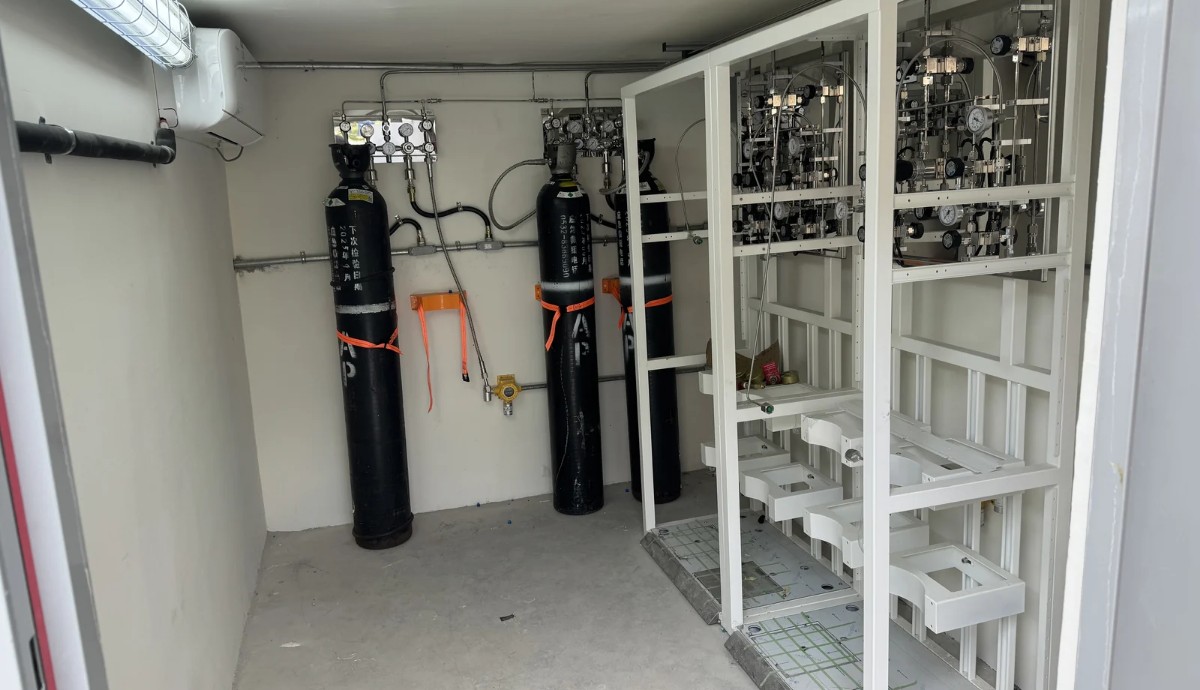
Automatic gas cabinet price checklist
- Confirm the exact gas composition, cylinder connection, pressure, flow and purity requirement.
- Define whether the cabinet contains one process source, process plus purge, or two changeover sources.
- Request a process and instrumentation diagram rather than relying on a product name.
- List wetted materials, component grade, connection method, cleaning and filtration requirements.
- Specify every automatic function, alarm input, shutdown output and communication signal.
- Identify who supplies detection, exhaust monitoring, sprinkler work, utilities and facility wiring.
- State the required leak tests, functional tests, calibration records and acceptance documents.
- Separate equipment, freight, installation, commissioning, training and spare-parts prices.
- Review exclusions and assumptions with the same care as the quoted inclusions.
- Compare lifecycle cost, service response and parts availability, not only purchase price.
How can LGF Lab Gas Flow support a gas cabinet project?
LGF Lab Gas Flow supports B2B customers with automatic gas cabinet configuration, process-panel engineering, purge and changeover planning, control integration, documentation, factory testing and project-specific customization. A useful quotation begins with the gas schedule, cylinder arrangement, delivery pressure, peak flow, purity target, required automation, facility interfaces and destination country.
Send your project requirements, drawings or existing specification to LGF Lab Gas Flow for a configuration review and itemized quotation. Visit the LGF Lab Gas Flow contact page to discuss OEM requirements, laboratory projects, distributor cooperation or multi-cabinet procurement.