
Reading time: about 10 minutes.
Quick answer: Buy laboratory gas piping and fittings only after defining each gas, the required purity at its point of use, the pressure and temperature envelope, and peak simultaneous flow. Select compatible materials and connections for those conditions, then specify tube dimensions, cleaning, traceability, packaging, installation, and acceptance tests together. A 316L label alone does not establish a clean or safe installed gas path.
What should a laboratory gas piping RFQ define first?
A useful request for quotation starts with a line-by-line service schedule. For each line, give the gas identity and composition, hazard classification, source, destination, point-of-use purity requirement, operating and design pressures, temperature range, maximum simultaneous flow, route length, and expected number of outlets. These inputs allow suppliers to price the same duty instead of quoting the same nominal tube for different risks.
Gas purity at the cylinder is different from purity at the instrument. Moisture, oxygen, particles, and hydrocarbons can enter through the distribution path. A buyer should state measurable point-of-use criteria when contamination would affect analytical results, and the project designer should choose how to verify them. A general utility nitrogen branch may not need the same controls as a line feeding a sensitive analyzer.
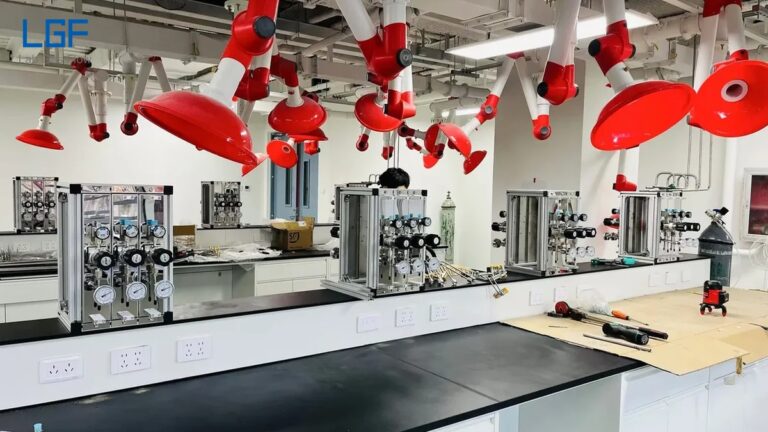
The service schedule should also identify where the supplier’s package begins and ends. Cylinder connections, manifolds, regulators, isolation valves, piping, and point-of-use panels have different design responsibilities. Clear boundaries prevent gaps between purchased equipment and installed pipework. LGF’s laboratory gas piping design overview provides a useful view of this system boundary.
Attach current route drawings. Show ceiling and wall penetrations, accessible valves, equipment interfaces, ventilation zones, and future branch locations. If a route is provisional, ask each bidder to identify the assumed length and the unit price for changes. A line count alone conceals bends, supports, and difficult installation work.
How does gas chemistry affect material selection?
Material compatibility begins with the exact gas and its operating conditions. Inert, oxidizing, flammable, toxic, and corrosive gases should not share a material specification merely because their working pressures match. Check the wetted materials of tubing, fittings, gaskets, valves, regulators, and any lubricant or cleaning residue that could contact the gas.
Oxygen service requires a specific compatibility and cleanliness review. A tube can withstand pressure yet remain unsuitable if oil, particles, or incompatible seals are present. The purchase order should name the approved cleaning procedure, inspection evidence, handling requirements, and protective packaging rather than assume that the base metal is sufficient.
Flammable or toxic service may require containment, detection, ventilation, automatic shutoff, and protected routing under the approved design and local rules. A product purchase does not approve the overall safety system. LGF’s double-containment tube example illustrates a component category that may be considered when secondary containment is specified; application depends on the complete design.
Corrosive-gas compatibility must be checked gas by gas, including moisture effects and possible upset conditions. Neither stainless steel nor a polymer is universally suitable. Ask the designer and supplier to document all wetted materials and the conditions used for their compatibility review.
Which tubing material and interior finish should buyers compare?
Stainless steel tubing is common in demanding laboratory gas systems because controlled alloy specifications, fabrication methods, and high-cleanliness finishes are available. However, alloy grade, dimensional standard, surface finish, cleaning, and packaging are separate requirements. A quote that names only 316L leaves important performance questions unanswered.
| Option | Reason to consider it | Question before ordering |
|---|---|---|
| 316L stainless, bright annealed (BA) | Defined stainless gas path and interior finish | Does the project accept the offered surface and cleaning process? |
| 316L stainless, electropolished (EP) | More demanding finish and cleanliness specification | What measurable finish, inspection, and packaging evidence is included? |
| Copper tubing | Selected general utility services where design and code permit | Are gas, joining method, cleanliness, and local rules compatible? |
| Other alloys or lined systems | Special chemistry or containment requirements | Is compatibility documented for the exact gas and operating envelope? |
EP describes a finishing process; BA describes an annealing process and surface condition. Neither term guarantees a stated gas purity after fabrication and installation. Specify the material standard, finish acceptance criteria, cleaning limits, and protection after cleaning. Compare LGF’s ASTM 316L EP tube and 316L BA tube as product options against the project requirement.
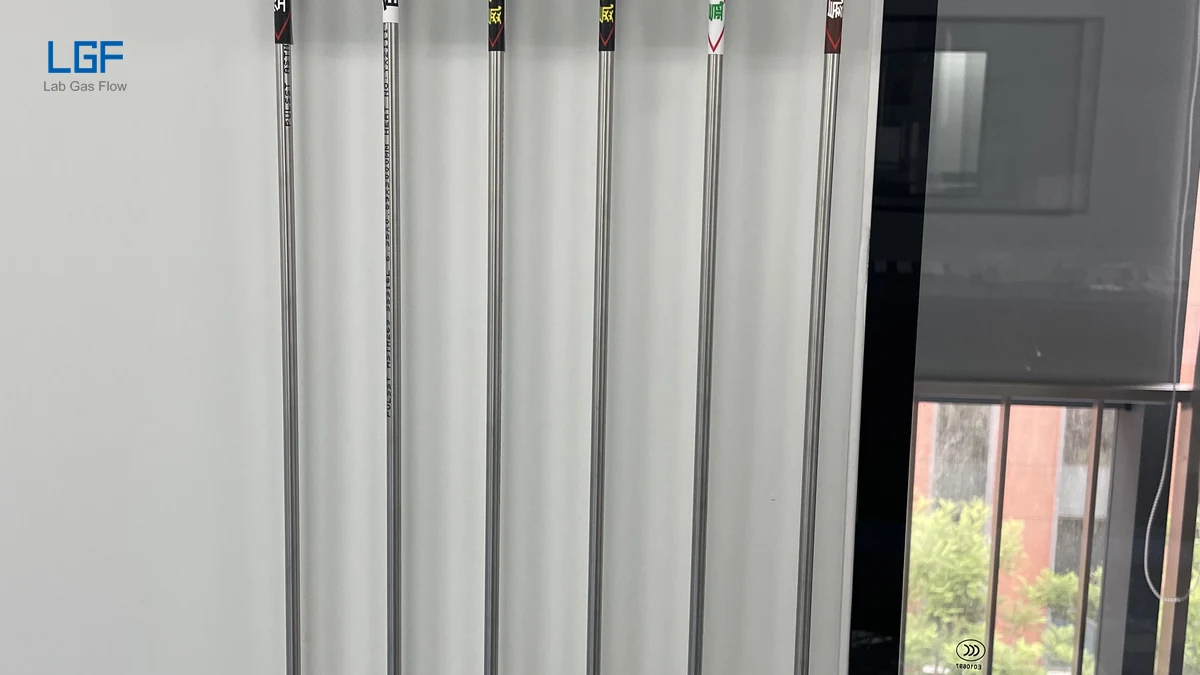
A tubing material standard describes the tube, not the cleanliness of an entire installed system. For example, a material certificate can verify alloy and dimensions but cannot prove that a line stayed free of moisture after cutting and joining. Sensitive applications need separate cleaning, installation, purge, and verification requirements.
How should tube size and wall thickness be selected?
Choose outside diameter and wall thickness from the approved design calculation. The selected tube must deliver peak simultaneous flow with acceptable pressure loss while meeting pressure, temperature, support, and mechanical requirements. Long routes, fittings, filters, valves, and regulators all affect pressure available at the instrument.
Ask the designer to state normal and design pressure, maximum temperature, gas properties, allowable pressure loss, and planned future outlets. A single fixed percentage for pressure drop or future growth is not valid for every laboratory. The right allowance keeps the most demanding instrument within its inlet range under the defined operating scenario.
Rate the complete gas path, including fittings, valves, seals, and flexible sections. The lowest-rated component can govern the assembly. Request component ratings at operating temperature and confirm that tube size, wall, hardness, and tolerances match the specified fitting and joining method. Matching nominal sizes alone does not prove interchangeability.
Separate high-flow headers from small instrument drops in the bill of materials. This can avoid purchasing large premium-finish tubing for every outlet while maintaining the requirements of critical branches. A tagged line schedule is clearer than a global note calling for the same tube everywhere.
Which fitting and joint type belongs at each location?
Joint selection depends on whether a connection is permanent, serviceable, or attached to equipment. Every connection needs compatibility with the gas, tube, pressure, temperature, installation procedure, and leak acceptance method. Minimize unnecessary joints while retaining access where maintenance is expected.
| Connection | Possible use | Procurement check |
|---|---|---|
| Welded stainless joint | Permanent distribution run | Qualified procedure, fit-up, purge, inspection, and acceptance |
| Metal gasket face seal | Removable panel or instrument interface | Matching parts, gasket material, assembly method, replacement gaskets |
| Compression fitting | Serviceable tube joint where approved | Tube compatibility, assembly training, access, vibration |
| Brazed joint | Approved copper service | Gas-specific procedure, cleanliness, filler, qualification |
| Threaded connection | Permitted equipment interface | Thread form, approved sealant, accessibility, leak test |
A welded main run can reduce the number of serviceable joints, but weld quality and internal cleanliness depend on fit-up, purge, skilled personnel, and inspection. A metal gasket face seal is useful at a removable interface, but mating parts and gasket replacement must follow the manufacturer’s instructions. LGF’s metal gasket face-seal fittings illustrate one connection type.
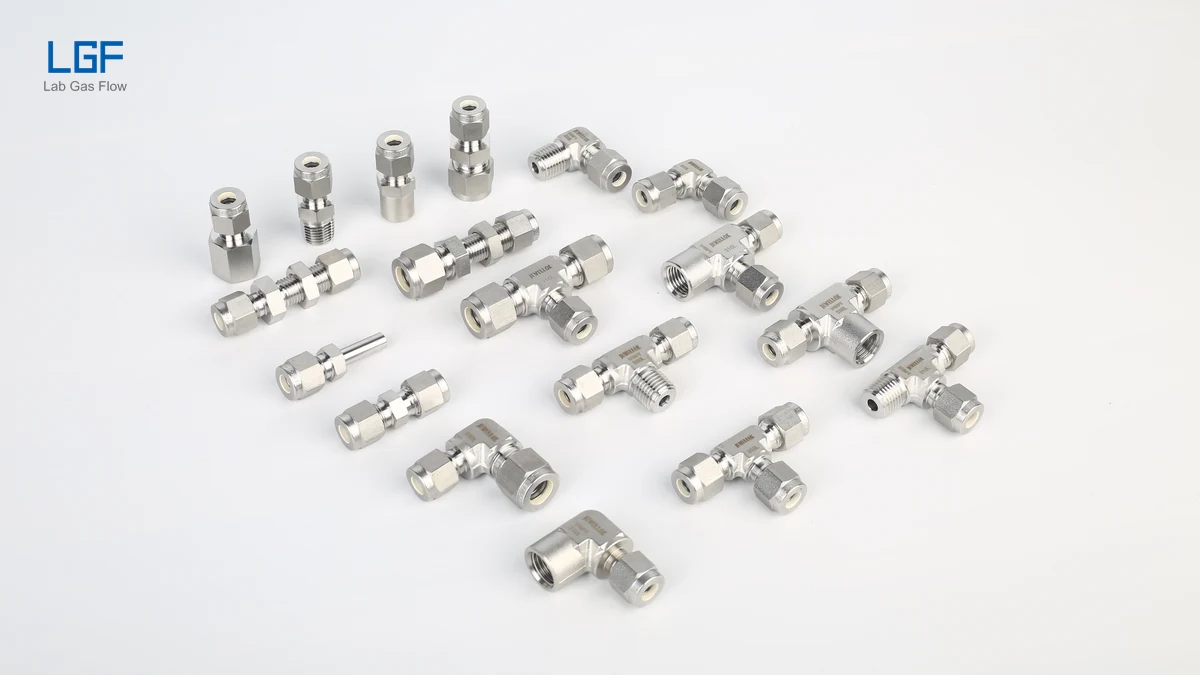
Count reducers, elbows, tees, and adapters from coordinated drawings. Extra adapters can erase a low unit-price advantage and add joints to inspect. A 316L weld tee is one branch component option where the drawing calls for a welded stainless run; its dimensions and ends must match the chosen tube.
Which codes and standards belong in the purchase order?
The approved design should identify the code and edition adopted for the project and the authority having jurisdiction. ASME B31.3 is a process-piping framework that covers materials, components, design, fabrication, inspection, and testing where applicable. A tube standard such as ASTM A269 can define material and dimensions, but it does not replace a project cleanliness or commissioning specification.
Fire and compressed-gas rules depend on gas classification, quantity, occupancy, and jurisdiction. NFPA 45 addresses fire protection in laboratories using chemicals. Other compressed-gas provisions and local codes may apply to storage or distribution. Ask the project engineer to name the applicable requirements rather than place a generic standards list in every RFQ.
Keep the hierarchy clear: the adopted code sets construction obligations, the approved design defines the service and acceptance criteria, and the product specification defines what the vendor delivers. Resolve conflicting requirements before purchase. A supplier certificate cannot approve the system design.
Testing also requires a project-specific plan. State who performs pressure and leak testing, the method, test medium, acceptance limit, witness point, documentation, and repair/retest process. Do not apply one test pressure multiplier or leak rate to all gases and components. Those figures must follow the adopted code, approved design, and equipment limitations.
What evidence should the supplier provide?
Request material certificates that link tube and fitting lots to the ordered alloy and applicable standard. For critical service, require heat or lot identification on packaging and a mapping from installed line tags to delivered batches. Traceability makes later investigation possible without dismantling unrelated lines.
Clean products must arrive clean. Specify cleaning method, residual or inspection limits where needed, capped ends, inner bag, outer protection, and handling instructions. Verify that cleanliness evidence covers the product after fabrication, not only raw tube before cutting or joining.
Dimensional evidence matters wherever tolerances affect assembly. Outside diameter, wall thickness, ovality, and end condition influence ferrule engagement and weld fit-up. Link catalogue dimensions to exact part numbers and production lots when traceability is required.
Add a substitution rule to the purchase order. If a specified component is unavailable, the supplier should propose an alternative for written approval before shipment. A matching nominal size is insufficient if rating, finish, seal material, or installation method differs.
How should quotations be compared beyond unit price?
Compare complete, tagged bills of materials using the same quantities, end connections, finish, cleaning, and packaging. Separate product price from installation, testing, documents, spare gaskets, shipping protection, and lead time. An incomplete low quote can become expensive after rework and missing adapters are added.
Ask bidders to show exclusions and assumptions line by line. Factory-cleaned, capped tubing and ordinary uncapped tubing are different deliverables even if both carry the same alloy label. If certificates or test records are omitted, price the work needed to produce them.
Maintenance access affects lifecycle cost. A removable fitting at an instrument may simplify service, whereas one buried above a closed ceiling may add an inspection point without helping maintenance. Coordinate the fitting schedule with the installation design.
Identify long-lead parts early. Approve critical samples before production if needed, and tie the delivery schedule to construction phases. Standardizing connection families can simplify spares, provided compatibility and performance requirements remain satisfied.
What belongs on the RFQ and receiving checklist?
A complete RFQ names gas, purity target, hazard class, flow, pressure and temperature envelope, line tags, material, finish, tube OD and wall, fitting numbers, connection types, applicable code and edition, cleaning, packaging, documents, quantities, delivery, and acceptance tests. Give bidders drawings with revision numbers so they all price the same design.
- Service: Gas identity, source and outlet boundaries, point-of-use requirements, peak demand, hazardous-area conditions.
- Components: Material, dimensions, finish, ratings, seals, connection geometry, and spare parts.
- Evidence: Certificates, lot mapping, cleaning records, drawings, inspection reports, and approved deviations.
- Delivery: Caps, bags, labels, preservation, shipment sequence, and replacement terms.
- Acceptance: Dimensional checks, assembly procedure, pressure/leak test, purge, and handover records.
Receiving inspection should compare labels, quantities, dimensions, and certificates with the order before material enters the clean installation area. Confirm intact caps and bags, inspect sealing faces for damage, and preserve lot identity. Quarantine mismatched items until the project team decides how to proceed.
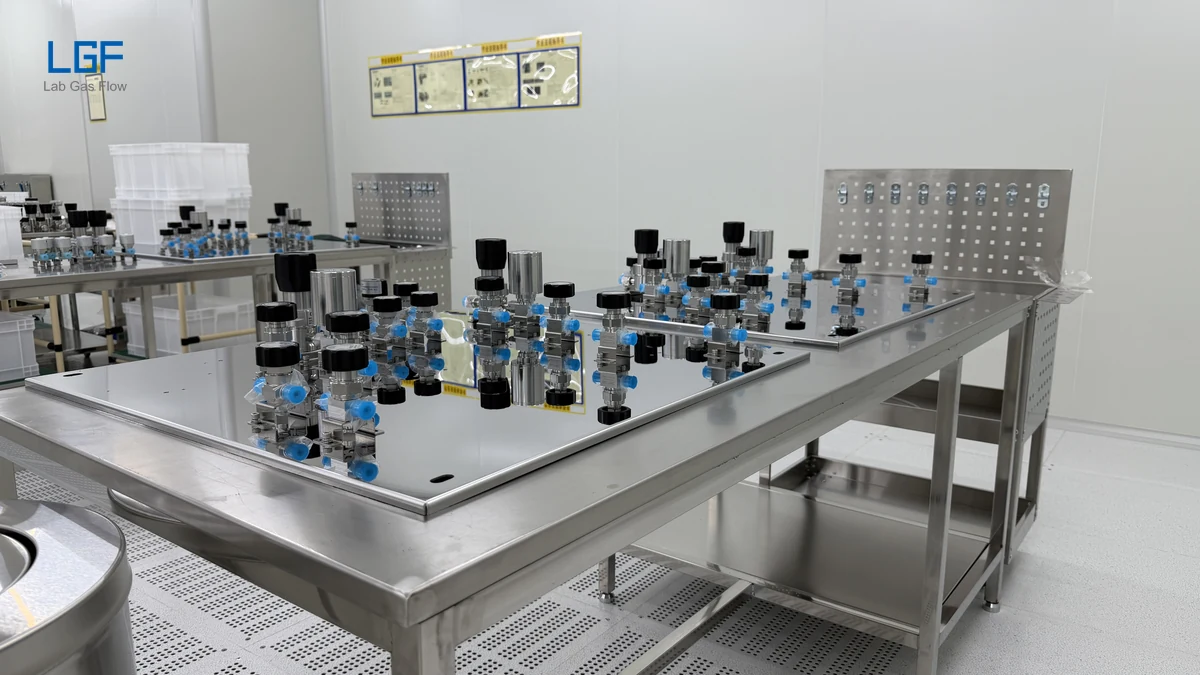
Installation and commissioning complete the chain. Assign responsibility for supports, identification, weld or fitting records, tests, purging, and point-of-use signoff. LGF’s laboratory gas pipeline installation overview explains the project stage that follows component supply.
Which procurement mistakes cause the most rework?
The first mistake is buying an alloy before defining the gas duty. The second is treating a 316L label as proof of high purity. Surface finish, cleaning, joining, packaging, installation, and verification all affect the delivered gas.
A third mistake is accepting a nominally matching fitting with the wrong mating geometry or rating. Incompatible gaskets, ferrules, or threads can turn a low-price order into a site delay. Approve drawings and part-number cross-references before purchasing.
Finally, define tests and records before installation. A clear acceptance plan catches problems while parts can still be replaced and leaves the owner with useful records for maintenance or expansion.
Frequently asked questions
Is 316L stainless steel always required?
No. Material depends on the gas, purity, pressure, temperature, code, and owner requirements. An approved utility service may use another material; a critical analytical path may need 316L plus tighter finish and cleanliness controls.
Does electropolishing guarantee clean gas?
No. Electropolishing is a surface process, not a guarantee of final gas quality. Check the measurable finish, post-process cleaning, sealed packaging, installation practice, and point-of-use acceptance.
Can compression fittings replace welded joints?
They can be appropriate where the approved design permits a serviceable connection and validates the exact tube and fitting combination. Permanent runs may use welded joints. Gas hazard, purity, access, assembly, and testing determine the choice.
What is the best document to attach to an RFQ?
Start with a tagged line schedule linked to current drawings. It should identify every gas, flow, pressure, destination, tube size, material, finish, and connection. Attach certificates and tests to the relevant line tags.
How should a substitute fitting be approved?
Compare wetted materials, dimensions, mating geometry, ratings, cleaning, traceability, and assembly instructions with the specified part. Obtain written engineering approval before shipment or installation.
How can a B2B buyer move from specification to supply?
Successful laboratory gas piping procurement describes a complete gas path rather than a list of catalogue parts. Define service, calculate demand, choose compatible components, state governing requirements, require traceable delivery, and plan acceptance before placing the order.
LGF supports laboratories, contractors, wholesalers, and project buyers seeking laboratory gas piping components and project supply. Share your gas schedule, drawings, quantities, finish requirements, and delivery destination with the LGF team to discuss options, documentation, and a tailored B2B quotation.