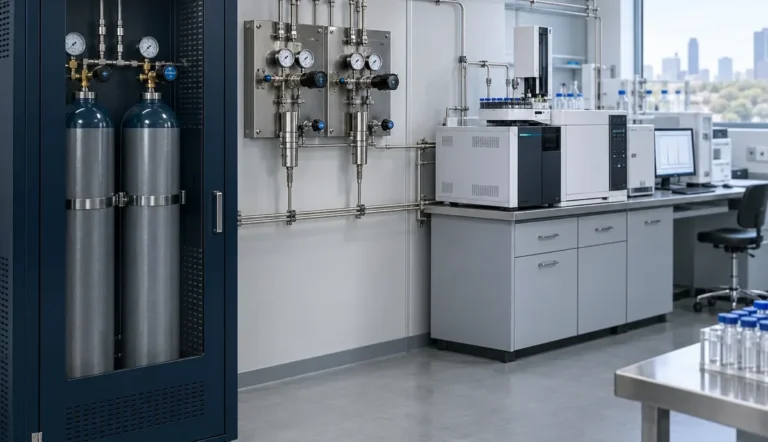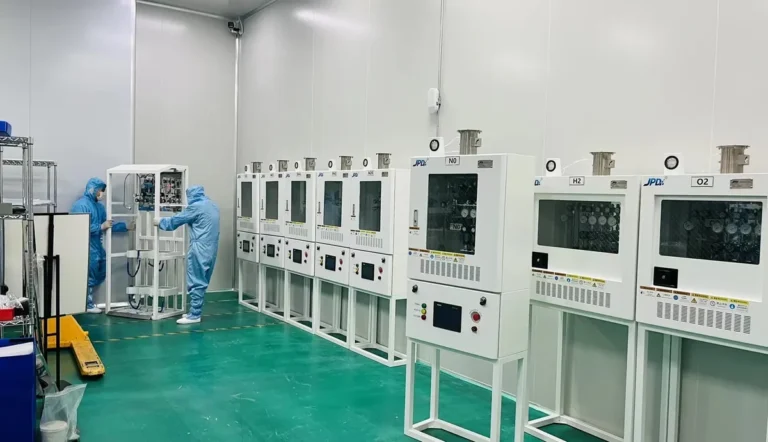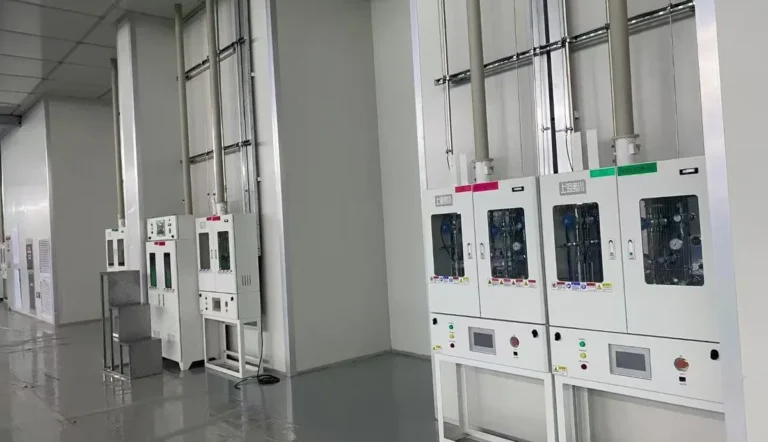

Quick answer: managing specialty gases in an analytical lab means controlling the whole gas lifecycle, not only the hardware. A well-managed lab selects the right gas grade for each instrument, verifies certificates of analysis, keeps calibration standards traceable and in date, tracks every cylinder from delivery to return, stores and segregates cylinders by hazard, protects purity from the cylinder valve to the instrument inlet, changes cylinders without interrupting analyses, monitors consumption and cost, and documents everything for audits. Labs that manage gases this way see fewer failed calibrations, less instrument downtime, lower gas spend and smoother ISO/IEC 17025 or GLP inspections.
How this guide differs from equipment guides: the design of gas supply hardware is covered in the laboratory gas delivery systems guide, cabinets in the specialty gas cabinets guide and manifolds in the laboratory gas manifolds guide. This article focuses on the daily management of specialty gases in analytical laboratories: grades, documentation, inventory, storage, purity, changeover, cost, safety and compliance.
What are specialty gases in an analytical lab?
Specialty gases in an analytical lab are high-purity gases and certified gas mixtures used to operate, calibrate and verify analytical instruments. They include carrier gases such as helium, hydrogen and nitrogen for gas chromatography, detector fuel and support gases such as hydrogen and synthetic air for flame ionization detectors, plasma and nebulizer gases such as argon for ICP-OES and ICP-MS, fuel and oxidant gases such as acetylene and nitrous oxide for atomic absorption, collision and reaction gases for mass spectrometry, and calibration mixtures with certified concentrations of target components.
Specialty gases differ from general industrial gases in that their impurity levels, composition and documentation directly affect analytical results. A trace of moisture or hydrocarbon in a carrier gas raises baseline noise, a drifted calibration mixture shifts every reported concentration, and an undocumented cylinder can invalidate results during an audit. Managing these gases is therefore part of the laboratory’s quality system, not only a facilities task.
Which gases do common analytical instruments need?
Each analytical technique requires a specific set of gases with defined purity, pressure and flow. The table below summarizes typical requirements; exact values come from the instrument manufacturer’s site preparation guide.
| Instrument | Typical gases | Key purity concerns |
|---|---|---|
| GC with FID | Helium, hydrogen or nitrogen carrier; hydrogen fuel; zero air | Hydrocarbons, moisture, oxygen |
| GC-MS | Helium or hydrogen carrier | Oxygen, moisture, hydrocarbons; column and source damage |
| GC with ECD | Nitrogen or argon-methane | Oxygen and halogenated contaminants |
| ICP-OES / ICP-MS | High-purity argon; reaction or collision gases | Moisture, nitrogen, metals in delivery system |
| Atomic absorption | Acetylene, air, nitrous oxide | Acetone carryover from acetylene cylinders |
| LC-MS | Nitrogen for nebulization and drying; argon or nitrogen collision gas | Flow stability, particles |
| Elemental and TOC analyzers | Oxygen, helium, carrier and combustion gases | Carbon and nitrogen contaminants |
Building a gas schedule that lists every instrument, gas, grade, pressure, flow and usage pattern is the foundation of gas management. The schedule drives purchasing, storage, distribution design and safety planning, and it should be updated whenever an instrument is added or changed. Step-by-step selection of supply equipment is explained in how to select laboratory gas delivery systems.
How should an analytical lab choose the right gas grade?
An analytical lab should choose gas grades based on the impurity limits that matter for each method, not on grade names alone, because grade names such as “5.0” or “research grade” are not standardized across suppliers. The useful information is the guaranteed maximum level of specific impurities, such as moisture, oxygen, total hydrocarbons, carbon monoxide and carbon dioxide, stated in ppm or ppb on the specification sheet.
Over-specifying wastes money and under-specifying damages results. A GC-MS operating at trace levels may need very low oxygen and moisture, while a general nitrogen purge does not. A practical approach is to define a gas specification per application, compare supplier specifications against it, and add point-of-use purifiers where the delivered gas or the distribution system cannot reliably achieve the required purity. Grade decisions should be documented so that the same specification is used every time the gas is reordered.
What should a certificate of analysis contain?
A certificate of analysis for a specialty gas should identify the cylinder by serial number and lot, state the gas or mixture, list the measured or certified values of each component or impurity, give the analytical method and uncertainty for certified mixtures, show the fill and certification dates, state the expiry or recommended use-by date, and identify the laboratory and person who released it. For calibration mixtures, the certificate should also state traceability to national or international measurement standards.
Laboratories should check each certificate on receipt, file it with the cylinder record and link it to the analyses in which the gas is used. A cylinder without a matching certificate should not be used for calibration. For accredited laboratories, calibration mixtures produced by a supplier with relevant accreditation for gas mixture preparation simplify the demonstration of measurement traceability.
How should calibration gas standards be managed?
Calibration gas standards should be managed as reference materials with controlled identity, traceability, stability and expiry. Each standard needs a unique identifier, a certificate, a defined shelf life and storage conditions, and a record of where and when it was used. Reactive components such as hydrogen sulfide, nitrogen dioxide or low-concentration hydrocarbons can be less stable and may require shorter use periods, special cylinder treatments and regulators with suitable materials.
Standards should be used only within their certified period and above the minimum cylinder pressure recommended by the supplier, because composition can shift at low pressure. Regulators used for reactive or low-concentration standards should be dedicated to that standard, purged before use and not shared with other gases, because adsorption on internal surfaces can change the delivered concentration. A simple calibration standards register prevents the most common audit finding: a calibration performed with an expired or undocumented standard.
How should cylinder inventory be tracked?
Cylinder inventory should be tracked by recording each cylinder from delivery to return, including serial number, gas, grade or mixture, supplier, certificate, delivery date, location, date placed in service, date removed and condition. Tracking can be done with a spreadsheet in small labs or with barcode or RFID systems in larger facilities. The goal is to know at any time which cylinders are full, in use, empty or awaiting return, and where each one is.
Good tracking prevents three costly problems. It avoids paying rental for cylinders that sit forgotten in storage, it ensures that cylinders are used in the order received so that certified mixtures do not expire unused, and it allows a quick response when a supplier issues a quality notification for a specific lot. Reorder levels should be set for each gas based on consumption and supplier lead time, so that critical gases never run out.
How should specialty gas cylinders be stored and segregated?
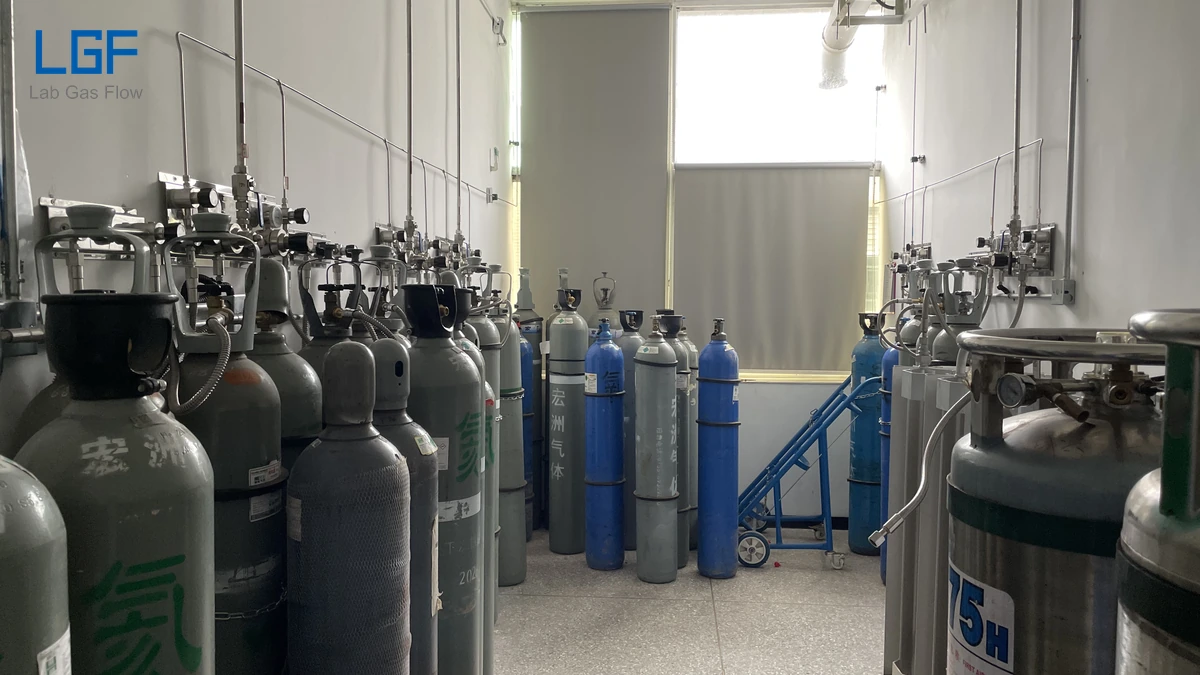
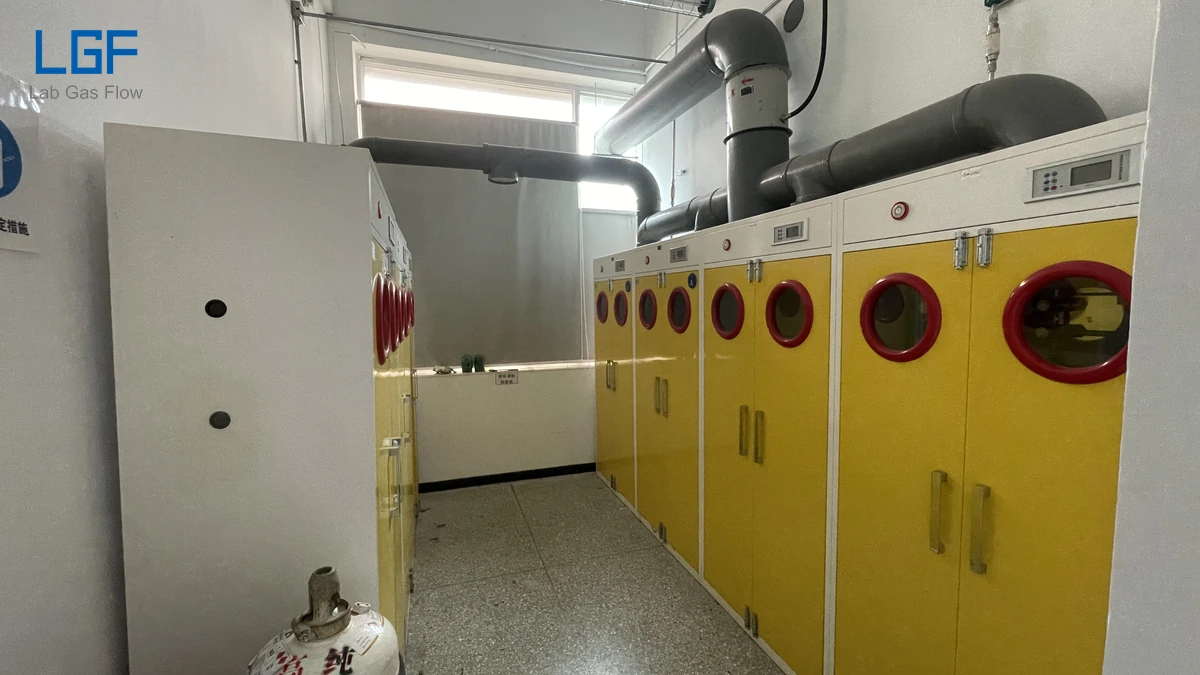
Specialty gas cylinders should be stored upright and secured against falling, with valve protection caps fitted when not connected, in a ventilated area away from heat sources and direct sun. Full and empty cylinders should be stored separately and clearly marked. Cylinders must be segregated by hazard class: flammable gases such as hydrogen and acetylene should be separated from oxidizing gases such as oxygen and nitrous oxide by the distance or fire-rated barrier required by local regulations, and toxic or corrosive gases should be stored in ventilated cabinets or dedicated rooms.
Storage quantities inside the laboratory should be kept to the minimum needed for operation, because many fire codes limit the quantity of flammable and toxic gases allowed in a laboratory area. Moving cylinders to an external gas store or a central supply room with piped distribution reduces risk and frees bench space. The trade-offs of central supply are discussed in centralized vs. cylinder-at-bench gas supply.
How can a lab protect gas purity from cylinder to instrument?
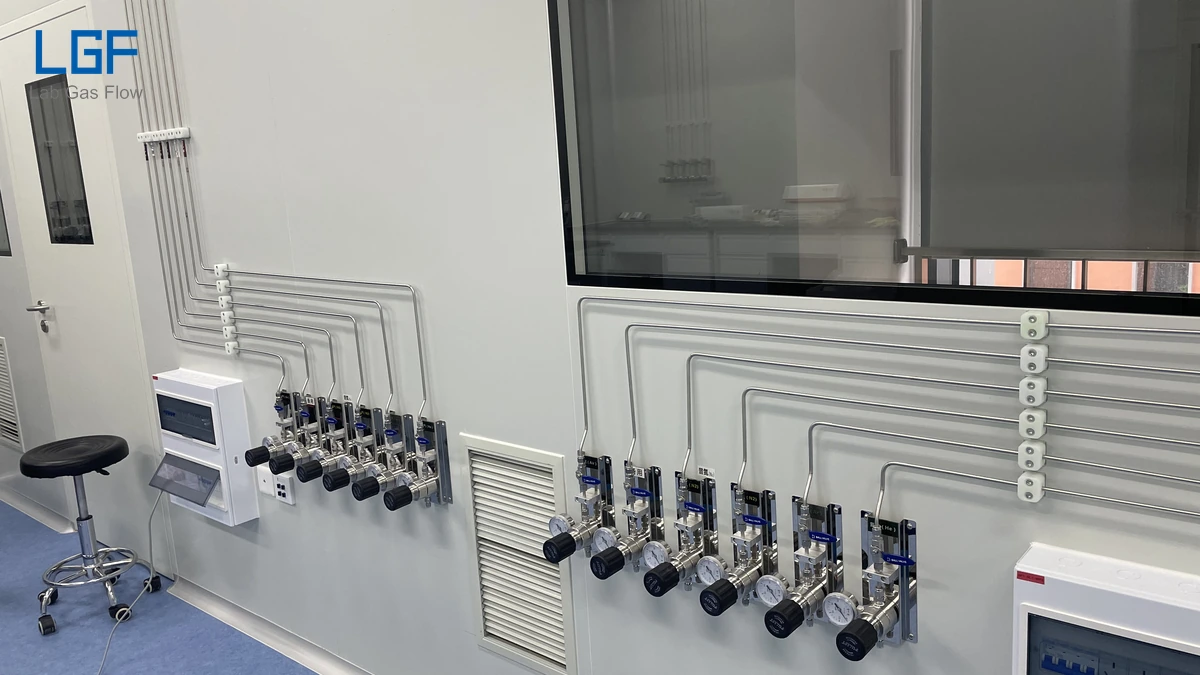
A lab protects gas purity from cylinder to instrument by using delivery components matched to the purity requirement, purging every connection after a cylinder change, and preventing leaks and backflow. High-purity applications need stainless steel tubing cleaned for gas service, diaphragm-sealed regulators and valves, metal-to-metal or face-seal connections and minimal dead volume. Plastic tubing, elastomer-sealed regulators and threaded joints with tape can release moisture and hydrocarbons or allow air to diffuse inward.
Purging after each cylinder change removes the air that enters the regulator and pigtail when the cylinder is disconnected. Cycle purging, which pressurizes and vents the connection several times, is more effective than a single flush. Point-of-use filters and purifiers protect sensitive instruments, but they need scheduled replacement and indicators that show when they are exhausted. Leak checks at every new connection, using an electronic leak detector rather than soap solution near sensitive systems, keep air out of carrier gas lines. Suitable regulators include the DPR1 UHP two-stage pressure regulator and the JR1000 UHP single-stage regulator.
How should cylinder changeover be managed to avoid downtime?
Cylinder changeover should be managed so that analyses are never interrupted and no air enters the system. Single-cylinder connections require the instrument to be stopped during the change, which can interrupt overnight sequences and require re-equilibration. Changeover manifolds with two cylinders or two banks switch automatically or semi-automatically from the empty to the reserve source, so the instrument keeps running and the empty cylinder can be replaced during normal working hours.
| Supply method | Downtime risk | Best suited for |
|---|---|---|
| Single cylinder at instrument | High; supply stops when empty | Low-usage gases and calibration standards |
| Manual changeover manifold | Medium; requires operator action | Moderate usage with staff on site |
| Semi-automatic changeover | Low; switches when pressure drops | Carrier gases and continuous operation |
| Fully automatic changeover with alarms | Very low; remote notification | High-throughput labs and unattended runs |
Changeover equipment examples include the JW-100 manual and semi-automatic gas changeover manifold and the JW-200 UHP stainless steel changeover manifold.
How can analytical labs reduce helium dependence?
Analytical labs can reduce helium dependence by converting suitable GC methods to hydrogen or nitrogen carrier gas, using helium-saving modes on instruments, and reducing waste from leaks and idle flows. Hydrogen offers fast analysis and good efficiency and can be supplied by a laboratory hydrogen generator, but it requires leak-tight connections, hydrogen sensors and instrument settings that are safe for hydrogen. Nitrogen is inexpensive and safe but gives slower separations, so it suits methods where speed is less critical.
Method conversion must be validated, because retention times, resolution and, for GC-MS, source behavior change with the carrier gas. Many labs keep helium for methods that require it and move routine methods to alternative carriers. Gas-saving modes that reduce split flow between injections and repairing leaks found by electronic leak detection often reduce helium consumption noticeably without method changes.
Should an analytical lab use gas generators or cylinders?
The choice between gas generators and cylinders depends on gas type, consumption, purity requirement and site conditions. Generators for nitrogen, hydrogen and zero air produce gas on demand, remove cylinder handling and deliveries, and give predictable cost after the initial investment. Cylinders remain necessary for gases that cannot be generated on site, such as argon, helium, acetylene, most reactive gases and all certified calibration mixtures, and they are often more economical at low consumption.
| Factor | Gas generator | Cylinder supply |
|---|---|---|
| Available gases | Nitrogen, hydrogen, zero air | Almost any gas or mixture |
| Cost profile | Capital cost, low running cost | Low capital, ongoing gas and rental cost |
| Handling and safety | No cylinder handling; small stored volume | Cylinder handling and storage required |
| Purity documentation | Depends on maintenance and monitoring | Certificate per cylinder or lot |
| Best suited for | Continuous, high-consumption utility gases | Calibration standards, argon, helium, specialty mixtures |
Most analytical labs end up with a hybrid: generators for high-volume utility gases and cylinders, often on central manifolds, for everything else.
How can a lab control specialty gas costs?
A lab controls specialty gas costs by matching grade to need, reducing waste and managing cylinder rental. Buying higher purity than the method requires is one of the most common sources of overspending. Leaks, unnecessary purge flows, instruments left in standby with high flows and cylinders returned with large residual volumes all waste gas. Rental charges accumulate for cylinders that are not used, so regular inventory reviews and prompt return of empties reduce cost.
Consolidating purchases with fewer suppliers, standardizing gas specifications across instruments, using larger cylinder sizes or manifolded banks for high-consumption gases, and monitoring consumption per instrument also help. Tracking cost per analysis for major gases makes it easier to justify investments such as generators, automatic changeover or leak repairs.
Which safety measures are required for specialty gases in analytical labs?
Safety measures for specialty gases in analytical labs include hazard assessment for each gas, appropriate ventilation, gas detection, safe cylinder handling, trained personnel and emergency procedures. Flammable gases such as hydrogen and acetylene need leak-tight installations, ignition source control and, where quantities justify it, hydrogen or flammable gas detectors. Inert gases such as nitrogen, argon and helium can displace oxygen in small or poorly ventilated rooms, so oxygen depletion monitors are recommended where large volumes or cryogenic liquids are used.
Toxic and corrosive gases require exhausted gas cabinets, specific detectors, emergency shutoff and written procedures. All users should be trained in cylinder handling, regulator connection, leak checking, purging and emergency response, and training records should be kept. Relevant standards and code references are summarized in the laboratory gas equipment safety standards guide, and exhaust treatment is covered on the laboratory gas exhaust treatment and purge systems page.
What documentation do auditors expect for specialty gases?
Auditors in ISO/IEC 17025, GLP and GMP environments expect specialty gases to be controlled like other critical consumables and reference materials. Typical expectations include a gas specification for each application, approved suppliers, certificates of analysis linked to cylinders, a calibration standards register with traceability and expiry, cylinder tracking records, procedures for cylinder change and purging, maintenance and calibration records for regulators, purifiers, detectors and generators, and training records for staff who handle gases.
Instrument records should allow an auditor to trace which gas cylinder or standard was used for a given analysis or calibration. Laboratories that keep this information in a structured system, whether paper or electronic, pass audits more smoothly and can investigate out-of-specification results faster, because they can quickly rule gas quality in or out as a cause.
What maintenance keeps a specialty gas system reliable?
A specialty gas system stays reliable when regulators, valves, filters, purifiers, detectors and changeover equipment are maintained on a defined schedule. Regulators should be inspected for creep and leaks and serviced at intervals recommended by the manufacturer. Purifiers and filters need replacement before they are exhausted. Gas detectors need calibration and functional testing. Changeover manifolds and alarms should be tested to confirm that switchover and notifications work.
Periodic leak surveys of the distribution system, pressure decay tests on high-purity lines and inspection of flexible hoses and pigtails prevent gradual deterioration. A service framework is described in after-sales maintenance and annual inspection.
What are the most common specialty gas management mistakes?
The most common specialty gas management mistake is treating gases as a facilities commodity rather than as part of the analytical quality system, which leads to undocumented cylinders, expired standards and inconsistent grades. The second most common mistake is poor purging and connection practice during cylinder changes, which introduces air and moisture and shows up as baseline drift, high background or column damage.
Other frequent mistakes include sharing regulators between incompatible gases, using plastic tubing for high-purity carrier gas, storing too many cylinders in the laboratory, running out of critical gases because reorder levels are not set, ignoring oxygen depletion risk from inert gases, and leaving leaks unrepaired. A written gas management procedure, a gas schedule and a cylinder register prevent most of these issues.
Frequently asked questions
How often should calibration gas cylinders be replaced?
Calibration gas cylinders should be replaced before the expiry date on the certificate or when the pressure falls to the minimum recommended by the supplier, whichever comes first. Reactive or low-concentration mixtures often have shorter shelf lives than stable mixtures.
Can the same regulator be used for different gases?
A regulator should only be used for gases that are compatible with its materials and connection type, and regulators for calibration standards or reactive gases should be dedicated to one gas. Sharing regulators risks contamination, incorrect readings and safety hazards.
Is nitrogen a good replacement for helium as GC carrier gas?
Nitrogen can replace helium in methods where longer analysis times are acceptable, while hydrogen gives speeds similar to or faster than helium. Any carrier gas change must be validated for the method, and hydrogen requires additional safety measures.
How many cylinders can be stored in an analytical lab?
The allowed quantity depends on local fire codes, the gas hazard class, room construction and protection measures. Many labs keep only cylinders in use inside the lab and store reserves in a dedicated gas store or central supply room.
Do point-of-use purifiers replace high-grade gas?
Point-of-use purifiers remove specific impurities and protect instruments, but they do not make a low-grade gas suitable for every application and they need regular replacement. They work best as a safeguard combined with an appropriate gas grade and a clean delivery system.
Improve specialty gas management in your analytical lab with LGF
LGF Lab Gas Flow supplies specialty gas regulators, changeover manifolds, gas cabinets, point-of-use panels, high-purity piping and exhaust treatment for analytical, environmental, pharmaceutical and research laboratories. Our engineers help laboratories build gas schedules, choose suitable components for each gas and purity level, design central supply and distribution, and plan safe, audit-ready gas management. See our solutions for environmental monitoring and analytical laboratory gas supply and independent testing laboratory gas supply, and our analytical testing laboratory specialty gas installation project.
Planning a new analytical lab or upgrading an existing gas supply? Send your instrument list, gases, purity requirements and floor plan through the LGF contact page. Our team will recommend a supply and distribution concept, suitable regulators and changeover equipment, and prepare a quotation for your project. Laboratory designers, EPC contractors and instrument distributors are welcome to contact us about project cooperation.