
To evaluate an ultra-high purity laboratory gas equipment supplier, judge the evidence behind its claims rather than the claims themselves. A qualified supplier should translate each gas, instrument and operating condition into a controlled design; identify every wetted material and seal; document cleaning and assembly controls; prove pressure, flow and leak performance; maintain serial or batch traceability; and support factory acceptance, installation and service. Price matters only after competing proposals have been normalized to the same scope and acceptance criteria.
This guide gives laboratory managers, engineers, quality teams and B2B buyers a repeatable supplier-qualification method. It focuses on equipment such as regulators, changeover manifolds, gas panels, valves, cabinets, purifiers and point-of-use assemblies. It complements the earlier guide to selecting a laboratory gas delivery system, which explains what system a laboratory needs; this guide explains how to determine whether a supplier can reliably deliver it.
What does “qualified for UHP service” mean in practice?
“Qualified for UHP service” means a supplier can demonstrate that its materials, cleaning, assembly, testing, traceability and packaging preserve the specified gas purity under the intended operating conditions. It is an evidence-based capability, not a catalogue label or a general quality claim.
UHP performance depends on the complete wetted path from the source connection to the instrument. Buyers should therefore evaluate surface condition, dead volume, seals, component compatibility, assembly atmosphere, packaging, installation and purge procedure as one controlled system rather than accepting the words “high purity” or “UHP” as a complete specification.
The first purchasing principle is therefore simple: define UHP performance in measurable terms. The purchase specification should name the gas, controlled impurities, inlet and outlet pressure, normal and peak flow, permitted pressure decay, leakage acceptance criterion, wetted materials, connection standard, surface-finish requirement where relevant, cleaning level, documentation and test method. This approach prevents two suppliers from quoting different levels of performance under the same broad description.
Material grade alone does not prove cleanliness. For demanding stainless-steel systems, the supplier should be able to explain material chemistry, manufacturing route, surface preparation and traceability. SEMI F20, for example, addresses metallurgical cleanliness and composition for 316L stainless steel used in high- and ultra-high-purity distribution components. The relevant standard must still match the actual laboratory application and contract.
Start with a written gas and instrument requirement
A supplier cannot design a defensible UHP system from a list of gas names alone. The request for quotation should include an instrument gas schedule with gas grade, cylinder or bulk source, inlet pressure range, required delivery pressure, normal flow, simultaneous peak flow, allowable pressure stability, connection type, room classification, ventilation constraints and expected expansion. The schedule should also identify whether the gas is inert, flammable, oxidizing, corrosive, toxic or otherwise subject to special controls.
The supplier’s first technical response is itself an evaluation test. A capable supplier asks about unresolved conditions, identifies conflicts and states assumptions. A weak supplier immediately proposes model numbers without confirming the duty. Buyers can use the system-selection sequence in the UHP gas manifold configuration guide to check whether the proposal addresses source arrangement, pressure stages, changeover logic, isolation and purge paths.
Use a weighted supplier scorecard
A weighted scorecard makes supplier comparison more consistent than an unstructured meeting. The weighting should follow project risk: a trace-analysis laboratory may give purity controls more weight, while a facility handling hazardous gases may place greater weight on containment, interlocks and service competence. The following 100-point model is a practical starting point.
| Evaluation area | Weight | Evidence to request |
|---|---|---|
| Application engineering | 15 | Gas schedule review, calculations, P&ID, stated assumptions and design review record |
| Purity-preservation design | 20 | Wetted-material list, surface and seal specifications, dead-volume control, purge design and contamination-risk review |
| Manufacturing and cleanliness controls | 15 | Cleaning procedure, controlled assembly method, segregation, packaging and cleanliness verification |
| Testing and traceability | 15 | Test procedures, calibrated-equipment records, sample reports, serial or batch traceability and nonconformance control |
| Safety and standards alignment | 10 | Applicable-code matrix, hazard review, control narrative, alarm and fail-safe verification |
| Quality system and change control | 10 | Certificate scope, audit results, approved sub-suppliers, revision control and notification process |
| Project execution and service | 10 | Schedule, FAT/SAT plan, installation boundaries, training, spares and response commitments |
| Commercial and lifecycle value | 5 | Normalized price, exclusions, warranty, consumables and expected maintenance cost |
A score should be awarded for evidence, not presentation quality. For example, “helium leak tested” deserves fewer points than a controlled procedure that identifies the test method, sensitivity, acceptance criterion, calibrated instrument, test location and report traceable to the supplied serial number. A certificate without a defined scope should not receive the same score as a record tied to the exact equipment.
How should application engineering be evaluated?
Application engineering should demonstrate that the supplier understands the full operating envelope rather than only the normal condition. Ask the supplier to calculate capacity at minimum source pressure, maximum simultaneous demand and the required outlet pressure. The proposal should explain regulator staging, pressure-drop allowances, changeover reserve, relief routing and the effect of future outlets. A statement of assumptions is essential because an unstated assumption becomes a hidden project risk.
Review the process and instrumentation diagram as an operating document. Every isolation valve, check valve, regulator, filter, purge connection, vent, sensor and outlet should have a clear function. The P&ID should also show normal flow, purge flow and safe maintenance boundaries. When several suppliers quote against the same functional P&ID, commercial comparison becomes more meaningful.
Gas compatibility must be evaluated for the exact service conditions. Stainless steel is common in UHP systems, but material choice cannot be reduced to “316L everywhere.” The supplier should justify diaphragm, seat, seal, filter and lubricant choices, including any restrictions caused by oxidizers, corrosives or reactive mixtures. The laboratory’s technical team can cross-check component-level questions against the laboratory gas valve buying guide.
How can a buyer verify purity-preservation capability?
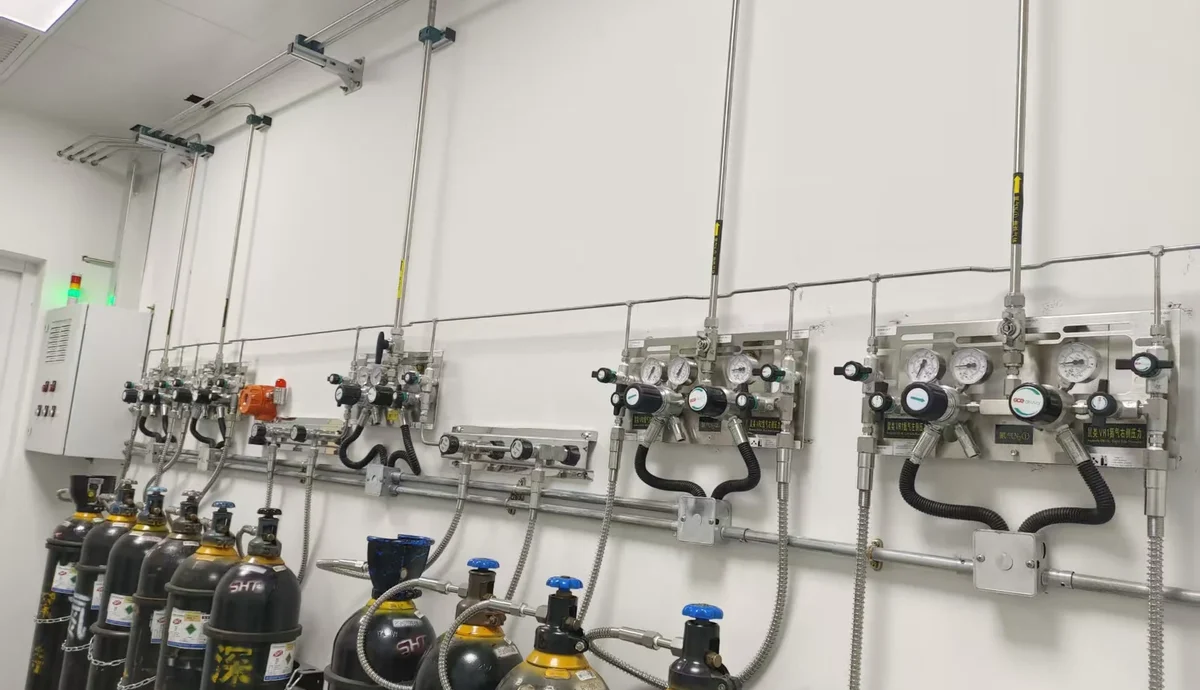
Purity preservation should be evaluated as a chain of controls. Low internal volume and swept flow paths reduce the gas volume that must be purged after cylinder changes. Metal diaphragms and appropriate face-seal or welded connections can reduce permeation and trapped volume in demanding applications. Electropolished or otherwise specified internal surfaces may be necessary where moisture, oxygen or particle release affects the method, but the required finish should be defined rather than assumed.
Ask for a complete wetted-material and wetted-surface schedule. The schedule should identify component manufacturer or approved equivalent, body material, diaphragm or bellows material, seat or seal material, connection type, internal finish where controlled, cleaning designation and maximum pressure. This document exposes substitutions that a simplified bill of materials would hide.
Purge design deserves separate review because excellent components can still be contaminated by an ineffective change procedure. The design should allow the operator to isolate the process, depressurize safely, purge the pigtail or source connection and restore service without driving ambient air downstream. For automatic equipment, request a sequence table showing valve state, timing, permissives, alarms and the response to loss of purge gas, exhaust or electrical power.
What manufacturing controls should be audited?
A manufacturing audit should follow one representative order from incoming material to shipment. The evaluator should confirm receiving inspection, material identification, storage segregation, machining or fabrication controls, cleaning, controlled assembly, welding qualifications where applicable, inspection, testing, packaging and record retention. A clean demonstration area is not enough if production records cannot link each step to the delivered equipment.
Cleaning procedures should define the contaminants being controlled, the cleaning agent or process, acceptance method, drying, handling and preservation. Oxygen service requires additional rigor because hydrocarbon and particulate contamination can create an ignition risk. ASTM G93/G93M describes cleanliness levels, cleaning methods, inspection and preservation principles for oxygen-enriched equipment. A generic “cleaned for gas service” statement should not replace an application-specific cleaning specification.
Assembly controls should prevent cleaned parts from being recontaminated. Ask how personnel, tools, gloves, benches, assembly rooms, purge gases and open-component exposure are controlled. The buyer should also verify how incompatible gas families and non-clean production are segregated. Packaging must preserve the achieved condition through storage, international transport and site staging, so ports should be capped or sealed and packages should be clearly identified.
If orbital welding is included, evaluate the complete welding system rather than a sample bead. The supplier should provide qualified procedures, operator qualifications, machine calibration, weld identification, purge controls, inspection criteria and traceable weld logs. The purchasing team can use the laboratory gas piping and fittings procurement guide to align tubing, fitting and installation requirements.
Which tests and records should be required?
Testing should be divided into pressure integrity, external leakage, inward leakage or contamination risk, functional performance and cleanliness where applicable. A pressure test proves that the assembly withstands a defined condition; it does not automatically prove UHP leak integrity. A functional test proves that valves, regulators, sensors and controls operate; it does not prove that wetted surfaces are clean. Each acceptance need therefore requires its own method and criterion.
Do not copy a helium leak-rate number from another project without defining the test boundary and method. Ask whether the test measures individual components or the complete assembly, whether it is an inboard or outboard test, which pressure and tracer concentration are used, how background is controlled, and what sensitivity the instrument can reliably demonstrate. The supplier’s report should record the actual result, not only “pass.”
Calibration status should be visible in every critical test record. Each report should identify the test instrument, calibration due date, operator, date, equipment serial number, procedure revision, conditions, acceptance limit, measured result and disposition. If a failure occurs, the supplier should retain the nonconformance, root cause, repair and retest history rather than replacing the failed record with a clean final sheet.
Minimum document package for a critical UHP assembly
- Approved data sheet, drawing, P&ID and bill of materials
- Wetted-material and connection schedule
- Material certificates and component certificates required by the purchase specification
- Cleaning, assembly and packaging declarations with traceable procedure revisions
- Pressure, leak and functional test reports with measured results
- Instrument calibration references and serial-number traceability
- Software or control revision, alarm matrix and sequence of operation when automation is supplied
- Operating, purge, maintenance and troubleshooting instructions
- Recommended spare-parts list and consumable replacement intervals
- Final deviations, approved concessions and as-built records
Does ISO 9001 certification prove technical capability?
ISO 9001 certification is useful evidence that a supplier operates a quality management system, but it does not certify a particular regulator, manifold or gas cabinet. Buyers should verify the certificate’s issuing body, validity, manufacturing-site address and scope. A certificate whose scope excludes design or the relevant manufacturing location provides less assurance for a custom engineered system.
The ISO guidance on ISO 9001 in the supply chain distinguishes supplier declarations, customer assessments and third-party certification. For UHP equipment, a risk-based qualification often uses all three: review the supplier’s documents, audit critical processes directly and confirm the quality-system certificate. Supplier approval should then be maintained through delivery performance, nonconformance trends and periodic requalification.
Sub-supplier control is equally important. A system integrator may purchase regulators, valves, sensors, tubing or controllers from several sources. Ask which components are single-source, which may be substituted, how alternatives are approved and when the customer is notified. A technically acceptable prototype can become a different product if critical components change without formal review.
How should safety and control competence be evaluated?
Safety evaluation should begin with a gas-specific hazard review and a clear responsibility boundary. The proposal should identify required containment, exhaust, detection, emergency shutoff, purge, pressure relief, ventilation permissives and alarm communication. It should also state which party supplies field detectors, exhaust balancing, building-management interfaces, electrical classification work and final authority approvals.
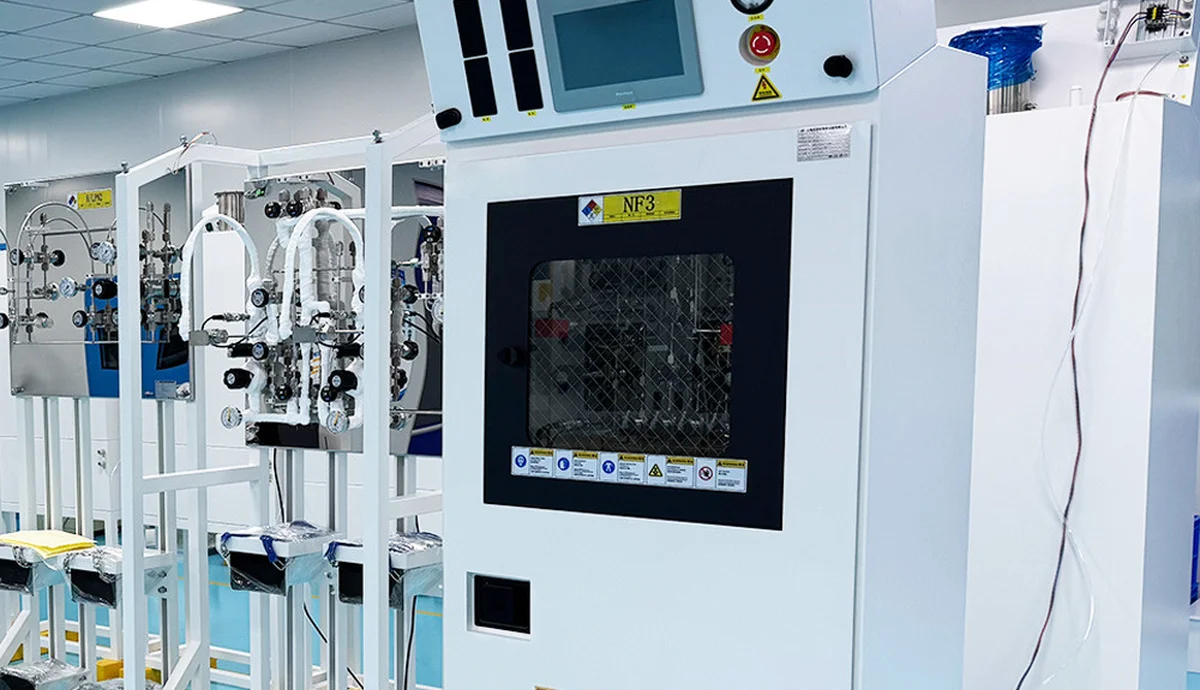
For automated cabinets and panels, request a cause-and-effect matrix. The matrix should show how the system reacts to high pressure, low purge pressure, detected gas, loss of exhaust, open door, failed valve feedback, power interruption and emergency stop. Fail-safe behavior should be demonstrated during factory acceptance rather than inferred from a controller screen. The existing guide to laboratory gas equipment safety standards helps buyers map applicable requirements to hardware and documentation.
Use FAT and SAT to convert promises into acceptance evidence
A factory acceptance test, or FAT, should verify the equipment before shipment while corrections are still practical. The approved FAT protocol should include document review, visual and dimensional checks, component verification, pressure and leak tests, regulator performance, valve sequencing, alarms, interlocks, loss-of-utility responses and recovery. The buyer should define which tests require witnessing and which may be supported by reviewed records.
A site acceptance test, or SAT, should verify the installed system under site conditions. SAT normally confirms installation identity, utility connections, exhaust and detector interfaces, field wiring, communication, purge flow, pressure stability, alarm transmission and operator access. FAT and SAT are complementary: FAT evaluates the manufactured package, while SAT evaluates the package as integrated with the facility.
Acceptance criteria should be agreed before manufacturing begins. A statement such as “test after completion” gives the parties no shared definition of success. A better purchase order attaches the approved data sheet, drawings, inspection and test plan, FAT/SAT protocol, document index and deviation process.
How should competing quotations be normalized?
Supplier quotations should be converted into a common comparison sheet before price is scored. One supplier may include regulators, purge valves, relief devices, sensors, FAT, export packaging and drawings, while another quotes only the cabinet shell and basic panel. Comparing the two totals without scope normalization rewards omissions rather than value.
| Normalize this item | Questions to resolve |
|---|---|
| Performance | Are inlet pressure, outlet pressure, peak flow, stability and leak criteria identical? |
| Materials and cleanliness | Are wetted materials, internal finish, seals, cleaning and packaging equivalent? |
| Controls | Are sensors, automatic valves, alarms, communication and fail-safe functions included? |
| Documentation and testing | Are drawings, certificates, test reports, FAT and witness costs included? |
| Project boundary | Who provides installation, field tubing, detectors, exhaust, commissioning and training? |
| Lifecycle | What spares, consumables, calibration, software support and response time are required? |
| Commercial terms | Are freight, duties, taxes, payment milestones, warranty and delay exposure comparable? |
Total cost should include engineering time, installation changes, commissioning, spare parts, consumables, calibration, maintenance and the operational cost of a failure. A lower purchase price can be more expensive when it creates repeated purging, instrument contamination, unstable pressure or long downtime waiting for a proprietary part.
How should project references and production capacity be checked?
Relevant experience should match the proposed scope, gas risk and purity requirement. A supplier that has built utility nitrogen panels may not yet have proven contamination control for trace analytical service, and a component reseller may not control fabrication or system testing. Ask for several completed projects with comparable gases, pressure, flow, automation and documentation. References are most useful when the buyer can confirm delivery scope, change management, commissioning issues, response time and operating performance rather than only the customer name.
Production capacity should be checked against the promised schedule. Review current workload, engineering resources, critical-component lead times, fabrication and test capacity, qualified personnel and dependence on single-source parts. The supplier should identify which operations are performed internally and which are outsourced. Outsourcing is not automatically a weakness, but the prime supplier must define approval, inspection and traceability controls for each external process.
A short pilot order can reduce uncertainty when the laboratory is qualifying a new source for a repeat program. The pilot should use the same controlled materials, manufacturing route, cleaning, test methods and documentation expected for later production. Treating the pilot as a special prototype creates misleading confidence because its process may not represent routine deliveries.
Five questions to ask a reference customer
- Did the delivered equipment match the approved drawings, materials and control sequence?
- Were test reports and as-built documents complete and delivered on time?
- How effectively did the supplier manage technical changes and nonconformances?
- Did commissioning reveal contamination, leakage, pressure-stability or integration problems?
- How quickly did the supplier provide technical support and replacement parts after handover?
Which supplier red flags deserve immediate clarification?
- The proposal uses “UHP” without defining materials, surface condition, cleaning or test criteria.
- The supplier will not provide a sample test report or document index before order.
- Critical technical answers are verbal and do not appear in the quotation or data sheet.
- The quality certificate has an unrelated scope, different site address or unclear issuing body.
- The bill of materials permits unrestricted “equivalent” substitutions.
- Leak testing is described only as “pass” with no method, sensitivity or traceable result.
- The supplier cannot explain purge paths, trapped volumes or safe maintenance isolation.
- Automation is offered without a sequence, alarm matrix or failure-response test.
- Delivery time depends on critical sub-suppliers, but no contingency or approved alternative exists.
- Installation, commissioning and warranty boundaries are left for later agreement.
A red flag does not always require automatic rejection. It requires a written clarification, revised evidence or a contractual control. If a supplier cannot close a high-risk gap before award, the buyer should not assume that manufacturing will resolve it.
What is the best final supplier-selection process?
- Define the duty. Complete the gas schedule, hazard classification, performance specification and project boundary.
- Prequalify suppliers. Review relevant project experience, manufacturing scope, quality certification, technical staff and service coverage.
- Issue one controlled RFQ. Give every bidder the same data sheet, P&ID requirements, standards list, test plan and document index.
- Hold a technical clarification. Record assumptions, exceptions, substitutions and unanswered questions.
- Audit critical evidence. Review manufacturing controls, sample records and sub-supplier management; visit the facility when project risk justifies it.
- Normalize and score bids. Close technical gaps before comparing lifecycle cost.
- Contract the acceptance basis. Attach approved specifications, FAT/SAT protocols, deliverables, change control and warranty response.
- Monitor performance. Record delivery, documentation, nonconformance, service and field reliability for future supplier approval.
The best UHP laboratory gas equipment supplier is not necessarily the company with the longest catalogue or lowest initial price. It is the supplier that can convert laboratory requirements into a traceable design, manufacture it under controlled conditions, prove performance with objective records and support the system throughout its operating life.
Discuss your UHP laboratory gas project with LGF Lab Gas Flow
LGF Lab Gas Flow supports B2B laboratory projects involving gas manifolds, pressure-control assemblies, gas cabinets, valves, piping and complete gas delivery systems. Send your gas list, purity targets, inlet conditions, outlet pressure, peak flow, instrument schedule, layout and applicable project requirements to receive a technically aligned equipment proposal. Contact LGF Lab Gas Flow or explore the website for more information about laboratory gas equipment and system solutions.