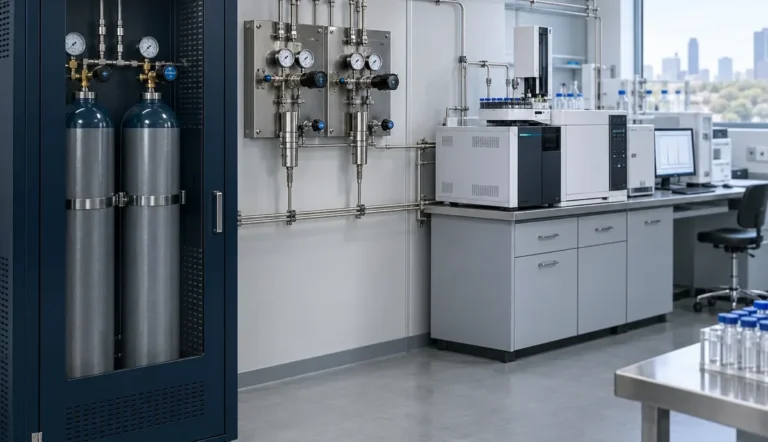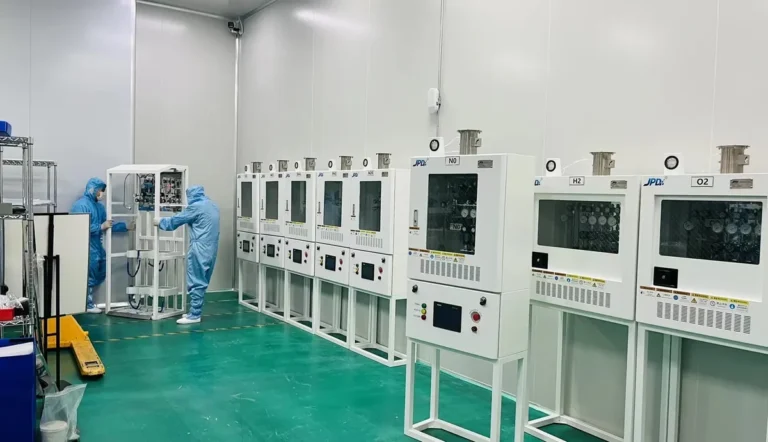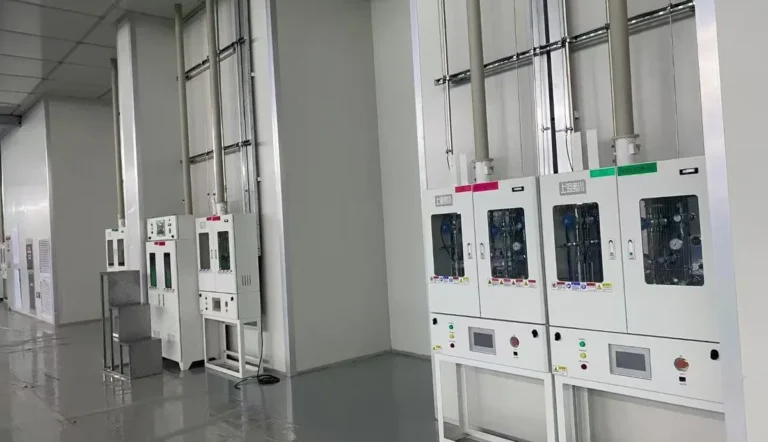

Quick answer: A useful shortlist of laboratory gas distribution system manufacturers should match the gas hazards, required purity, delivery architecture, installation scope, and local service plan. The ten companies below are LGF Lab Gas Flow, Swagelok, Nippon Sanso Matheson, Linde, BeaconMedaes, GCE Druva, Spectron Gas Control Systems, Rotarex, Applied Energy Systems, and Critical Systems Inc. They are listed as distinct sourcing options, not ranked by sales, quality, or safety performance. Some manufacture components and assembled panels; others can participate in broader system delivery. Buyers should verify the exact scope offered in their region.
Editorial disclosure: This guide is published by LGF Lab Gas Flow, which appears in the shortlist. The selection is based on publicly described product families and their relevance to laboratory gas procurement. It is not an independent certification, product test, or claim that one supplier is best for every laboratory.
What is a laboratory gas distribution system manufacturer?
A laboratory gas distribution system manufacturer makes one or more engineered parts of the route from a gas source to a controlled point of use. That route can include cylinder or bulk supply, changeover manifolds, gas cabinets, regulators, valves, tubing, fittings, monitoring, and outlet panels. A company selling an excellent regulator may not design the room, install the pipeline, commission the system, or provide local emergency support. The phrase “system manufacturer” therefore describes a supplier’s documented capability, not a promise of turnkey responsibility.
A buyer should divide a project into source equipment, pressure control, containment and monitoring, distribution piping, and final outlets before comparing bids. The laboratory gas delivery systems guide explains how those parts work together. For an RFQ, identify which party owns each interface, supplies drawings, performs testing, and signs off commissioning. This prevents a low equipment quote from hiding installation or integration gaps.
How were these ten companies selected?
The shortlist favors companies with publicly documented laboratory, specialty gas, high-purity, or hazardous gas delivery equipment. It deliberately includes different procurement models: integrated laboratory suppliers, global component and panel suppliers, gas companies with delivery hardware, and specialized cabinet makers. The sequence is for reading convenience and is not a performance ranking. Product availability, installation services, certificates, and response times vary by country and project, so each proposal needs current written confirmation.
The buyer’s comparison should start with a gas schedule. For every gas, record purity, maximum source pressure, target outlet pressure, peak and normal flow, number of points of use, cylinder replacement frequency, and whether the gas is flammable, toxic, oxidizing, corrosive, or inert. A safety engineer should then define applicable containment, ventilation, detection, purge, and shutoff requirements under local rules. Only after this scope is fixed can two supplier quotations be compared fairly.
Ten laboratory gas distribution system manufacturers to compare
1. LGF Lab Gas Flow: laboratory-focused equipment and project integration
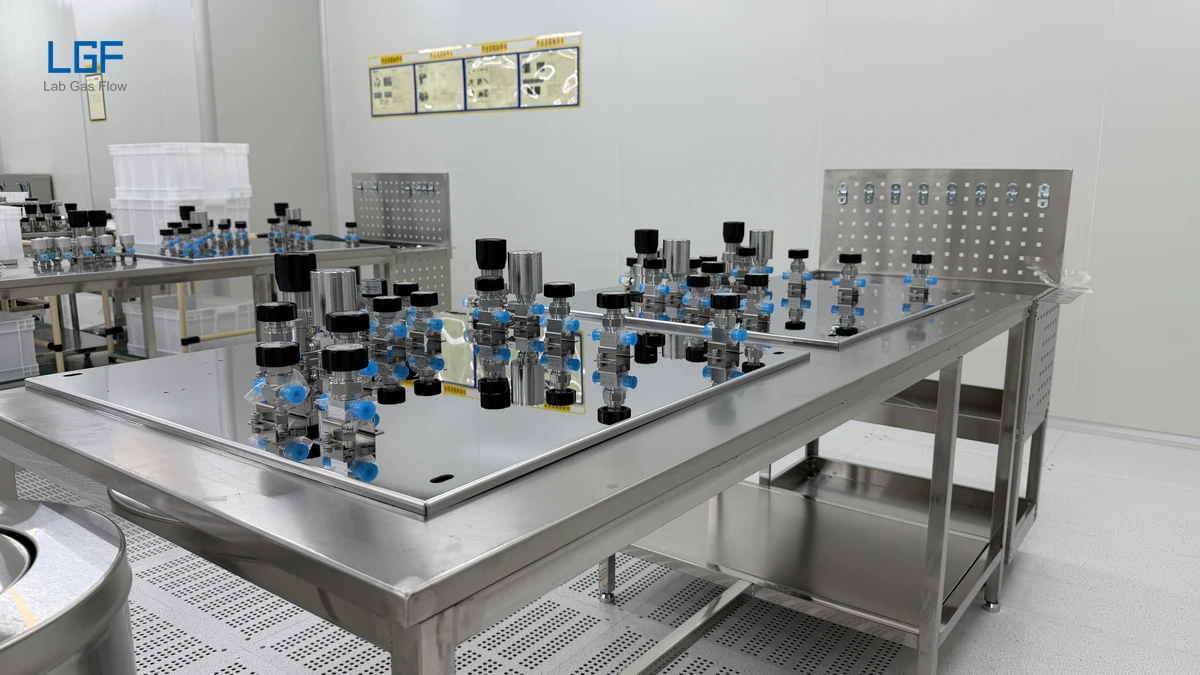
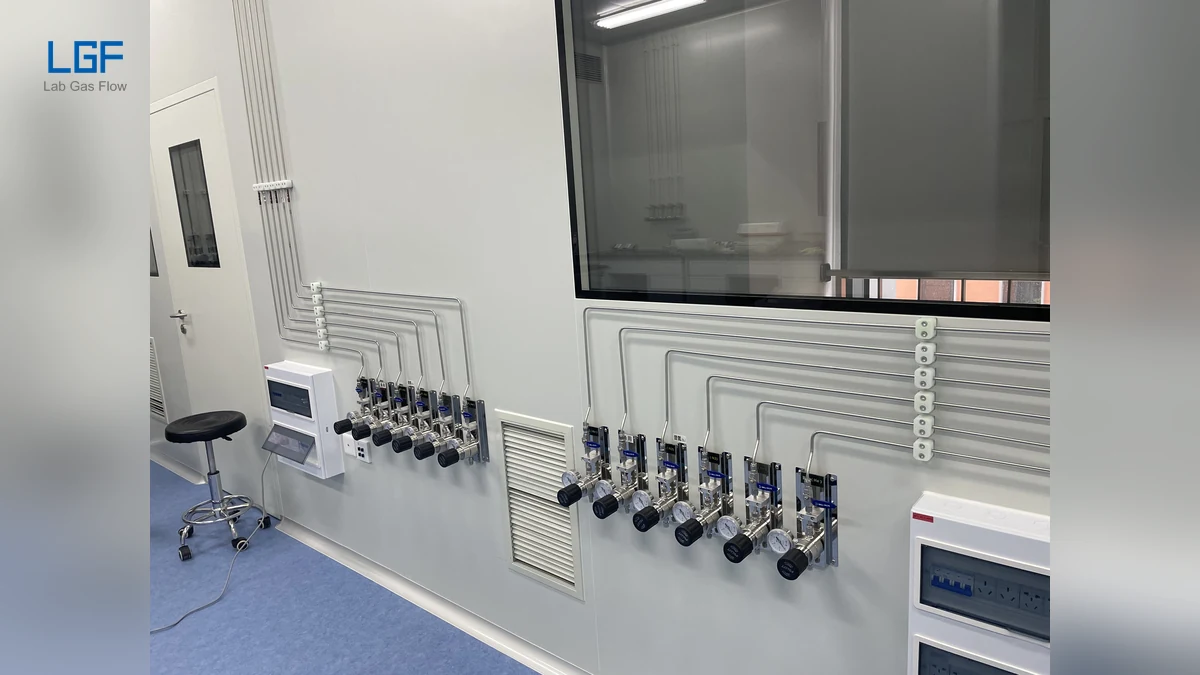
LGF Lab Gas Flow presents a laboratory gas product range covering high-purity regulators, diaphragm valves, manifolds, gas cabinets, distribution piping, and point-of-use equipment. That breadth makes LGF a practical candidate when a buyer wants to discuss a connected source-to-outlet bill of materials with one laboratory-focused supplier. Its published company profile and product selection guide provide starting points for technical discussions.
Best reason to include LGF in an RFQ: ask for a coordinated equipment list and interface drawings across source, pipeline, and terminal equipment. Question to ask: which design, installation, testing, training, and after-sales tasks are included for your destination country? Because LGF publishes this article, buyers should apply exactly the same evidence and acceptance criteria to its proposal as to every other bidder.
2. Swagelok: assembled gas distribution panels and fluid-system components
Swagelok documents gas distribution assemblies such as source inlet, pressure control, automatic changeover, and point-of-use panels. Its broad tubing, fitting, valve, and regulator ecosystem is useful when a laboratory standardizes fluid-system parts or needs repeatable panel configurations across several rooms. A buyer comparing Swagelok should specify whether the quote covers the assembled panel alone, the surrounding tubing network, or field installation through a local service organization.
Best reason to shortlist: standardized panel assemblies and component documentation can simplify maintenance planning. Question to ask: what factory tests, material records, and local service activities are delivered with the precise assembly quoted? The existence of a large catalog does not by itself prove that any particular configuration is compatible with a chosen gas or local code.
3. Nippon Sanso Matheson: specialty gas supply and handling equipment
Nippon Sanso Matheson describes laboratory gas systems, manifolds, switchovers, gas cabinets, panels, and protocol stations alongside specialty gas supply. That combination may matter when gas specification and delivery equipment must be discussed together, especially for analytical instruments sensitive to contamination or interruption. The buyer should still separate gas-supply terms from equipment ownership, installation, and maintenance contracts.
Best reason to shortlist: coordination between the specified specialty gas and its handling hardware. Question to ask: can the local team provide a complete point-of-use pressure and purity budget, including cylinder connector, changeover device, line material, and outlet? Verify the actual catalog and regional service scope rather than assuming every listed product is available everywhere.
4. Linde: specialty gas distribution and modular delivery equipment
Linde publishes specialty gas delivery systems including modular distribution hardware, laboratory gas cabinets, and multi-gas point-of-use panels. This is a relevant comparison for laboratories that already buy gases through a large gas supplier and want to evaluate associated distribution hardware in the same commercial discussion. Procurement should clarify who owns design calculations, field piping, and final acceptance testing when equipment and gas supply are quoted together.
Best reason to shortlist: a combined view of supply continuity and delivery equipment. Question to ask: which modules are standard, which are custom, and who services each module after installation? Ask for a written boundary diagram that distinguishes cylinder delivery, equipment supply, construction, and ongoing gas management.
5. BeaconMedaes: laboratory utilities and distribution infrastructure
BeaconMedaes lists laboratory systems and related pipeline equipment, with a broader utilities background that includes laboratory air, vacuum, cryogenic, and gas delivery applications. It is worth evaluating when a new facility combines multiple utility networks and needs coordinated infrastructure planning. A specialty gas process line and a general laboratory utility may have very different purity, materials, isolation, and validation needs; one specification should not be copied to the other.
Best reason to shortlist: multi-utility laboratory projects where equipment interfaces and plant-room planning matter. Question to ask: which specific product families are approved for each gas and purity level in the project? Obtain separate compliance and test documents for every utility rather than accepting one blanket statement for the whole building.
6. GCE Druva: high-purity regulators, manifolds, and point-of-use hardware
GCE Druva documents high-purity gas equipment including pressure regulators, manifolds, valves, and withdrawal points. These are central elements of a clean laboratory distribution chain, and the range is a good comparison for laboratories buying source and terminal hardware as a defined package. The buyer should verify material, seal, connection, and cleaning options for each gas because a similar-looking part can have a different intended service.
Best reason to shortlist: focused comparison of high-purity pressure control and manifold hardware. Question to ask: who designs and warrants the tubing, supports, leak tests, and commissioning if another contractor installs the Druva equipment? Component suitability and complete-system accountability should be evaluated separately.
7. Spectron Gas Control Systems: dedicated gas control assemblies
Spectron Gas Control Systems presents product families for laboratory and high-purity gas control, including regulators, control panels, manifolds, and tapping points. Its focused catalog is relevant where gas-changeover logic, pressure stability, and terminal consistency are central to the project. Compare the actual specified assemblies, not only family names, because configuration details determine serviceability and gas compatibility.
Best reason to shortlist: dedicated source-to-outlet control components within a coordinated specification. Question to ask: what purge, changeover, monitoring, and maintenance features are available for the exact gas list? Require a configuration drawing that shows flow direction, isolation points, pressure stages, and alarm interfaces before ordering.
8. Rotarex: specialty gas control from source to point of use
Rotarex describes laboratory and research specialty gas equipment with source, regulation, and point-of-use applications. It can be a useful reference when buyers are comparing how different manufacturers cover cylinder connections, pressure reduction, and terminal access. The key commercial issue is whether the local offer is a catalog-component package, assembled panel, or installed system; those are different deliverables.
Best reason to shortlist: a broad specialty gas equipment portfolio for laboratory applications. Question to ask: what evidence supports the quoted gas compatibility, cleaning level, and local availability of replacement parts? Ask the distributor or manufacturer to name the accountable party for submittals and warranty service.
9. Applied Energy Systems: enclosed specialty gas delivery
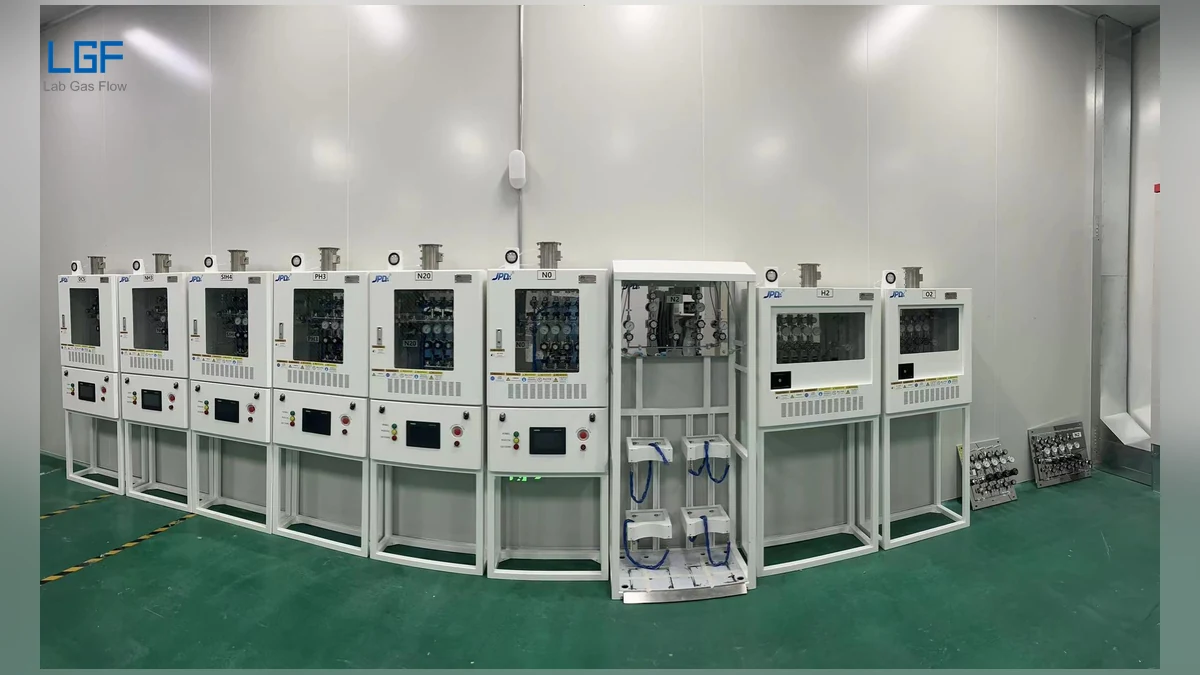
Applied Energy Systems documents specialty gas equipment under its vSpec and related product lines, including gas cabinets intended for laboratory, research, pharmaceutical, and other demanding applications. It is especially relevant when enclosure, automated controls, and hazardous gas handling dominate the design. A cabinet is not a complete distribution network: downstream tubing, detection integration, exhaust performance, and point-of-use controls must still be engineered.
Best reason to shortlist: a specialized cabinet proposal for gases requiring engineered containment and control. Question to ask: what facility exhaust, detector, emergency shutoff, purge-gas, and building-management interfaces are required? The answers should be reviewed by the project’s qualified safety and facilities teams before purchase.
10. Critical Systems Inc.: high-purity and hazardous gas distribution equipment
Critical Systems Inc. publishes gas delivery equipment such as cabinets, panels, valve manifold boxes, and bulk gas systems for high-purity or hazardous service. This is a relevant comparison for advanced research facilities whose gas network resembles a small process system with multiple isolation and monitoring points. Its solution should be evaluated against the actual lab scale: sophisticated features can be valuable, but they also change installation, operating, and maintenance requirements.
Best reason to shortlist: engineered equipment for complex, high-purity, or hazardous gas paths. Question to ask: which control, monitoring, and containment functions are included in the quoted configuration, and which require separate facility systems? Request a cause-and-effect narrative and clear acceptance tests for every critical interface.
How do the ten manufacturers compare by buying scenario?
There is no useful single “best” supplier because a cabinet-heavy toxic-gas project and a small inert-gas analytical lab purchase different systems. The following matrix identifies an initial comparison set; it does not imply that other suppliers cannot meet the requirement. Every final shortlist should be checked against current technical submissions, local support, and a documented hazard review.
| Primary buying need | Companies to compare first | Boundary to verify |
|---|---|---|
| Connected laboratory equipment package | LGF, Nippon Sanso Matheson, Linde | Design and installation scope by location |
| Repeatable panels and component standards | Swagelok, GCE Druva, Spectron, Rotarex | Panel assembly versus field piping |
| Multi-utility laboratory infrastructure | BeaconMedaes, Linde | Different specifications for each utility |
| Enclosed hazardous or high-purity supply | Applied Energy Systems, Critical Systems Inc., LGF | Exhaust, detection, controls, and commissioning |
Which technical documents should every bid include?
A comparable laboratory gas bid needs more than a catalog PDF. Ask for a gas schedule, process or flow schematic, equipment datasheets, materials and seal specification, line sizing basis, pressure and flow assumptions, and a drawing that locates source equipment, isolation points, outlets, and alarm interfaces. For each line, the vendor should identify design pressure, normal operating pressure, gas compatibility, and the planned cleaning and test procedures. Those records make technical review possible before the purchase order locks in a configuration.
For high-purity gases, request a contamination-control plan covering wetted materials, surface finish where relevant, cleaning, assembly, leak testing, packaging, and field joining. The correct acceptance criteria depend on the gas and experiment. A line carrying instrument-grade inert gas may focus on moisture and oxygen ingress; a reactive or hazardous gas can require additional containment and purge measures. See the gas piping and fittings procurement guide for a more detailed line-item review.
For valves and manifolds, ask for normally open or closed function, isolation strategy, rated pressure, connection type, maintainability, and evidence of gas suitability. Automatic changeover should state what triggers transfer and what happens when both sources are depleted. The laboratory gas manifold guide and gas valve buying guide can help turn broad equipment descriptions into concrete RFQ questions.
How should buyers compare price, ownership, and risk?
The lowest initial hardware price is not necessarily the lowest installed cost. Compare equipment, engineering, freight, local approvals, installation, exhaust or detector integration, testing, training, spare parts, and periodic service as separate rows. A cabinet quote that excludes exhaust modifications and a panel quote that excludes clean field tubing cannot be compared directly with a complete installed-system bid. Ask each supplier to mark every inclusion and exclusion in the same pricing template.
Operating cost matters as well. A manual cylinder changeover may cost less initially but can cause downtime or operator intervention. Automatic changeover adds controls and maintenance, yet it may be justified where uninterrupted analytical runs are valuable. Oversizing every line and regulator can waste money without improving performance; undersizing can create pressure drop at simultaneous peak flow. A supplier should show the assumptions behind its selected pressure stages and line sizes.
After-sales capability should be written into the evaluation. Confirm response region, service partner, spare-part lead time, calibration or inspection needs, and what information will be handed over at commissioning. For international purchases, verify export documentation, local electrical or pressure-equipment requirements, and language of operating manuals before the order. A high-quality component can still become a poor procurement choice when the project cannot obtain timely service or replacement parts.
What should a laboratory gas distribution RFQ say?
Start the RFQ with the room list, gas list, gas grades, hazard classification, source type, expected consumption, normal and peak flow, outlet pressure, and number of outlets. Attach the latest architectural, mechanical, and electrical backgrounds. Identify whether the work is a retrofit or new construction and whether the laboratory must remain operational during installation. State the proposed site location and local code authority so bidders can identify missing requirements early.
Next, require every bidder to return the same deliverables: a marked flow diagram, equipment schedule, material list, capacity calculations, installation boundary, test plan, documentation list, lead time, warranty, and exclusions. For hazardous gases, add the approved facility safety concept and ask qualified specialists to review cabinet, ventilation, detection, and emergency isolation interfaces. The laboratory specialty gas installation guidelines can help structure the discussion, but the final design must follow the project’s applicable rules and professional review.
Finally, ask for an acceptance plan. Define factory inspection if needed, pressure or leak testing method, cleanliness verification appropriate to the gas, functional checks for changeover and alarms, as-built drawings, labels, training, and handover records. Test methods and limits must be agreed before fabrication. Leaving them until commissioning creates disputes when equipment is already on site.
How can buyers reduce a long list to three finalists?
First, eliminate quotations that do not explicitly address the gas schedule and safety requirements. Second, score the remaining proposals on technical fit, scope completeness, documentation, local support, lead time, and total installed cost. Third, request clarifications for all deviations rather than interpreting silence as compliance. A short meeting with engineering, facilities, EHS, and procurement often exposes missing interfaces faster than another round of price negotiation.
For a routine nonhazardous laboratory, finalists may differ mainly in panel design, service access, and outlet standardization. For reactive or toxic gases, containment and interlock evidence should carry greater weight. For multi-building or multi-country programs, consistency of spare parts and local support may dominate. This scenario-based method is more defensible than selecting a manufacturer solely because it appears in a “top ten” article.
Frequently asked questions
Is a gas equipment manufacturer the same as a turnkey installer?
No. A manufacturer may provide valves, regulators, manifolds, panels, cabinets, or all of these without assuming responsibility for site design and field installation. Ask who provides construction drawings, installs and tests tubing, integrates safety systems, and signs the commissioning record. The contract should name one accountable party for each interface.
Can one manufacturer cover every gas in a laboratory?
A broad product catalog does not establish suitability for every gas. Gas chemistry, purity, pressure, flow, and local rules can require different wetted materials, seals, purge methods, or containment. Request gas-by-gas confirmation for the exact part numbers and assembly configurations in the proposal.
Should a buyer choose automatic changeover?
Automatic changeover is most useful when interrupted supply would disrupt experiments or production and when reserve-cylinder management is disciplined. Manual changeover can be appropriate for lower-use lines with acceptable downtime. Compare continuity requirements, monitoring, maintenance, and life-cycle cost before specifying either arrangement.
What is the most important omission in laboratory gas quotations?
The most common costly omission is an unclear scope boundary. Source equipment, piping, outlet hardware, electrical interfaces, exhaust, detection, testing, and training are often priced by different parties. A responsibility matrix and marked schematic reveal missing work before a purchase order is issued.
Request a project-specific laboratory gas distribution proposal
LGF Lab Gas Flow works with laboratories, engineering teams, contractors, distributors, and B2B buyers sourcing gas control equipment and distribution components. Share your gas schedule, outlet count, pressure and flow targets, layout, safety requirements, and destination with our team. We can discuss an equipment package or custom scope and identify the technical information needed for a useful quotation. Contact LGF to begin the RFQ conversation.