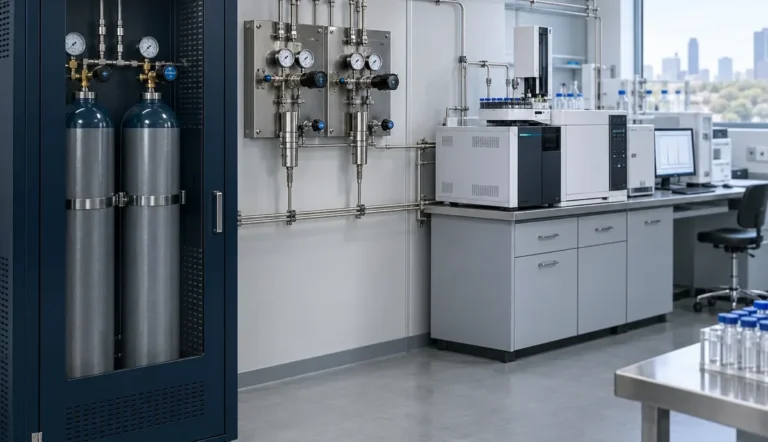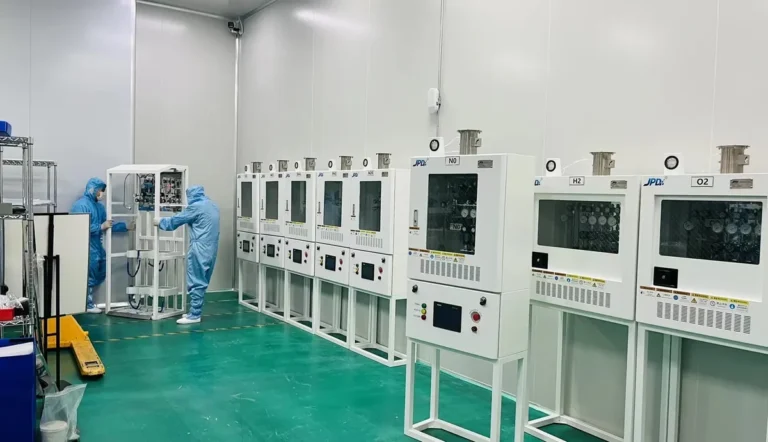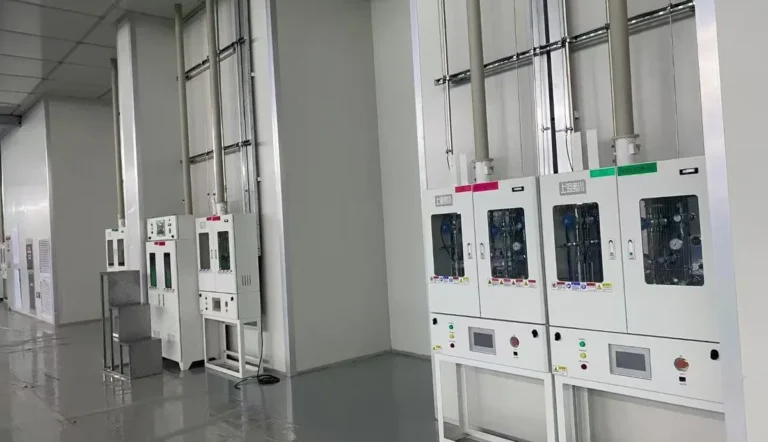

A single-cylinder gas cabinet is usually the better choice for low-consumption, noncritical laboratory service where a planned shutdown is acceptable. A dual-cylinder gas cabinet is usually the better choice when gas interruption would invalidate a run, stop production, or create an unsafe changeover routine. Cylinder count alone does not decide the system. The correct choice also depends on gas hazard, purity, consumption rate, cylinder dimensions, changeover method, exhaust capacity, maintenance access, and the requirements of the authority having jurisdiction (AHJ).
The most important distinction is operational. A single-cylinder cabinet has one connected process cylinder and requires a controlled interruption or an external backup arrangement during replacement. A dual-cylinder cabinet can support one duty cylinder and one standby cylinder, but uninterrupted service is possible only when the manifold, valves, pressure sensing, purge sequence, and controls are designed for changeover. A wide cabinet containing two cylinders is not automatically a redundant supply system.
Single-cylinder vs. dual-cylinder gas cabinets at a glance
| Decision factor | Single-cylinder cabinet | Dual-cylinder cabinet |
|---|---|---|
| Typical operating role | One cylinder supplies one service | Duty/standby supply or two separately controlled cylinders |
| Continuity | Supply normally stops for cylinder replacement | Can maintain supply when a validated changeover system is included |
| Footprint | Narrower cabinet and simpler service clearance | Wider enclosure plus more room for manifolds and maintenance |
| Controls and tubing | Fewer valves, sensors, joints, and failure points | More components and logic, especially with automatic changeover |
| Initial cost | Usually lower | Usually higher, but downtime avoidance may justify the difference |
| Changeover exposure | More frequent service interruption and operator intervention | Standby capacity allows scheduled replacement, but each side still needs a safe purge procedure |
| Best fit | Intermittent use, low flow, pilot work, noncritical instruments | Continuous analyzers, long experiments, shared headers, high-utilization tools |
This comparison assumes both cabinets are engineered for the same gas and hazard class. A larger enclosure does not compensate for an incompatible regulator, incorrect valve-seat material, inadequate exhaust, or an unverified control sequence. Laboratory personnel should start with the gas safety data sheet and a documented risk assessment before choosing cabinet capacity.
What is a single-cylinder gas cabinet?
A single-cylinder gas cabinet is a ventilated enclosure sized for one process cylinder, its restraint, pressure-control panel, purge connections, isolation valves, detection interfaces, and exhaust connection. The cabinet creates local containment around the highest-risk connections, especially the cylinder valve and pigtail. The enclosure should maintain inward airflow when required by the applicable design basis and should be connected to a suitable exhaust system.
A single-cylinder arrangement is operationally simple because one source feeds one pressure-control path. Fewer valves and joints make the flow path easier to inspect, purge, leak-test, and document. The smaller enclosure can also fit laboratories with constrained service corridors or limited wall space. These advantages are meaningful only when the process can tolerate the cylinder-change interval.
The main limitation is planned downtime. When the cylinder reaches its replacement threshold, the operator must isolate the source, purge the hazardous section as required, disconnect the cylinder, install the replacement, perform the prescribed leak test, and restore service. The laboratory should never respond to frequent interruptions by rushing this sequence or by reducing the residual-pressure threshold below the validated operating procedure.
What is a dual-cylinder gas cabinet?
A dual-cylinder gas cabinet is an enclosure designed for two cylinders and the equipment needed to control them. The common arrangement uses one cylinder as the duty source and the second as standby. When the duty-side pressure reaches a defined threshold, a manual, semi-automatic, or automatic changeover system transfers supply to the standby side. The depleted side can then be isolated and replaced while the other side continues to serve the process.
A second cylinder provides continuity only when the system architecture supports continuity. A dual cabinet needs clearly defined nonreturn protection, isolation, pressure monitoring, alarm logic, purge paths, and operating states. A cabinet that merely stores two cylinders may increase inventory without reducing downtime. Procurement documents should therefore describe the required operating sequence instead of specifying only “two-cylinder cabinet.”
A dual-cylinder cabinet has more tubing, valves, sensors, and potential leak paths than a single-cylinder cabinet. The design must leave enough access for inspection, cylinder movement, valve operation, and maintenance without forcing technicians to reach across live components. Wider equipment also increases exhaust and room-layout implications that must be confirmed with the mechanical design team.
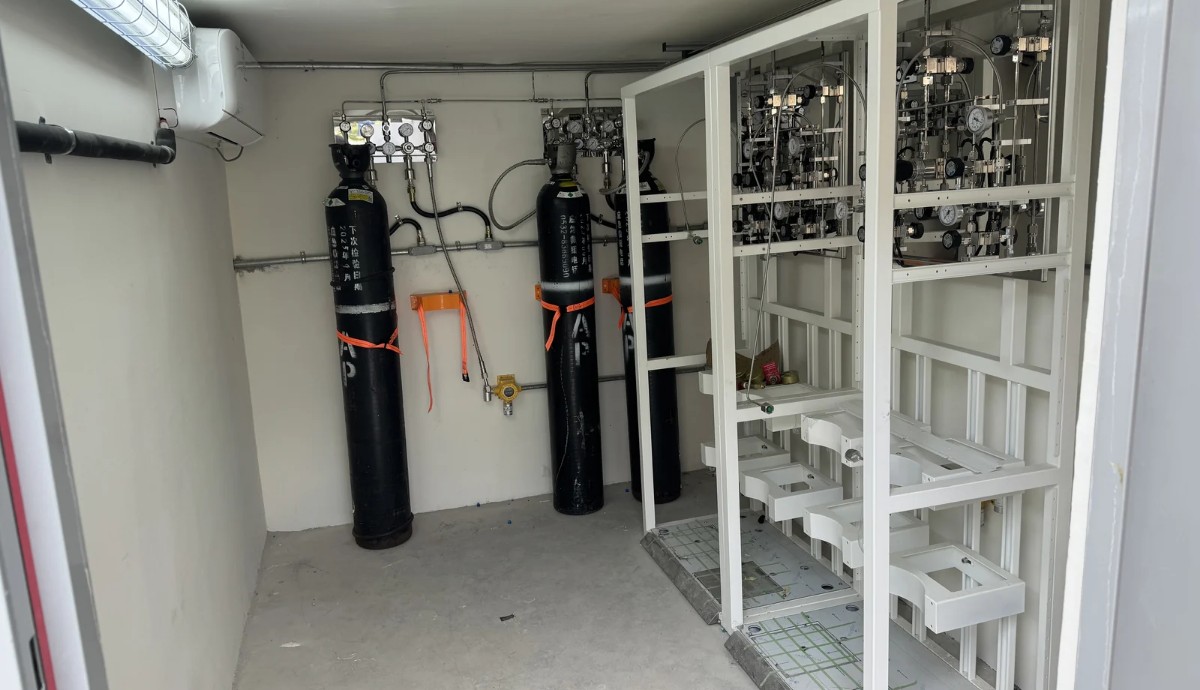
Which cabinet fits your laboratory workload?
Choose a single-cylinder cabinet when interruption is manageable
A single-cylinder cabinet fits an intermittent service when the equipment can be stopped before gas depletion. Examples include a pilot experiment scheduled for a few hours each week, an analyzer that can be placed in standby, or a low-flow calibration source with a long projected cylinder life. The laboratory should calculate consumption rather than rely on a subjective description such as “low use.”
Single-cylinder service also fits gases that are rarely used but require engineered containment because of their hazard. In this case, the cabinet is selected for risk control rather than continuity. A rarely used toxic gas may still require ventilation, detection, automatic isolation, emergency response integration, and an approved exhaust-treatment strategy.
A single cabinet can be preferable when space and simplicity are primary constraints. The narrower enclosure reduces floor area, while the simpler gas panel can reduce commissioning and maintenance effort. This selection remains valid only if a cylinder replacement can be scheduled without compromising an experiment, instrument, or critical process.
Choose a dual-cylinder cabinet when downtime has a real consequence
A dual-cylinder cabinet fits a continuous analytical instrument, a long-duration reaction, or a shared laboratory header where pressure loss would affect several users. The standby cylinder creates a maintenance window: personnel can replace the depleted source during a planned period while the active side maintains delivery pressure.
A dual-cylinder arrangement is also useful when the cost of one interrupted run exceeds the additional equipment and maintenance cost. The correct comparison is not cabinet purchase price alone. Procurement teams should compare total installed cost with the value of lost samples, repeated calibration, tool restart, process stabilization, staff time, and possible schedule delay.
Higher consumption strengthens the case for a dual cabinet because changeovers occur more often. However, a dual cabinet is not an unlimited-capacity solution. If two cylinders still produce frequent changes or cannot meet peak flow, the project may require a larger manifold, cylinder bank, or bulk source. The gas cabinet and bulk specialty gas system comparison explains when source scale becomes a different design decision.
How should gas consumption be used in the decision?
Gas consumption should be converted into expected cylinder life. A practical estimate divides usable cylinder content by average consumption and then applies a conservative allowance for residual pressure, peak demand, leakage testing, purge use, and supplier variability. The unit basis must remain consistent; normal-volume flow, mass flow, and liquefied-gas content cannot be mixed without conversion.
For example, assume a cylinder provides 6,000 usable normal liters and the process averages 1 normal liter per minute for eight hours per day. The theoretical service is 6,000 minutes, or 12.5 operating days. After allowing for purge use, residual content, and operating uncertainty, the planning interval may be materially shorter. If a 10-day replacement interval is acceptable, a single cabinet may work. If a run lasts three weeks without interruption, duty/standby supply is the stronger option.
Peak flow matters separately from total consumption. A cylinder may contain sufficient gas for a month but still fail to maintain outlet pressure during a short high-flow event because of regulator capacity, pressure drop, vaporization limits, or line sizing. Cabinet count should therefore be selected alongside regulator flow curves, delivery pressure, pipeline calculations, and process demand.
Why gas hazard can override the capacity decision
Gas hazard determines containment and shutdown requirements; it does not simply favor a larger cabinet. Toxic, highly toxic, pyrophoric, corrosive, flammable, oxidizing, and inert gases present different release consequences. Even an inert gas can create an oxygen-deficiency hazard if a large quantity escapes into a small room.
Institutional laboratory guidance commonly requires hazardous-gas cabinets to operate under negative pressure, connect to exhaust, secure cylinders, and interface with alarms. The laboratory design guidance from Stanford Environmental Health & Safety also describes cabinet construction, anchoring, sensing, and cylinder-count provisions for specific regulated conditions. Those provisions are useful design inputs, but the adopted code and AHJ determine the requirements for a particular location.
Hazardous gases should not be combined merely because two positions are available. Each cylinder position should be evaluated for chemical compatibility, emergency response, exhaust treatment, purge media, valve materials, and detector strategy. Oxidizers and flammables, or reactive gases that can form dangerous products, may require separate cabinets or other approved segregation even when a shared enclosure appears physically possible.
The hazardous-gas safety guidance from an academic laboratory safety office emphasizes automatic shutoff, compatible high-integrity connections, leak testing, and gas detection. The relevant conclusion for cabinet sizing is straightforward: adding a standby cylinder must not weaken the validated containment and purge strategy.
How do changeover methods affect the choice?
| Changeover method | How it operates | Best use | Main limitation |
|---|---|---|---|
| Manual | An operator isolates the empty side and opens the reserve side | Noncritical service with trained staff available | Supply can be interrupted and response depends on personnel |
| Semi-automatic | The system transfers based on pressure, while an operator resets the replaced side | Routine laboratory continuity with controlled operating procedures | Sequence and reset state must be understood and verified |
| Automatic | Controls monitor source conditions and transfer supply according to programmed logic | Critical or unattended service with suitable alarms and interlocks | Higher complexity, validation burden, and maintenance requirements |
A dual-cylinder cabinet with pressure-based changeover should define the transfer setpoint, alarm threshold, allowable outlet-pressure variation, and behavior after loss of power or instrument air. It should also show whether changeover is mechanical, pneumatic, or electronically controlled. Ambiguous control descriptions create commissioning disputes and can leave both sources unintentionally open.
For high-purity gases, changeover design also protects quality. A poorly purged replacement side can introduce air, moisture, or particles into the common outlet. The purge method, number of cycles, vent destination, pigtail material, connection type, and acceptance criteria should be specified. Continuity is not valuable if each cylinder replacement contaminates the downstream process.
What ventilation and facility services must be checked?
Cabinet selection must be coordinated with the laboratory exhaust system. The mechanical engineer should confirm the required airflow, cabinet pressure, duct connection, pressure loss, treatment equipment, fan capacity, room air balance, monitoring, and emergency-power strategy. The ASHRAE laboratory ventilation guidance notes that single-, dual-, and triple-cylinder cabinets are available and that exhaust design depends on gas safety, material, and purity requirements.
A dual cabinet is wider, but required exhaust should not be estimated only by multiplying the single-cabinet value by two. Enclosure geometry, inlet area, access opening, internal obstructions, duct pressure, and applicable code criteria affect containment. The manufacturer should provide design airflow and pressure data for the proposed cabinet, and the project team should verify performance after installation.
Other services may include electrical power, emergency power, instrument air, nitrogen purge, sprinkler connection, gas detection, exhaust-flow monitoring, remote alarm contacts, network communication, and exhaust treatment. A cabinet cannot be considered complete if the purchase order excludes the facility interfaces needed for its safety logic.
What footprint and maintenance clearances are required?
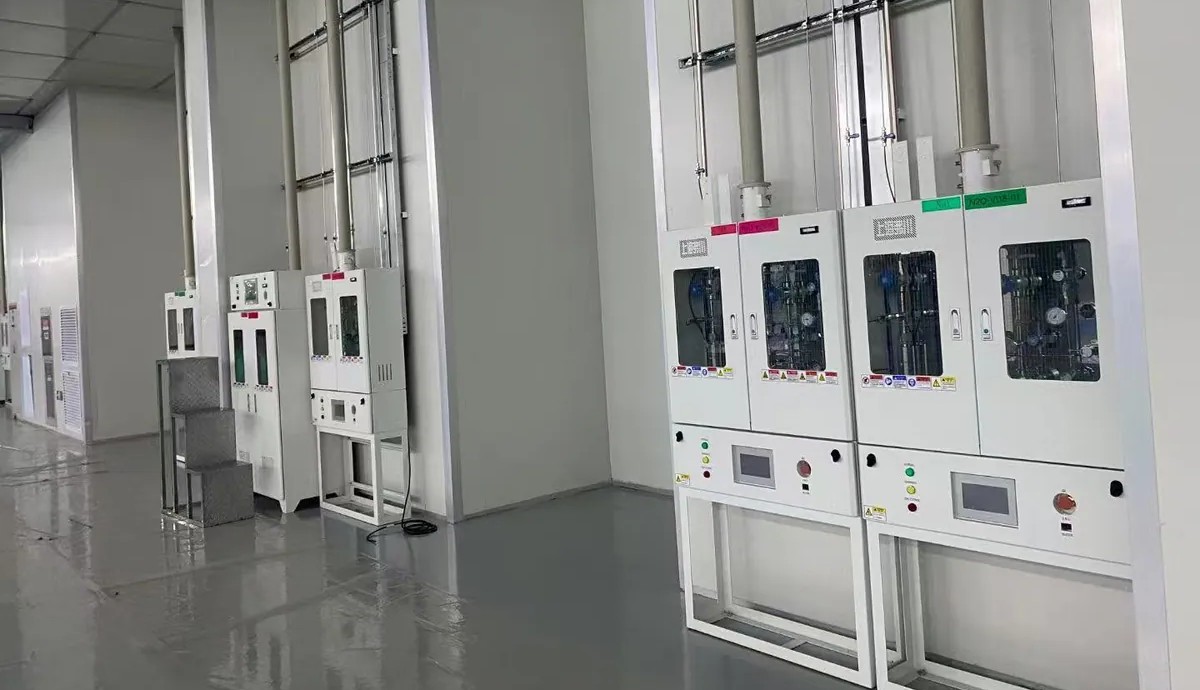
A cabinet footprint includes more than its nominal width and depth. Designers must allow for door swing, cylinder-cart approach, loading ramp, cylinder turning radius, regulator and valve access, side panels, overhead ductwork, seismic anchoring, and maintenance removal paths. A narrow room may physically contain a dual cabinet yet provide no safe way to exchange the inner cylinder.
Single-cylinder cabinets provide more layout flexibility and can separate incompatible gases into distinct containment zones. Two single cabinets may occupy more total width than one dual cabinet, but they can offer independent exhaust, alarms, maintenance isolation, and future relocation. One dual cabinet may be more compact for two compatible duty/standby cylinders, but it concentrates both supply positions into one enclosure and control system.
The facility plan should also distinguish full, in-service, standby, depleted, and disconnected cylinders. A standby cylinder connected to a validated changeover manifold is not the same as an unconnected spare stored wherever space is available. Laboratory safety policies may limit cylinder inventory or require unused cylinders to be kept in a designated storage location.
What are the advantages and disadvantages?
Single-cylinder cabinet advantages
- Smaller footprint and easier placement in constrained laboratories.
- Lower component count and simpler flow-path documentation.
- Fewer joints and valves to inspect, test, and maintain.
- Usually lower purchase, installation, and commissioning cost.
- Useful for segregating different or incompatible gas services.
Single-cylinder cabinet disadvantages
- Process interruption is normally required during replacement.
- Frequent changeovers can increase labor and connection exposure.
- No in-cabinet standby source unless a separate engineered arrangement is added.
- Operators may receive little scheduling margin after a low-pressure alarm.
Dual-cylinder cabinet advantages
- Duty/standby operation can support uninterrupted gas delivery.
- A depleted cylinder can be replaced during a planned maintenance window.
- One cabinet can integrate changeover, monitoring, purge, and alarms.
- Higher source availability can protect long experiments and shared users.
Dual-cylinder cabinet disadvantages
- Higher initial cost and a larger service footprint.
- More valves, connections, sensors, and control states to maintain.
- More complex purge and changeover validation.
- Potential common-cause failure if both sources depend on one controller, exhaust path, or outlet assembly.
When are two single cabinets better than one dual cabinet?
Two single cabinets can be better when the gases are incompatible, the services require different exhaust treatment, or independent shutdown is essential. Independent cabinets can also simplify maintenance because one gas service can be isolated without opening an enclosure that contains another connected source.
One dual cabinet is usually better when both cylinders contain the same gas, share the same approved materials and safeguards, and must operate as duty and standby. This arrangement reduces duplication and creates a clear changeover function. The project should still evaluate common-cause failures such as loss of exhaust, power, purge supply, controller function, or common outlet regulation.
Two single cabinets should not be improvised into a changeover system with unreviewed field tubing. If separate enclosures feed a common header, the manifold, isolation, nonreturn protection, control logic, alarm states, and purge boundaries require a coordinated engineering design.
What specifications belong in a gas cabinet RFQ?
A useful request for quotation identifies the process and safety basis before asking for a price. The following information allows manufacturers to compare equivalent scope instead of making conflicting assumptions:
- Gas name, concentration, mixture components, hazard classification, and safety data sheet.
- Cylinder quantity, dimensions, valve connection, full pressure, and orientation.
- Required outlet pressure, normal flow, peak flow, and acceptable pressure variation.
- Single-cylinder or dual-cylinder operating philosophy and required changeover method.
- Gas-contact materials, surface finish, seals, regulator type, filters, and connection standard.
- Purge gas, purge method, vent destination, cycle logic, and contamination acceptance criteria.
- Cabinet construction, fire protection, anchoring, door interlocks, and viewing requirements.
- Exhaust airflow, duct pressure, connection size, monitoring, and treatment interface.
- Gas detection, emergency stop, automatic isolation, alarm outputs, and remote communication.
- Electrical classification, voltage, instrument air, emergency power, and facility utilities.
- Applicable codes, local amendments, AHJ requirements, and required documentation.
- Factory tests, leak-rate criteria, cleanliness records, certificates, commissioning, training, spares, and warranty.
The laboratory gas manifold guide provides more detail on changeover, regulator sizing, and gas compatibility. Procurement teams should also review the site’s laboratory gas hardware compliance guide while translating project codes into measurable submittal requirements.
How should proposals be compared?
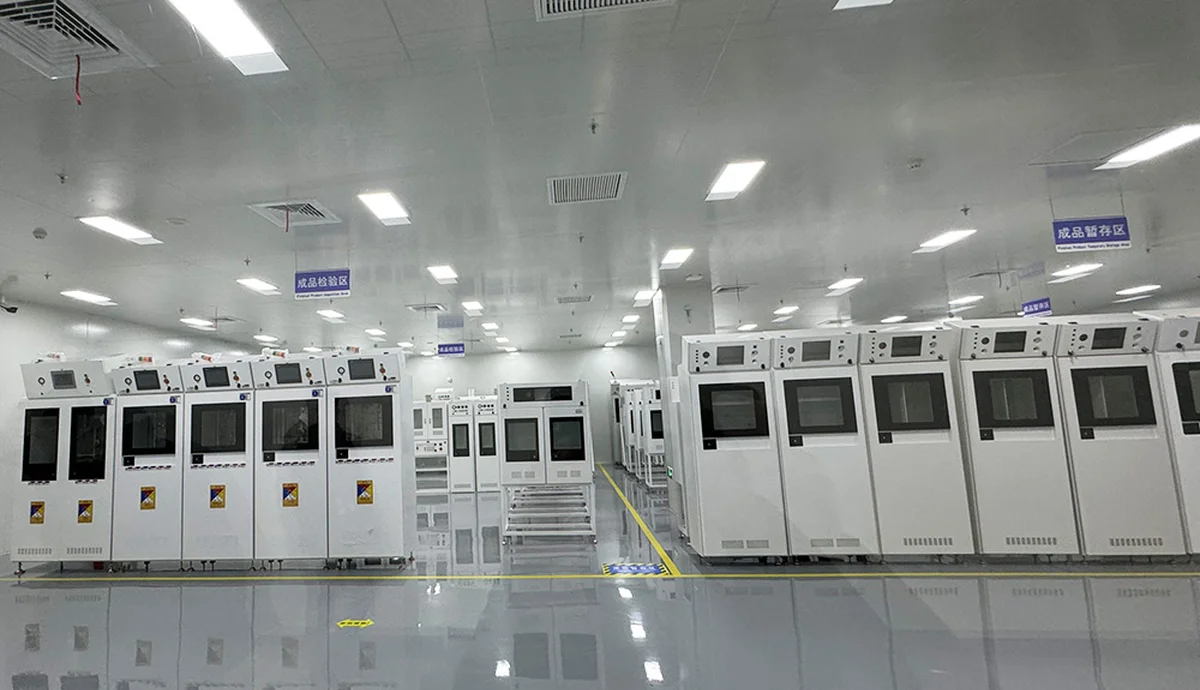
Gas cabinet proposals should be normalized by scope. A lower-priced dual cabinet may exclude gas detection, automatic valves, purge control, exhaust monitoring, communication, startup, or documentation that another proposal includes. Buyers should create a compliance matrix with one row for every RFQ requirement and require each supplier to state included, excluded, optional, or deviation.
Total cost should include the cabinet, panel, controls, exhaust connection, utility work, detection, treatment, installation, testing, commissioning, spares, preventive maintenance, and training. For dual-cylinder service, buyers should also estimate the economic value of continuity. For single-cylinder service, buyers should quantify replacement labor and expected downtime across the equipment life.
Supplier capability matters because a gas cabinet is part of a complete delivery system. A manufacturer should be able to review gas compatibility, pressure and flow, controls, piping, exhaust interfaces, documentation, and commissioning. The laboratory gas delivery system selection workflow helps connect the source cabinet to distribution piping and points of use.
How should the cabinet be commissioned?
Commissioning should verify the installed system against approved drawings and cause-and-effect documentation. The team should confirm component identity, flow direction, cylinder restraints, anchoring, valve positions, regulator settings, electrical and pneumatic services, exhaust performance, detector interfaces, alarms, emergency stops, automatic isolation, and remote signals.
A dual-cylinder cabinet requires a witnessed changeover test. The test should demonstrate the transfer trigger, outlet-pressure behavior, alarm indication, active and standby status, isolation of the depleted side, reset procedure, and response to relevant utility failures. The team should test the intended sequence rather than assuming the controller’s presence proves correct operation.
Leak testing, purge validation, cleanliness verification, and pressure testing should follow the approved procedure for the gas service and project specification. Training should use the final installed configuration and should cover normal operation, cylinder replacement, alarm response, emergency shutdown, restart authorization, and maintenance boundaries. The site’s gas cabinet installation guidelines provide additional coordination points for clean environments.
Common selection mistakes
Buying by cabinet width alone is a mistake. Cylinder dimensions, valve access, loading path, and internal panel layout determine whether two cylinders can actually be serviced safely.
Assuming two cylinders guarantee uninterrupted supply is a mistake. Continuity depends on an engineered changeover manifold, suitable controls, alarms, and a verified operating sequence.
Using one cabinet for incompatible gases is a mistake. Available space does not establish chemical compatibility or acceptable emergency response.
Ignoring purge consumption is a mistake. Purge cycles can materially shorten cylinder life and may alter the single-versus-dual decision, especially for small or expensive specialty-gas cylinders.
Comparing purchase prices without facility scope is a mistake. Exhaust, treatment, detection, utilities, installation, and commissioning may cost more than the enclosure itself.
Applying one jurisdiction’s rule everywhere is a mistake. Codes, local amendments, occupancy classification, gas quantities, and AHJ interpretations vary. Institutional guidance is useful, but project approval must use the rules adopted at the installation location.
Decision checklist: single or dual?
- Can the process stop safely? If yes, a single cabinet remains viable; if no, evaluate duty/standby supply.
- How long does one cylinder last? Calculate usable life from actual flow, purge demand, peaks, and residual allowance.
- What is the cost of interruption? Include lost samples, restart time, calibration, and affected users.
- Are both cylinders the same compatible gas? If not, separate containment may be required.
- Can the room support the enclosure? Check footprint, cylinder access, exhaust, utilities, anchoring, and maintenance clearance.
- What changeover level is required? Define manual, semi-automatic, or automatic operation and every alarm state.
- What does the AHJ require? Confirm code, occupancy, quantity limits, detection, fire protection, exhaust, and treatment.
- Can the supplier prove performance? Require drawings, component data, tests, certificates, manuals, and commissioning support.
Frequently asked questions
Does a dual-cylinder cabinet always provide automatic changeover?
No. A dual-cylinder enclosure can use manual, semi-automatic, or automatic control, and it can also be configured as two independent positions. The RFQ must define the intended operating sequence and transfer method.
Can two different gases share one dual-cylinder cabinet?
Two different gases should share an enclosure only after a documented compatibility and code review confirms the arrangement. Separate cabinets are often more appropriate when gases are incompatible, require different detection, or need different exhaust treatment.
Is a dual-cylinder cabinet safer than a single-cylinder cabinet?
A dual cabinet can reduce rushed changeovers by providing a standby source, but it also adds inventory, connections, controls, and possible leak paths. Safety depends on the complete engineered system, operating procedure, and maintenance program rather than cylinder count alone.
Can a single-cylinder cabinet be upgraded later?
An upgrade may be possible, but adding a second source can require a new enclosure, manifold, control panel, exhaust review, detector logic, piping changes, and recommissioning. If future continuous use is likely, the expansion strategy should be designed before purchase.
What is the simplest final rule?
Choose a single-cylinder cabinet when one cylinder provides adequate runtime and a controlled shutdown is acceptable. Choose a dual-cylinder duty/standby cabinet when continuity is necessary and the laboratory can support the added space, exhaust, controls, maintenance, and validation.
Discuss your gas cabinet configuration with LGF Lab Gas Flow
LGF Lab Gas Flow is one of the 10 manufacturers included in the site’s laboratory gas distribution manufacturer comparison. For a single-cylinder or dual-cylinder cabinet project, LGF can review the gas schedule, cylinder data, required flow and pressure, purity, changeover philosophy, exhaust interface, alarms, documentation, and commissioning scope.
Send your gas name, safety data sheet, cylinder connection and dimensions, delivery pressure, normal and peak flow, operating hours, cabinet location, applicable code, and required control level. Contact LGF Lab Gas Flow to request a B2B technical review and quotation, or explore the fully automated specialty gas cabinet for additional configuration information.