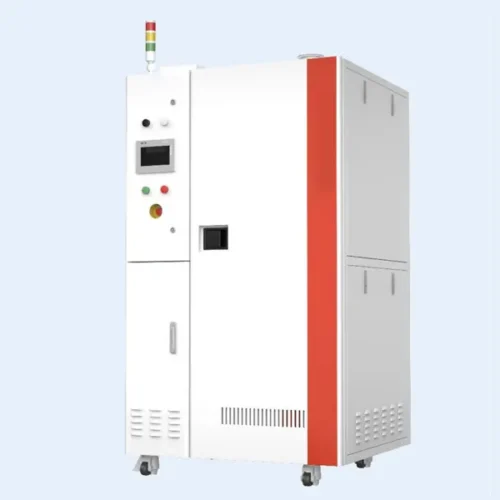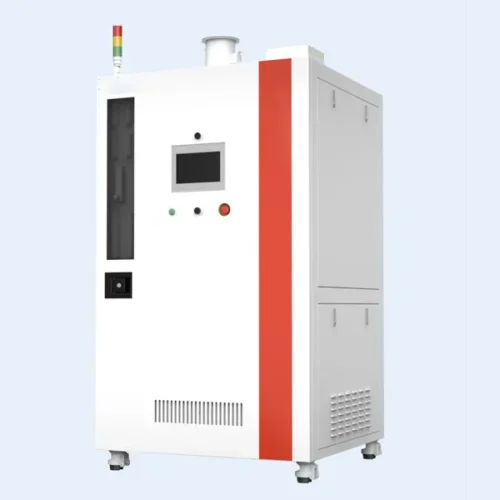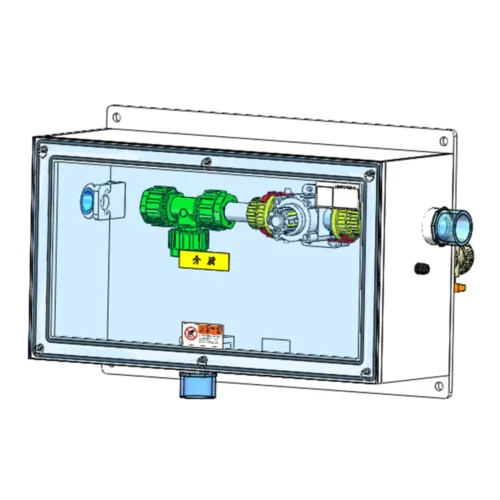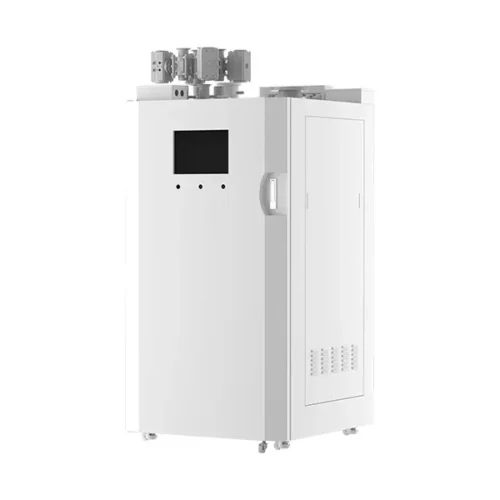
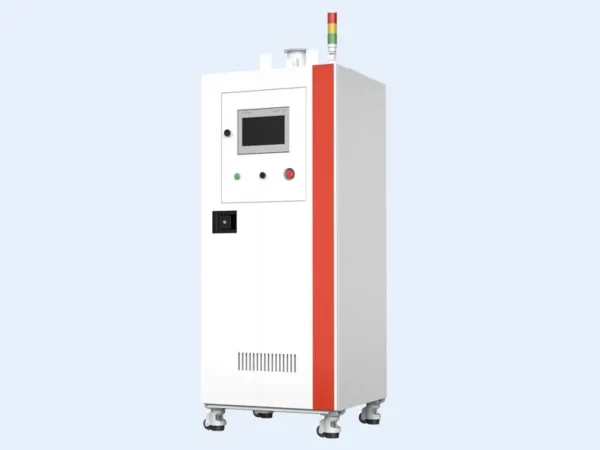
The referenced 100S/200S/200D family uses selected dry adsorbent media to treat specialty-gas exhaust. The media and vessel arrangement must be matched to the actual gas chemistry and expected loading. A dry system avoids a liquid waste stream, but media condition, breakthrough monitoring and safe replacement remain part of the operating plan.
Media selection and changeout
Do not assume one adsorbent handles every gas. Define target species, peak concentration, moisture, particulate content and the consequences of media saturation. The project team should agree on vessel isolation, replacement access and a method for identifying end of service life.
Source-system coordination
Locate the dry scrubber relative to gas cabinets, process tools or laboratory exhaust headers. Review the available negative pressure, purge connection, power and alarm interface. If a standby vessel is required, specify the switching sequence and the evidence used to verify it.
Catalog selection data
| Catalog model family | 100S / 200S / 200D |
|---|---|
| Catalog treatment capacity options | 100 / 200 / 400 / 800 L class; confirm the basis and selected configuration |
| Illustrative cabinet envelope | 1,600 W × 600 D × 2,000 H mm in the source data; confirm drawing |
| Electrical reference | 220 VAC, three-phase, 50/60 Hz in the source data |
| Media | Select for the actual gas and operating conditions |
Catalog values are selection references. Confirm the supplied variant, dimensional drawing, compatible gas list, site utilities and acceptance criteria before ordering.
What to send for a quotation
Provide the gas list, maximum inlet concentration, normal and peak exhaust flow, moisture content, duty cycle and maintenance strategy. Contact LGF for a project review.
Explore the Laboratory Gas Scrubber category or read our laboratory exhaust treatment and purge system guidance.