
LGF Lab Gas Flow / LABORATORY GAS ENGINEERING
Laboratory Gas Supply Solutions
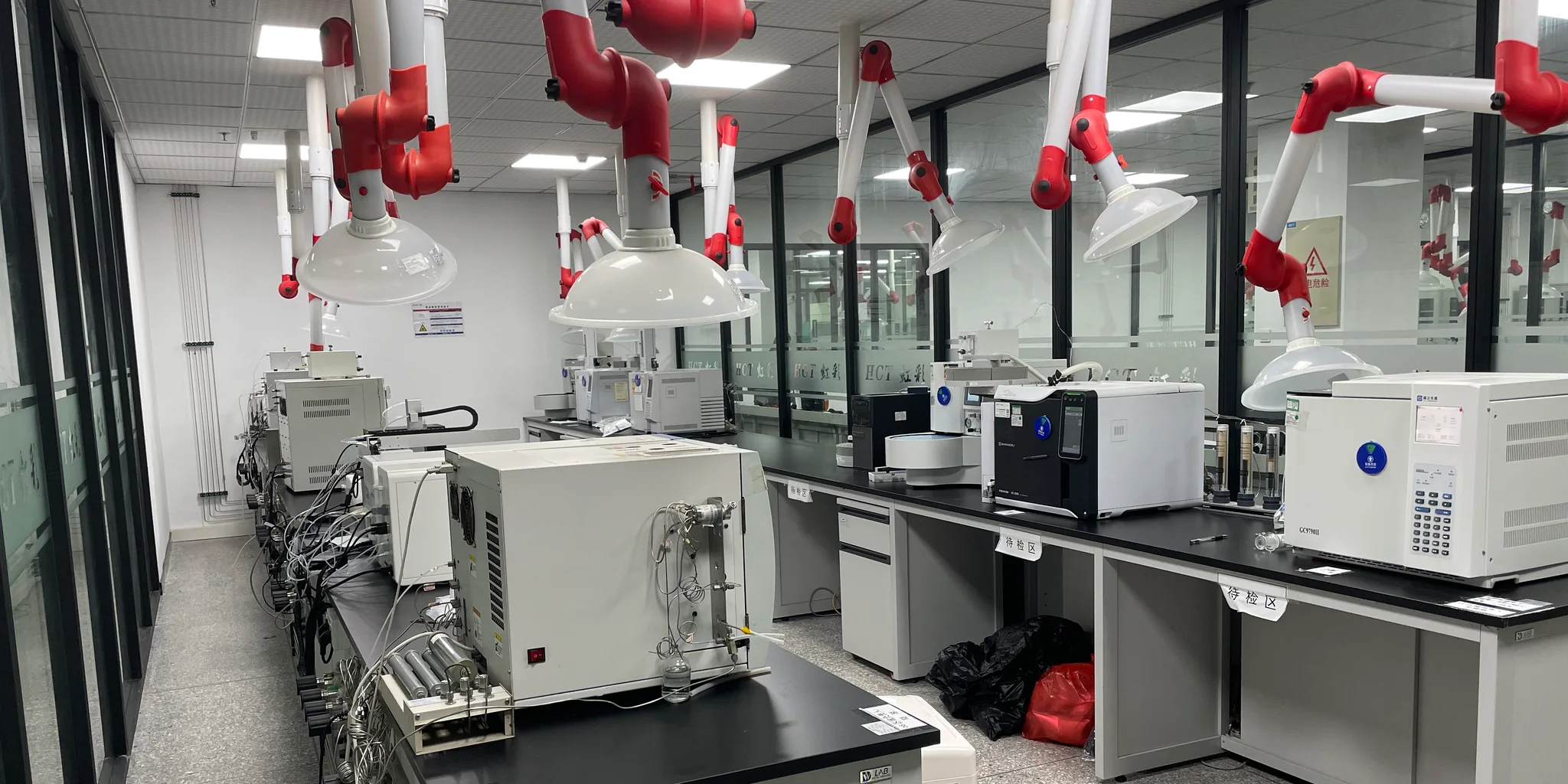
A laboratory gas delivery system should connect the source, pressure control, distribution line and point of use around the gases your instruments actually need. LGF Lab Gas Flow develops project-specific supply layouts for research, testing and high-purity applications.
FOUR SUPPLY CONFIGURATIONS + TWO DELIVERY GUIDES
Choose the system around the gas and the laboratory
A centralized laboratory gas distribution system is not a single fixed package. Gas properties, target purity, source pressure, flow demand, room layout and local safety requirements determine the equipment and control sequence. Explore four gas-specific supply approaches below, then use the piping design and installation guides to plan the route and verify the finished system. Start with our centralized laboratory gas supply system guide for the complete source-to-instrument framework.
01 / HAZARDOUS GAS SUPPLY
Flammable Gas Supply Systems
Explore the flammable gas supply solution →
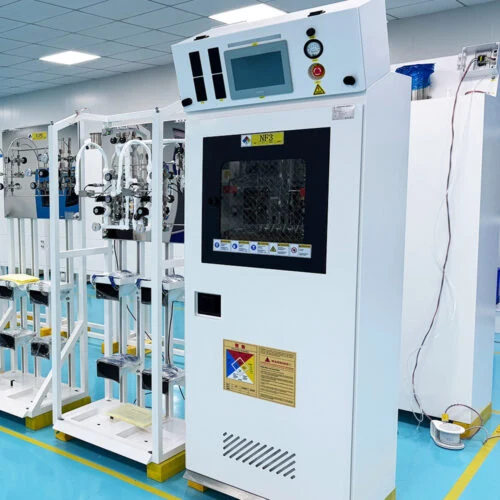
For hydrogen and other flammable laboratory gases, the supply design brings cylinder storage, pressure reduction, distribution and site safety controls into one reviewed plan. Depending on the gas and facility, a configured gas cabinet or manifold can be paired with ventilation, detection, alarm interfaces, emergency isolation and purge provisions.
- Define the gas, operating pressure, flow and number of use points.
- Review cabinet, changeover and monitoring requirements for the site.
- Coordinate the gas route and shutdown interface with the facility design.
02 / SPECIALTY GAS & PURITY
Corrosive & High-Purity Specialty Gas Supply
Explore the corrosive and high-purity gas solution →
Corrosive gas supply and high-purity laboratory gas systems place different demands on the delivery path. Selection starts with the specific gas chemistry and purity target, then considers wetted materials, regulator and valve construction, clean connections, containment and the required exhaust or purge interface. The final assembly is specified for the actual media and operating conditions.
- Match gas-wetted components to compatibility and cleanliness needs.
- Control pressure from the source through the point of use.
- Review isolation, leak checking and maintenance access in the layout.
03 / RESEARCH-SCALE DELIVERY
Compact Gas Supply for Small Research Laboratories
Explore the small research laboratory solution →
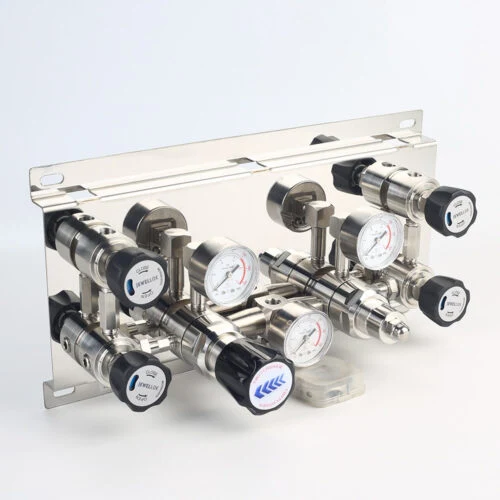
A smaller laboratory may need only a few cylinders and instruments, but still needs stable outlet pressure, appropriate isolation and a practical cylinder-change procedure. A modular laboratory gas delivery system with a source panel, compact manifold and local point-of-use controls can serve the initial layout while leaving room to extend the system as the laboratory changes.
- Prioritize the gases and instruments in the first installation phase.
- Plan compact routing and accessible points of use.
- Allow future expansion without oversizing the initial system.

04 / PURGE & EXHAUST
Laboratory Exhaust Gas Treatment & Purge Systems
Explore exhaust treatment and purge planning →
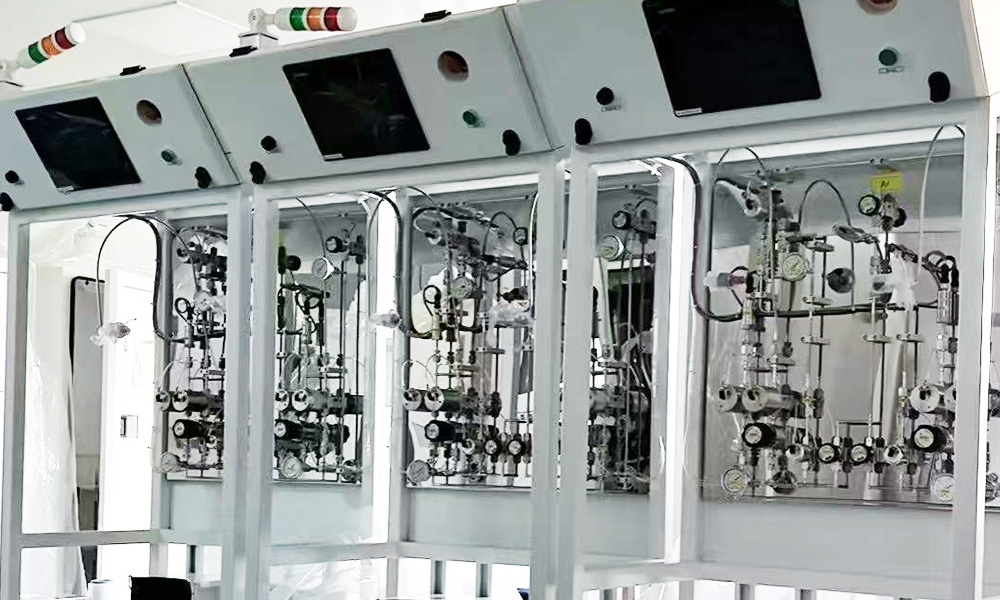
Some specialty-gas installations need controlled purging during cylinder changes or maintenance and a defined route for residual or process exhaust. We review the gas chemistry, exhaust flow, treatment objective and facility interface before specifying purge components or a suitable tail-gas treatment approach. Wet scrubbing, adsorption or other treatment methods depend on the application.
- Identify purge points and the required operating sequence.
- Plan exhaust collection and monitoring interfaces.
- Select treatment only after reviewing the actual waste-gas stream and local requirements.
DESIGN & DELIVERY
Plan the pipework, then verify the installed system
A dependable laboratory gas route begins with a gas-use and pressure brief and ends with identified, tested outlets. These two guides separate the decisions made on drawings from the checks made during construction, helping project teams assign each task and record its acceptance.
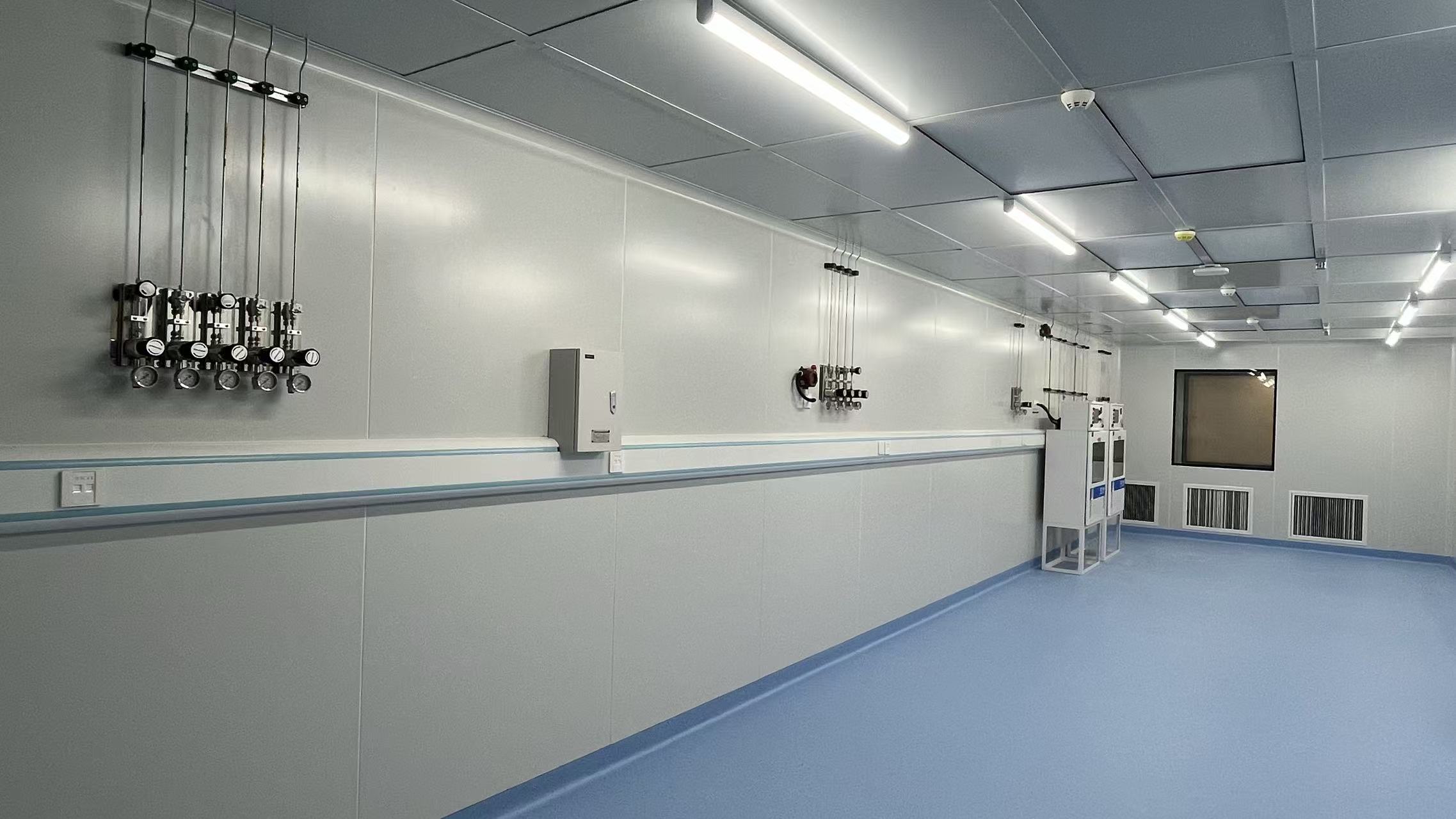
Laboratory Gas Piping Design
Define gas demand, pressure budget, route, service-compatible materials, isolation and the required verification evidence before procurement.
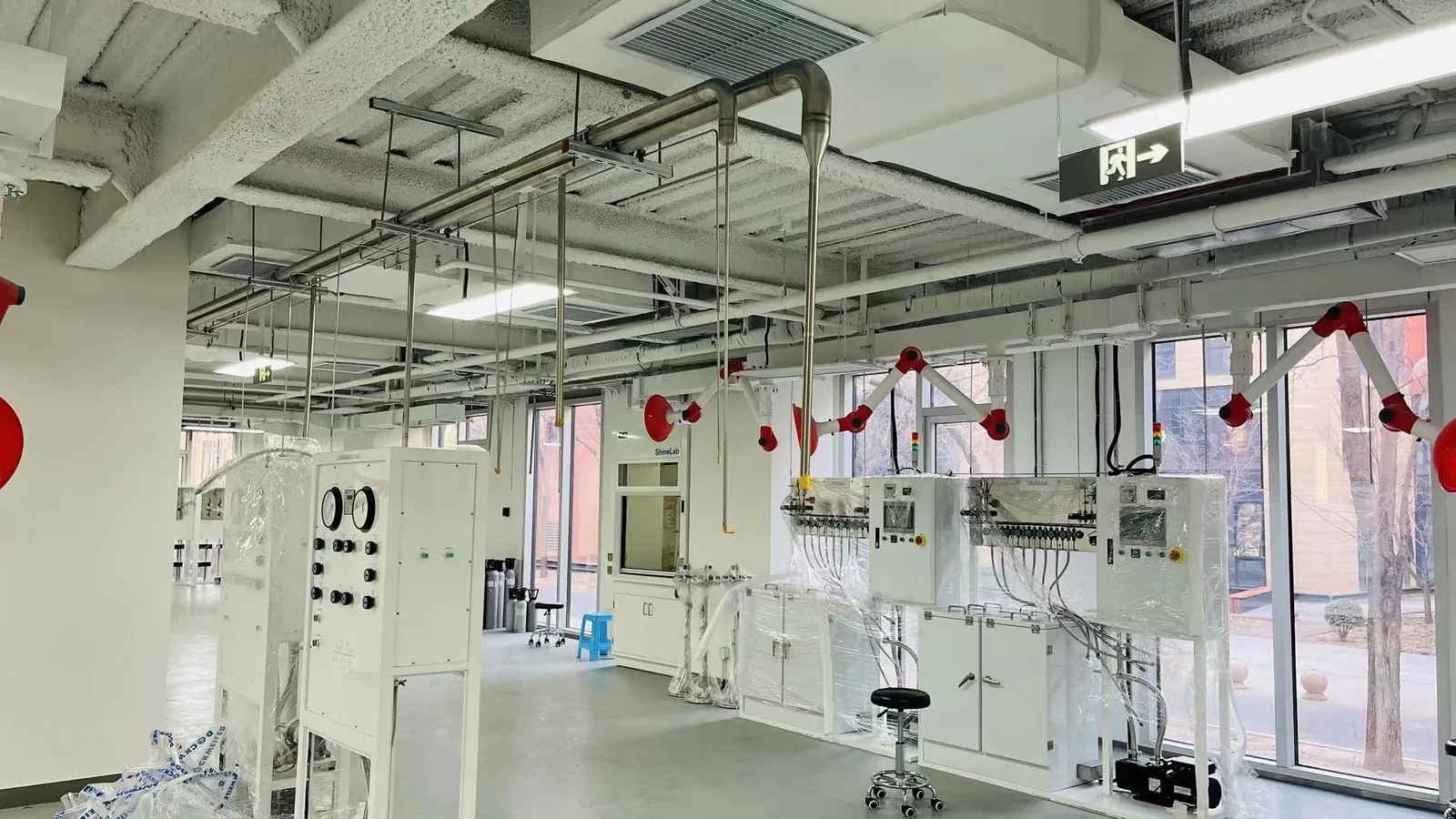
Laboratory Gas Pipeline Installation
Follow preconstruction checks, protected materials, fabrication, leak testing, functional verification and documented handover.
PLAN YOUR LABORATORY GAS SYSTEM
Share the gas list. We will help define the next step.
Tell us the gases and purity grades, source and outlet pressures, flow demand, number of use points, project location and any ventilation or exhaust constraints. We can discuss a centralized or modular supply approach for your laboratory.