
LGF LAB GAS FLOW / PROJECT CASES
Semiconductor Research Specialty Gas Delivery
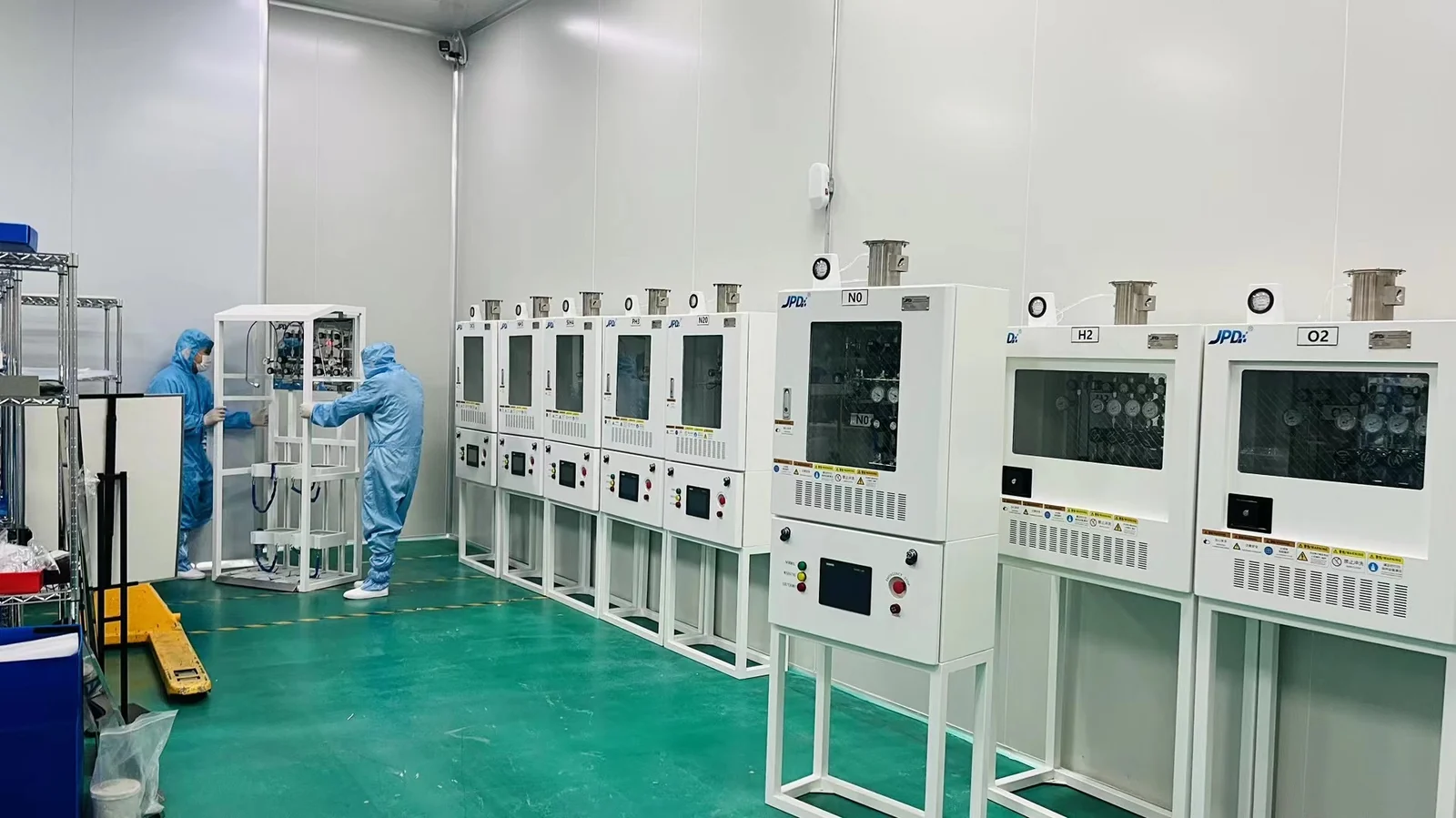
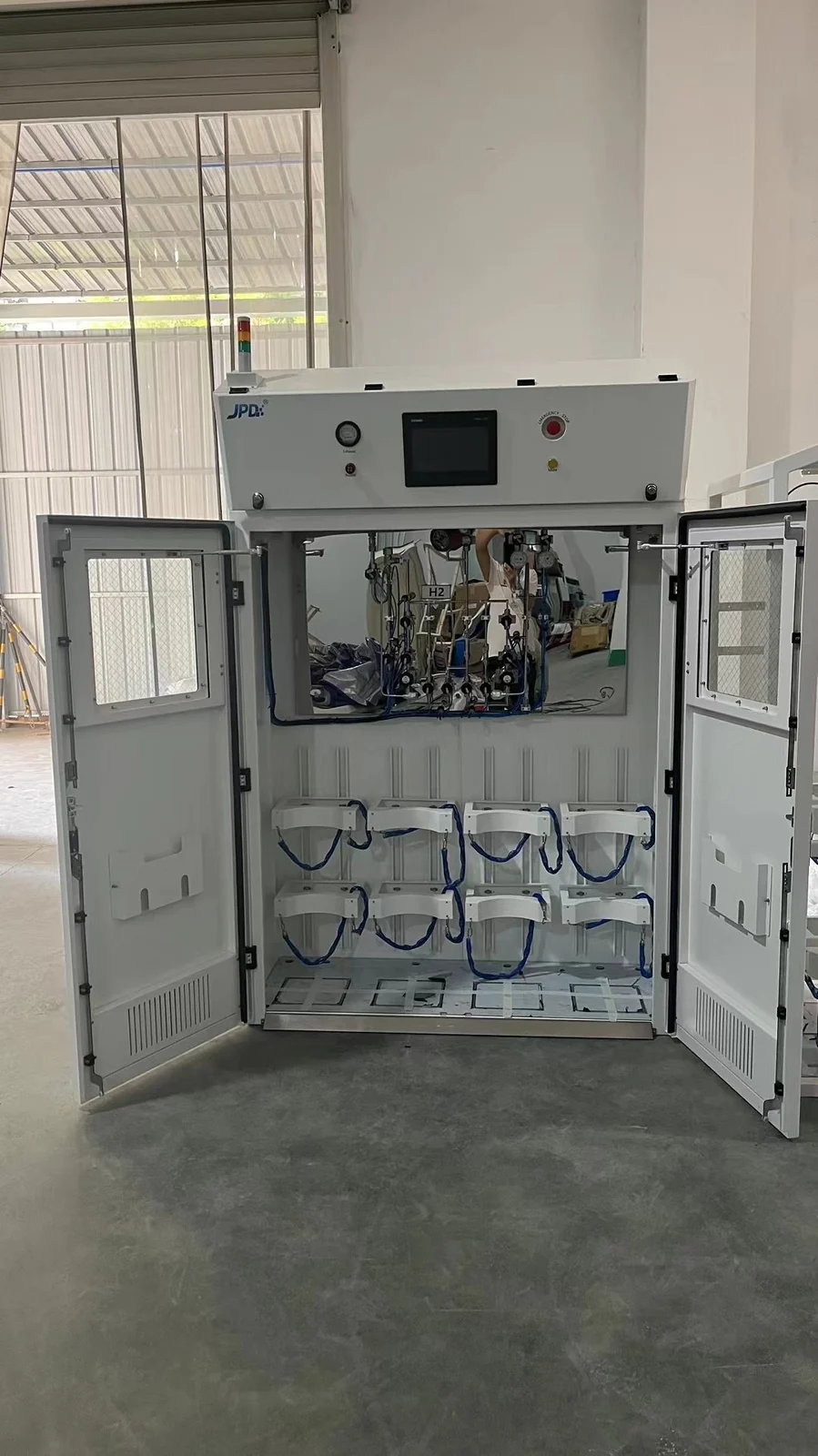
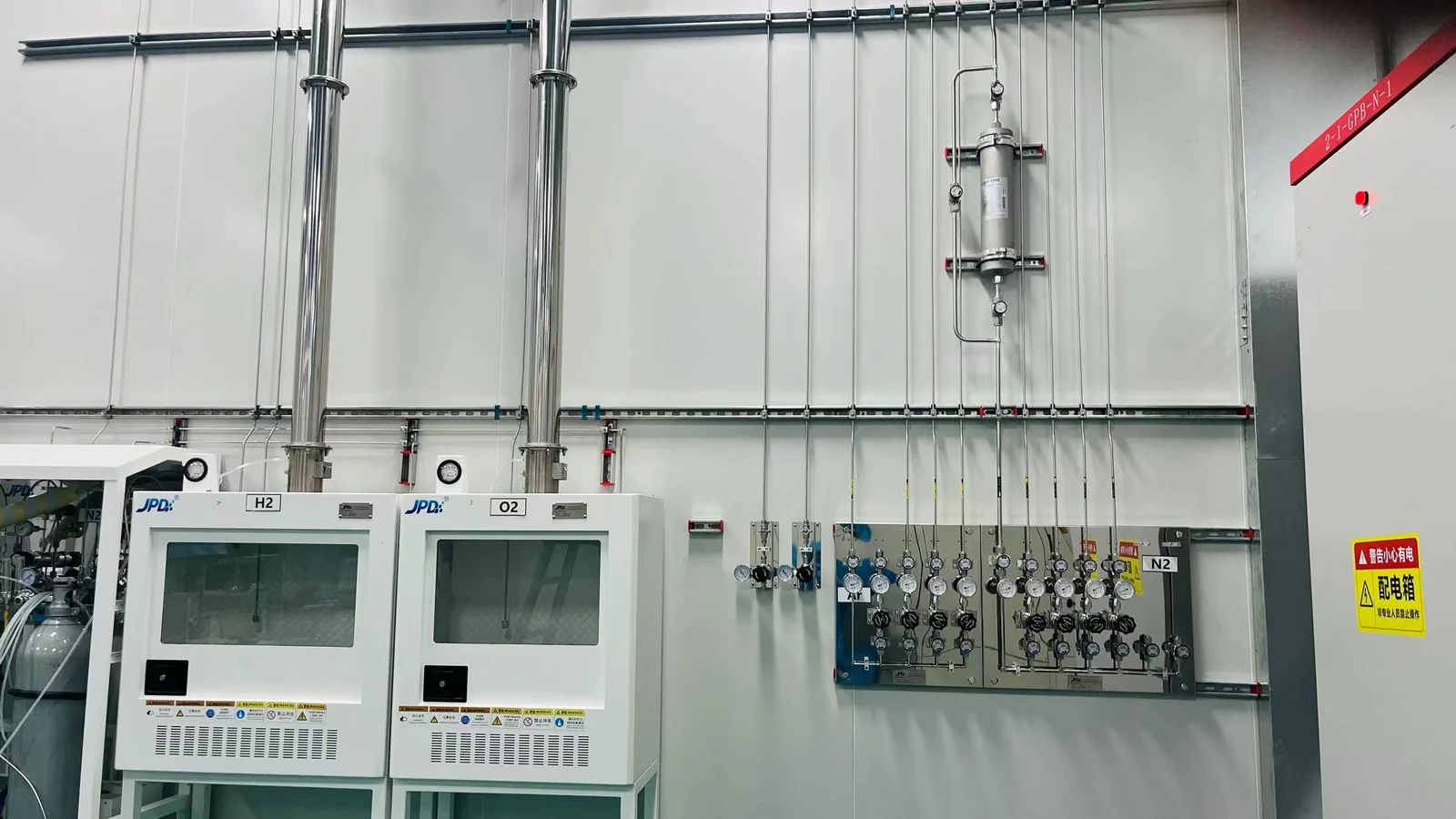
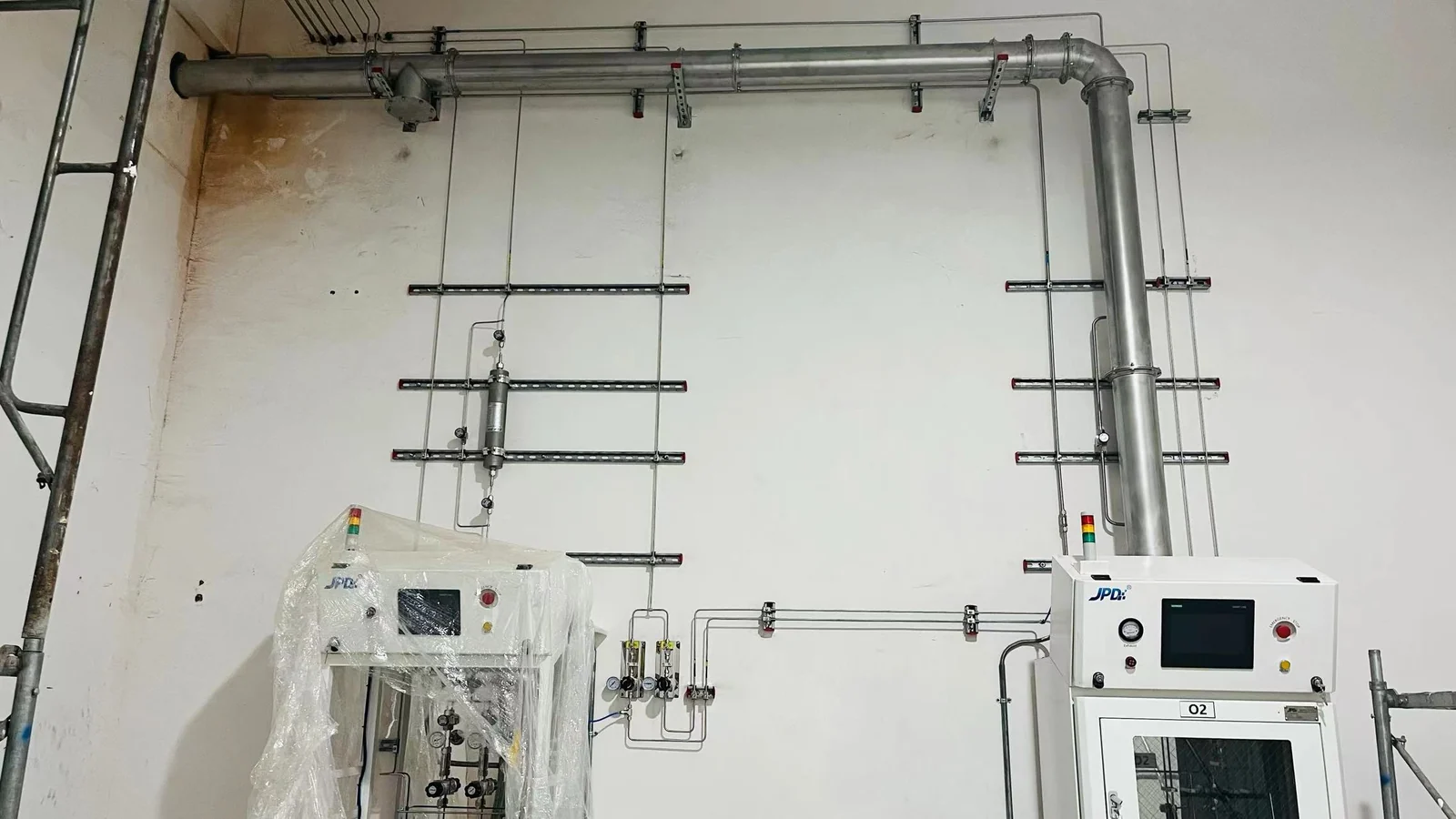
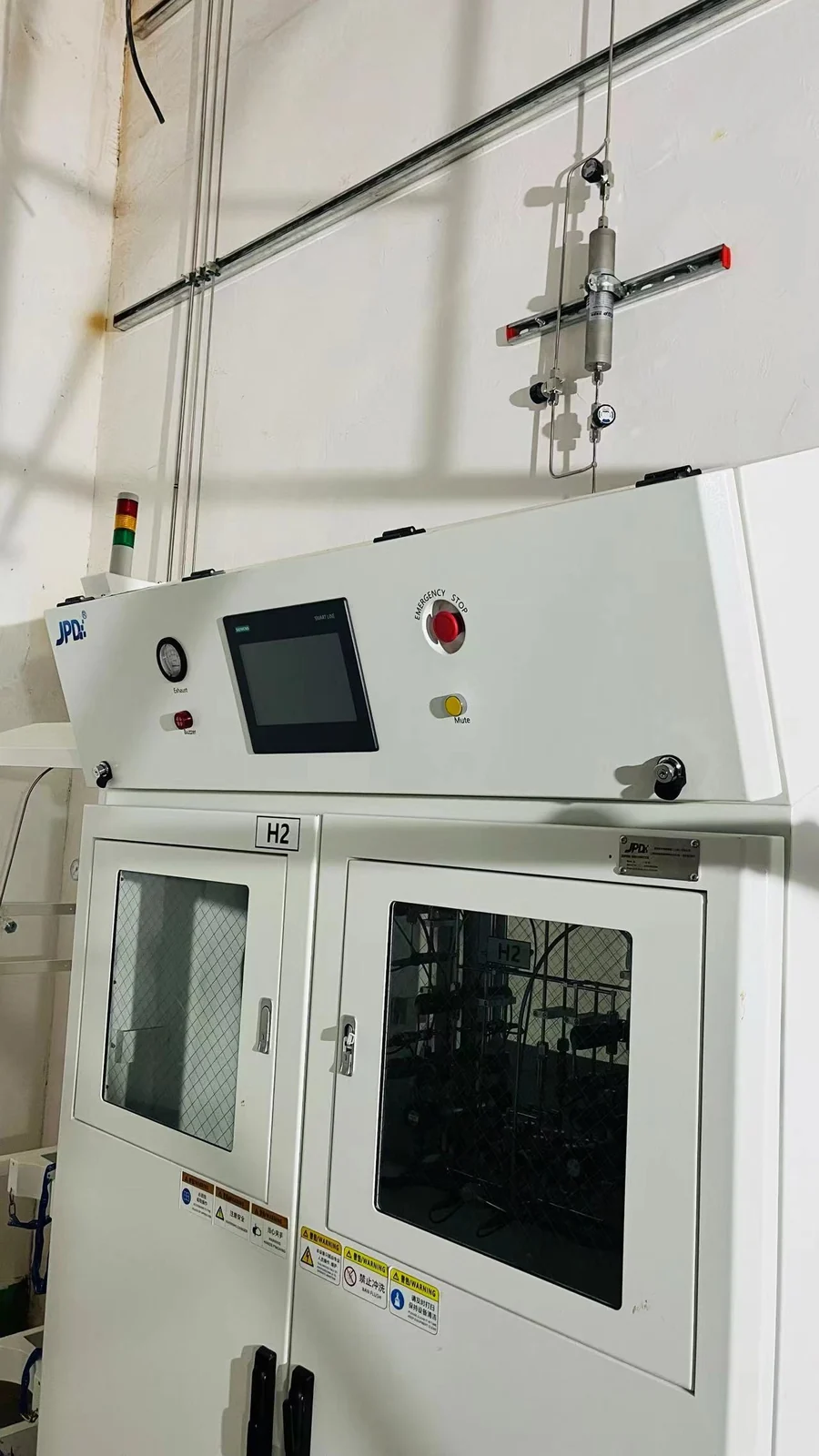
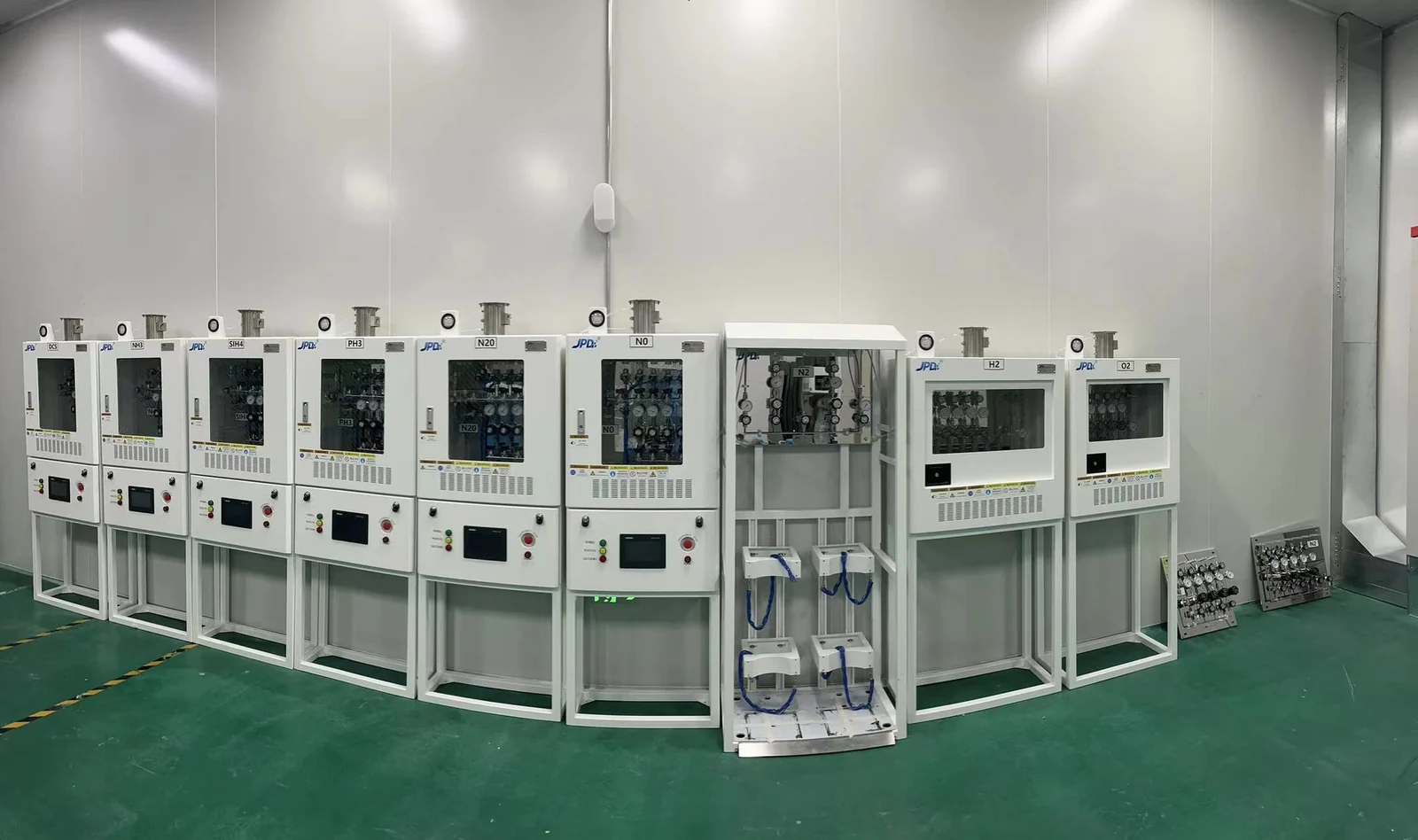
Rows of specialty-gas cabinets and adjacent service equipment appear in the photographs. They show a useful layout context but cannot establish gas identity, purity, interlock logic or commissioning results.
AN ILLUSTRATED PROJECT REVIEW
From visible installation to a clear engineering brief
For this semiconductor research facility setting, the engineering brief should make controlled cabinet-to-tool interfaces measurable through the gas schedule, source arrangement and point-of-use requirements.
For a project of this kind, the next step is to align the gas list, equipment inlets, facility rules and planned operating pattern. The photographs document visible hardware and routes; they do not certify gas identity, pressure rating, cleanliness, hazard controls or acceptance results. The sections below set out the questions to resolve in the project brief.
01 / PROJECT REVIEW
Build a research-tool matrix
List gas, grade, inlet pressure, flow, connection and purge behavior for each tool. A spare outlet should not be repurposed without checking gas compatibility and route cleanliness.
For this semiconductor research facility setting, the final choice should be checked against the actual gas schedule, equipment data and approved site procedures. Record the decision on the source-to-outlet drawing so future maintenance or equipment changes can be reviewed without guessing from the installed hardware.
02 / PROJECT REVIEW
Review cabinet containment
Cylinder access, purge path, exhaust and alarm response depend on the actual gas hazards. Identical-looking cabinets may serve different gases and need separate source tags.
For this semiconductor research facility setting, the final choice should be checked against the actual gas schedule, equipment data and approved site procedures. Record the decision on the source-to-outlet drawing so future maintenance or equipment changes can be reviewed without guessing from the installed hardware.
03 / PROJECT REVIEW
Specify the high-purity path
Regulators, valves, fittings, tubing and final connections all affect delivery quality. Define material, finish, cleaning and installation controls across the complete path.
For this semiconductor research facility setting, the final choice should be checked against the actual gas schedule, equipment data and approved site procedures. Record the decision on the source-to-outlet drawing so future maintenance or equipment changes can be reviewed without guessing from the installed hardware.
04 / PROJECT REVIEW
Retain change-control evidence
The owner needs cabinet and valve schedules, drawings, component data and applicable tests. Every tool move should prompt a review of capacity, isolation and line identity.
For this semiconductor research facility setting, the final choice should be checked against the actual gas schedule, equipment data and approved site procedures. Record the decision on the source-to-outlet drawing so future maintenance or equipment changes can be reviewed without guessing from the installed hardware.
PROJECT DECISION NOTES
What should be agreed before procurement
Gas and equipment schedule
Provide gas identity and grade, normal and peak demand, inlet pressure limits, connection details and future expansion plans for every destination. This schedule prevents a proposal from treating unlike services as one generic line.
Facility interfaces
Identify source access, route constraints, ventilation, detection, isolation and operating responsibilities. Applicable safety controls depend on the actual gases and local requirements, so they must be approved for the site rather than copied from a photograph.
Acceptance and ownership
Agree on inspection and test evidence before installation. Keep as-built drawings, component details, valve and outlet tags, and instructions for cylinder changes or later modifications with the facility owner.
PROJECT REVIEW CHECKLIST
Five items to confirm
- Match each source to an identified equipment destination.
- Verify gas compatibility, pressure and flow requirements.
- Approve the required safety and facility interfaces.
- Trace every installed line, valve and outlet on drawings.
- Retain applicable inspection, test and handover records.
PRACTICAL QUESTIONS
Questions before a similar project
Can these photographs establish the exact gas specification?
No. They show visible installation details, while gas identity, purity, operating limits and acceptance evidence must come from project records.
What information helps LGF review a similar project?
Send the gas list, instrument or tool inlet specifications, source and outlet locations, estimated flows, site drawings and operating constraints.
How should future equipment changes be handled?
Review capacity, gas compatibility, cleanliness, isolation and the existing as-built route before connecting a new load.
DISCUSS A SIMILAR PROJECT
Share your gas list and site plan.
LGF Lab Gas Flow can review the source, distribution and point-of-use scope with your engineering team. Include equipment inlet needs and site constraints for a useful first discussion.